

The pursuit of cinematic audio excellence at home begins with understanding advanced surround sound configurations. An onkyo 7.1 home theater system represents a significant leap from basic audio setups, delivering immersive soundscapes that rival commercial theaters. These systems combine precision engineering with user-friendly technology, making them accessible for both audio enthusiasts and newcomers to home cinema. With seven discrete channels plus a dedicated subwoofer, Onkyo's 7.1 configurations create dimensional sound that places you at the center of every scene, whether you're watching action blockbusters or intimate dramas.
Understanding 7.1 Surround Sound Architecture
The numerical designation "7.1" describes a specific speaker arrangement that fundamentally transforms how audio reaches your ears. This configuration employs seven satellite speakers and one subwoofer, strategically positioned throughout your listening space to create a complete sonic envelope.
Channel Breakdown and Purpose
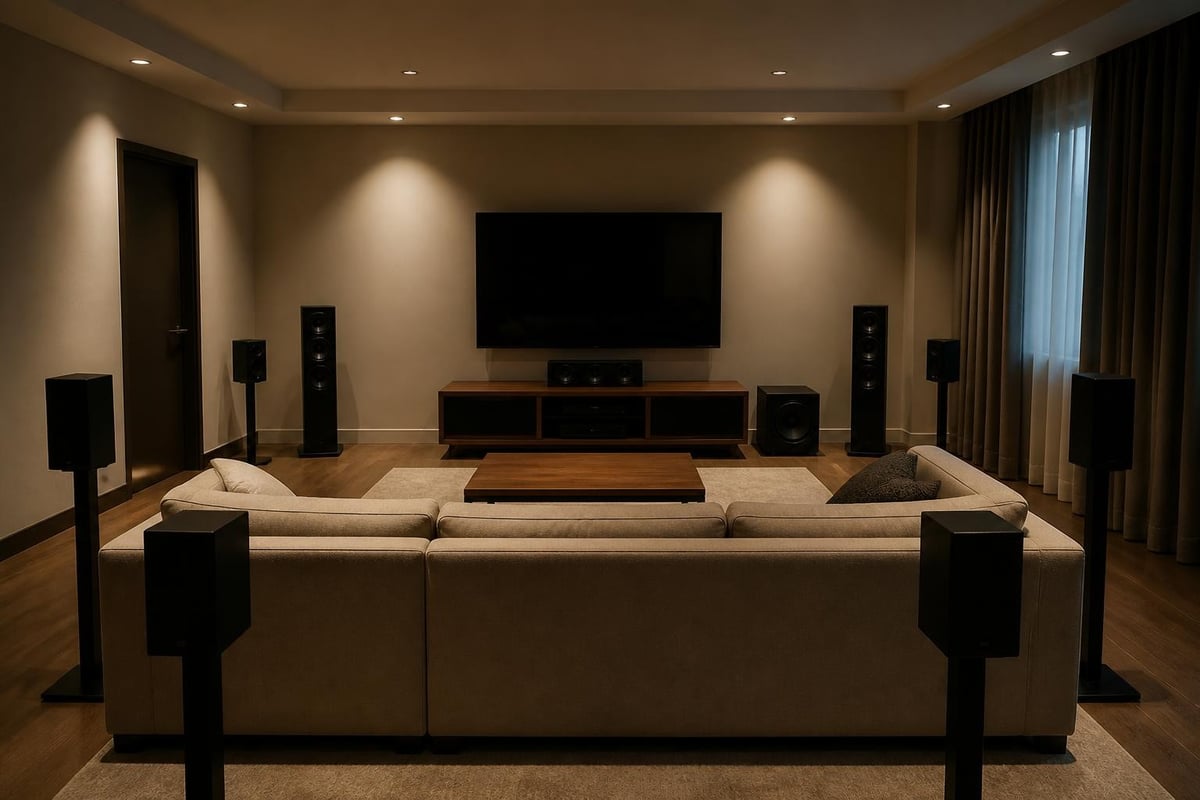
Each channel in an onkyo 7.1 home theater system serves a distinct function in the overall soundstage. The front left, center, and front right speakers handle dialogue, music, and primary sound effects. Side surround speakers add lateral dimension, while rear surround speakers create depth and ambiance. The subwoofer reproduces low-frequency effects that add physical impact to explosions, musical bass lines, and atmospheric rumble.
Key advantages of 7.1 versus 5.1 configurations:
- Enhanced rear soundstage separation
- Improved localization of ambient effects
- Greater immersion during action sequences
- More precise audio positioning
- Better performance in larger rooms
The two additional rear channels distinguish 7.1 from the more common 5.1 setup, creating a fuller rear soundstage that prevents the "hole in the middle" effect some listeners experience with traditional five-speaker arrangements.
Popular Onkyo 7.1 Home Theater Models
Onkyo has manufactured several notable 7.1 systems over the years, each targeting different performance tiers and budgets. Understanding the distinctions between models helps consumers make informed decisions aligned with their needs and room characteristics.
| Model | Key Features | Target User | Power Output |
|---|---|---|---|
| HT-S9800THX | THX certification, premium drivers | Enthusiasts | 130W per channel |
| HT-S6100 | Balanced performance, good value | Intermediate users | 100W per channel |
| HT-S5100 | Entry-level 7.1, compact design | Beginners | 80W per channel |
| HT-S790 | Network capabilities, modern connectivity | Tech-focused users | 110W per channel |
HT-S9800THX: The Flagship Experience
The Onkyo HT-S9800THX system represents the manufacturer's premium offering in complete package systems. THX certification ensures this onkyo 7.1 home theater system meets rigorous performance standards established by Lucasfilm. The receiver features advanced room calibration technology that automatically adjusts output to compensate for acoustic irregularities.
Premium build quality extends to the speaker cabinets, which utilize dense MDF construction and silk dome tweeters. Bass response from the included subwoofer reaches down to 25Hz, capturing the deepest cinematic rumbles with authority and control.
Mid-Range Options: HT-S6100 and HT-S790
For those seeking excellent performance without flagship pricing, the HT-S6100 delivers remarkable value. This onkyo 7.1 home theater system balances power, features, and affordability. Its receiver includes multiple HDMI inputs supporting 4K pass-through, ensuring compatibility with modern video sources.
The HT-S790 introduces network streaming capabilities, allowing users to access internet radio and music services directly through the receiver. This model particularly appeals to households that prioritize both movie watching and music listening.
Setting Up Your Onkyo 7.1 System
Proper installation determines whether your onkyo 7.1 home theater system achieves its full potential or merely occupies space. The physical placement of speakers follows established acoustic principles that maximize immersion while minimizing interference.
Speaker Placement Fundamentals
Begin with the front three speakers, which handle the majority of dialogue and on-screen action. Position the center channel directly above or below your display, angled toward the primary listening position. Front left and right speakers should form a 22-30 degree angle from the center seat, placed at ear level when seated.
Side surround speakers belong 90-110 degrees from the center position, slightly above ear level. Rear surrounds mount 135-150 degrees back, creating the enveloping rear soundstage that defines 7.1 performance. The subwoofer placement requires experimentation, as room modes and boundary reinforcement affect bass response unpredictably.
- Position front speakers first, establishing the primary soundstage
- Mount side surrounds at appropriate angles and heights
- Install rear surrounds to complete the envelope
- Place subwoofer using the "crawl test" or room corner placement
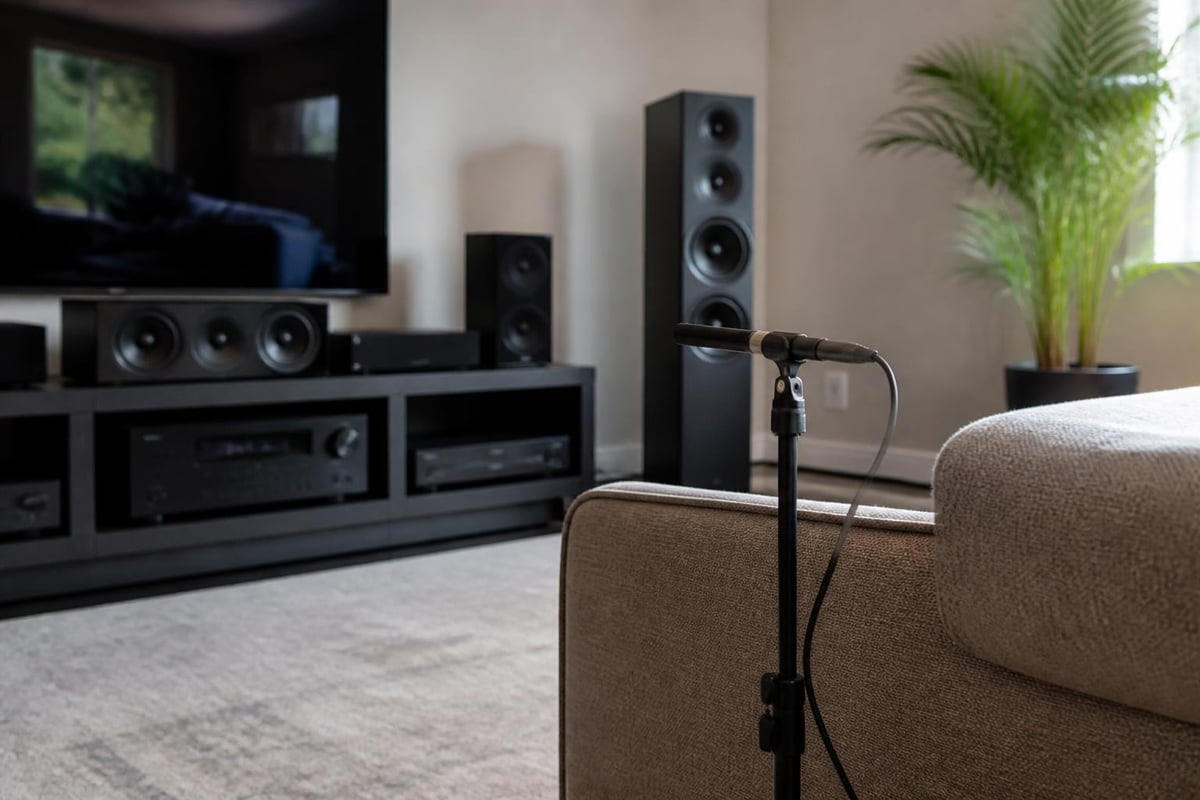
- Run automatic calibration using the included microphone
- Fine-tune settings based on listening tests
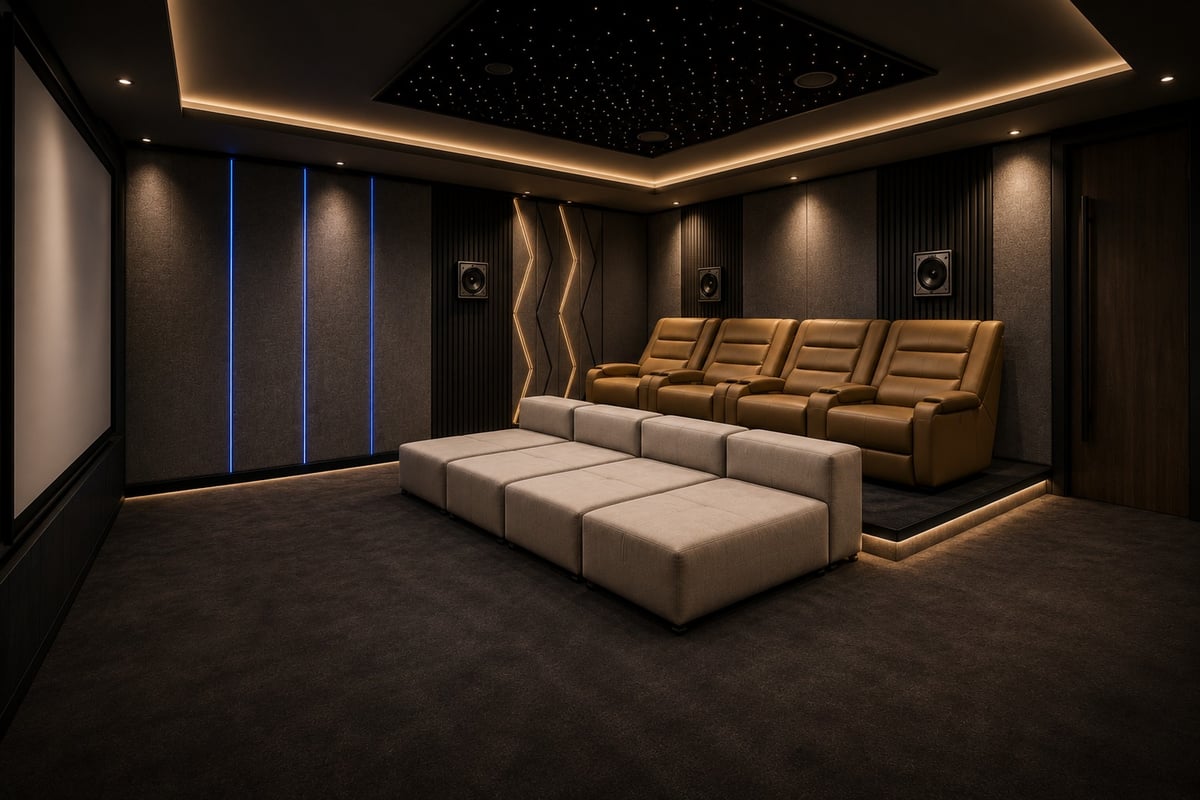
For those planning custom installations, Home cinema room conversions provide optimized acoustic environments where speaker placement follows precise architectural planning rather than furniture compromises. Professional installation ensures every element works in harmony with room acoustics.
Connection and Calibration Process
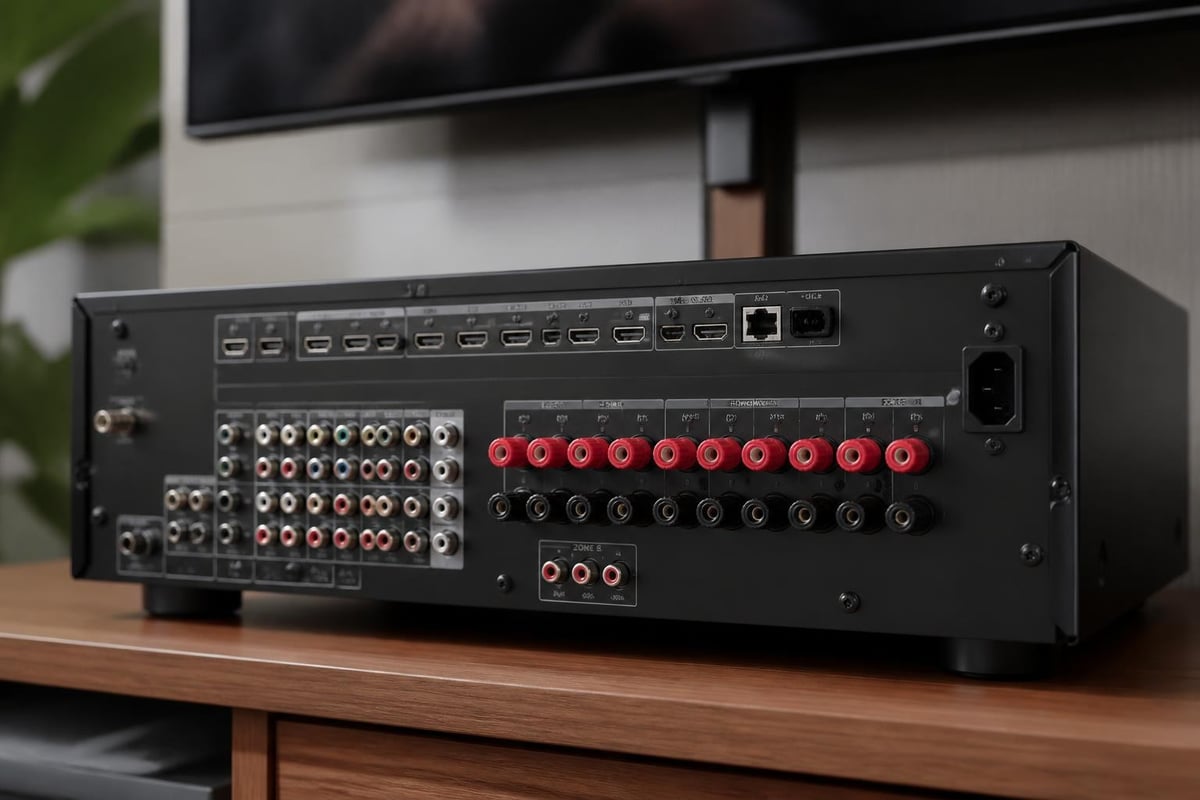
Modern Onkyo receivers simplify connections through clearly labeled terminals and color-coded inputs. Proper hookup procedures prevent damage and ensure optimal signal flow. Always connect speakers with correct polarity, matching positive to positive and negative to negative across all channels.
Essential connection steps:
- Connect video sources to HDMI inputs
- Wire speakers to corresponding terminals (front, surround, rear)
- Attach subwoofer using LFE cable
- Connect display to HDMI output
- Plug network cable for firmware updates and streaming
After physical connections, run the automatic calibration routine. This process uses test tones and microphone measurements to set speaker levels, distances, and crossover frequencies. The onkyo 7.1 home theater system analyzes your room and adjusts parameters accordingly, though manual tweaking often improves results further.
Audio Performance and Format Support
Onkyo receivers decode multiple surround formats, each offering different approaches to multichannel audio. Understanding these formats helps users maximize their onkyo 7.1 home theater system's capabilities with various content sources.
Dolby and DTS Technologies
Dolby TrueHD and DTS-HD Master Audio represent lossless formats found on Blu-ray discs, preserving studio master quality without compression. These formats fully utilize all seven channels plus subwoofer, delivering reference-level performance when properly configured.
Dolby Digital Plus and DTS Digital Surround provide lossy compression suitable for streaming services and broadcast television. While not matching Blu-ray fidelity, these formats still create convincing surround experiences through an onkyo 7.1 home theater system.
| Format | Type | Bitrate | Channels | Common Sources |
|---|---|---|---|---|
| Dolby TrueHD | Lossless | Up to 18 Mbps | 7.1 | Blu-ray |
| DTS-HD MA | Lossless | Up to 24.5 Mbps | 7.1 | Blu-ray |
| Dolby Digital Plus | Lossy | Up to 1.7 Mbps | 7.1 | Streaming, Cable |
| DTS Digital | Lossy | Up to 1.5 Mbps | 5.1/7.1 | DVD, Broadcast |
Music Playback Capabilities
Beyond movies, an onkyo 7.1 home theater system excels at music reproduction through dedicated listening modes. Multi-channel stereo mode distributes two-channel music across all speakers for room-filling sound. Other modes create simulated surround from stereo sources, though purists prefer direct stereo playback through the front channels only.
High-resolution audio support allows playback of FLAC, WAV, and DSD files at quality levels exceeding CD standards. Network streaming from computers or NAS devices makes large music libraries accessible without physical media.
Optimizing Your Listening Environment
Room acoustics profoundly influence how your onkyo 7.1 home theater system performs. Hard surfaces reflect sound, creating echoes and frequency peaks. Soft materials absorb energy, potentially deadening the soundstage excessively.
Acoustic Treatment Strategies
Strategic placement of absorption panels at first reflection points reduces unwanted echoes while preserving spaciousness. These points exist where sound bounces from speakers to walls before reaching your ears. Bass traps in room corners control low-frequency buildup that causes boomy, indistinct bass.
Practical acoustic improvements:
- Add thick curtains to windows
- Place area rugs on hard floors
- Use upholstered furniture to break up reflections
- Install acoustic panels at reflection points
- Position bass traps in corners
- Avoid placing speakers in corners (except subwoofers)
Avoid extreme treatment that creates an overly "dead" space. The goal involves controlling problematic reflections while maintaining natural ambiance and spaciousness that makes movie soundtracks come alive.
Receiver Settings and Fine-Tuning
After automatic calibration, manual adjustments often yield improvements. Increase center channel level by 2-3 dB if dialogue seems unclear. This common adjustment compensates for the center speaker's critical role in conveying speech.
Crossover settings determine which frequencies route to the subwoofer versus main speakers. The HT-S5100 manual recommends 80Hz as a starting point for most compact speakers, though larger tower speakers may perform better with 60Hz crossovers.
Dynamic range compression reduces the difference between loud and quiet passages, useful for late-night viewing without disturbing others. However, this processing reduces impact during action scenes, so disable it for critical listening sessions.
Comparing Onkyo to Alternative Solutions
While an onkyo 7.1 home theater system offers excellent value and performance, understanding alternatives provides context for purchasing decisions. Separate components, soundbars, and competing manufacturer systems each present different compromises.
Package Systems Versus Separates
Complete systems like Onkyo's offerings provide matched components designed to work together. This approach eliminates compatibility concerns and simplifies setup compared to selecting individual receivers, amplifiers, and speakers.
Separate component systems allow unlimited customization, mixing brands and models to achieve specific sonic signatures. This flexibility comes at higher cost and increased complexity. Enthusiasts often start with package systems before gradually upgrading individual components.
| Approach | Cost | Complexity | Performance Ceiling | Upgrade Path |
|---|---|---|---|---|
| Package System | Lower | Simple | Good | Replace entirely |
| Separates | Higher | Complex | Excellent | Incremental upgrades |
| Soundbar + Surrounds | Medium | Moderate | Limited | Add wireless speakers |
Competing Manufacturer Options
Yamaha, Denon, and Sony manufacture comparable 7.1 systems targeting similar markets. Yamaha emphasizes music performance through YPAO calibration technology. Denon focuses on video processing and Audyssey room correction. Sony integrates PlayStation gaming optimization.
An onkyo 7.1 home theater system distinguishes itself through Audyssey MultEQ room calibration, AccuEQ technology, and a reputation for warm, engaging sound signatures. Build quality typically exceeds price points, with solid receiver chassis and well-constructed speakers.
Maintenance and Longevity Considerations
Proper care extends the operational life of your onkyo 7.1 home theater system while maintaining peak performance. Regular maintenance prevents common issues and preserves resale value.
Routine Care Procedures
Dust accumulation on speaker drivers reduces high-frequency output and mars appearance. Gently vacuum grilles monthly using brush attachments. Clean receiver ventilation slots to prevent overheating, which degrades components and reduces lifespan.
Firmware updates address bugs and sometimes add features to existing receivers. Check Onkyo's support website quarterly for new releases applicable to your model. Update via network connection or USB drive following manufacturer instructions.
Recommended maintenance schedule:
- Weekly: Dust receiver and visible components
- Monthly: Vacuum speaker grilles and check connections
- Quarterly: Verify firmware updates and test all inputs
- Annually: Re-run automatic calibration to account for room changes
- As needed: Tighten speaker binding posts if vibration loosens them
Common Issues and Solutions
If certain channels produce no sound, verify speaker wire connections haven't loosened. Intermittent audio dropouts often result from HDMI handshake issues; power-cycle the receiver and connected devices. Persistent problems may require factory reset, restoring default settings and clearing corrupted configurations.
Receivers entering protection mode repeatedly indicate ventilation problems, speaker impedance mismatches, or failing amplifier sections. Ensure adequate clearance above the receiver for heat dissipation. Verify speaker impedances match receiver specifications, typically 6-8 ohms for Onkyo systems.
Integration with Modern Technology
Contemporary onkyo 7.1 home theater systems incorporate networking, wireless capabilities, and smart home integration. These features expand functionality beyond traditional movie watching into whole-home audio and automated control.
Streaming and Network Features
Built-in Wi-Fi and Ethernet connections access internet radio stations, Spotify, Pandora, and other streaming services. DLNA compliance enables music playback from networked computers and mobile devices without cables.
AirPlay and Bluetooth support varies by model, with newer units offering both protocols. These wireless standards stream audio from smartphones and tablets, converting your onkyo 7.1 home theater system into a versatile music playback center.
Smart Home Control Options
Many Onkyo receivers respond to voice commands through Amazon Alexa or Google Assistant integration. Issue verbal instructions to change inputs, adjust volume, or select streaming services without touching a remote.
Control apps for iOS and Android replace traditional remotes with smartphone interfaces. These apps often provide more intuitive navigation through complex receiver menus, simplifying setup adjustments and input selection.
Upgrading and Expansion Opportunities
As your needs evolve, an onkyo 7.1 home theater system offers multiple upgrade paths. Incremental improvements spread costs while progressively enhancing performance.
Component Replacement Strategy
Speakers represent the most impactful upgrade opportunity. Replacing the included speakers with higher-quality models transforms system performance while retaining the capable receiver. Front speakers merit priority, as they handle dialogue and primary sound effects.
Subwoofer upgrades deliver dramatic improvements in bass extension and impact. Larger drivers and more powerful amplifiers reproduce low frequencies with greater authority and control, enhancing both movies and music.
Adding Atmos Height Channels
Select Onkyo receivers support Dolby Atmos, which adds overhead sound through ceiling speakers or upward-firing modules. While this creates a 5.1.2 or 7.1.2 configuration rather than traditional 7.1, the additional dimension elevates immersion significantly. Atmos-capable receivers reassign two surround channels to height duties or utilize external amplification for additional channels.
Consider room size and ceiling height before pursuing Atmos upgrades. Rooms smaller than 2,500 cubic feet or with ceilings below eight feet may not benefit substantially from overhead channels.
Selecting and properly configuring an onkyo 7.1 home theater system delivers years of immersive entertainment that transforms how you experience movies, music, and gaming. Understanding speaker placement, room acoustics, and calibration procedures ensures your investment achieves its full potential. Whether you're building a dedicated theater space or enhancing an existing living room, these versatile systems provide the foundation for exceptional audio experiences. ANR media specializes in custom home cinema installations that optimize every aspect of your audiovisual setup, from acoustic treatment to component selection and professional calibration. Contact our team to explore how we can create the perfect entertainment environment tailored to your space and preferences.