

Searching for "home theater near me" represents more than just looking for equipment. It signals a desire to transform how you experience entertainment at home. Whether you're planning a dedicated cinema room or upgrading your living space with immersive audio, understanding what professional installation specialists offer makes the difference between a collection of expensive equipment and a truly exceptional viewing experience. The journey toward creating your perfect home cinema involves careful planning, expert knowledge, and understanding the technological possibilities available in 2026.
Understanding Professional Home Theater Installation Services
When you search for a home theater near me, you're seeking specialists who combine technical expertise with design sensibility. Professional installers don't simply connect equipment. They assess your space, understand your viewing habits, and design systems that deliver cinema-quality performance tailored to your specific environment.
What Separates Professional Installation from DIY
The complexity of modern home theater systems extends far beyond plugging in speakers. Professional installers bring years of experience in acoustic design, video calibration, and system integration. They understand how room dimensions affect sound propagation, how ambient light impacts picture quality, and how to seamlessly integrate control systems.
Key advantages of professional installation include:
- Proper acoustic treatment and speaker positioning for optimal sound distribution
- Professional video calibration achieving accurate color and contrast levels
- Custom wiring solutions that maintain clean aesthetics
- Integration with smart home systems and lighting control
- Warranty protection and ongoing technical support
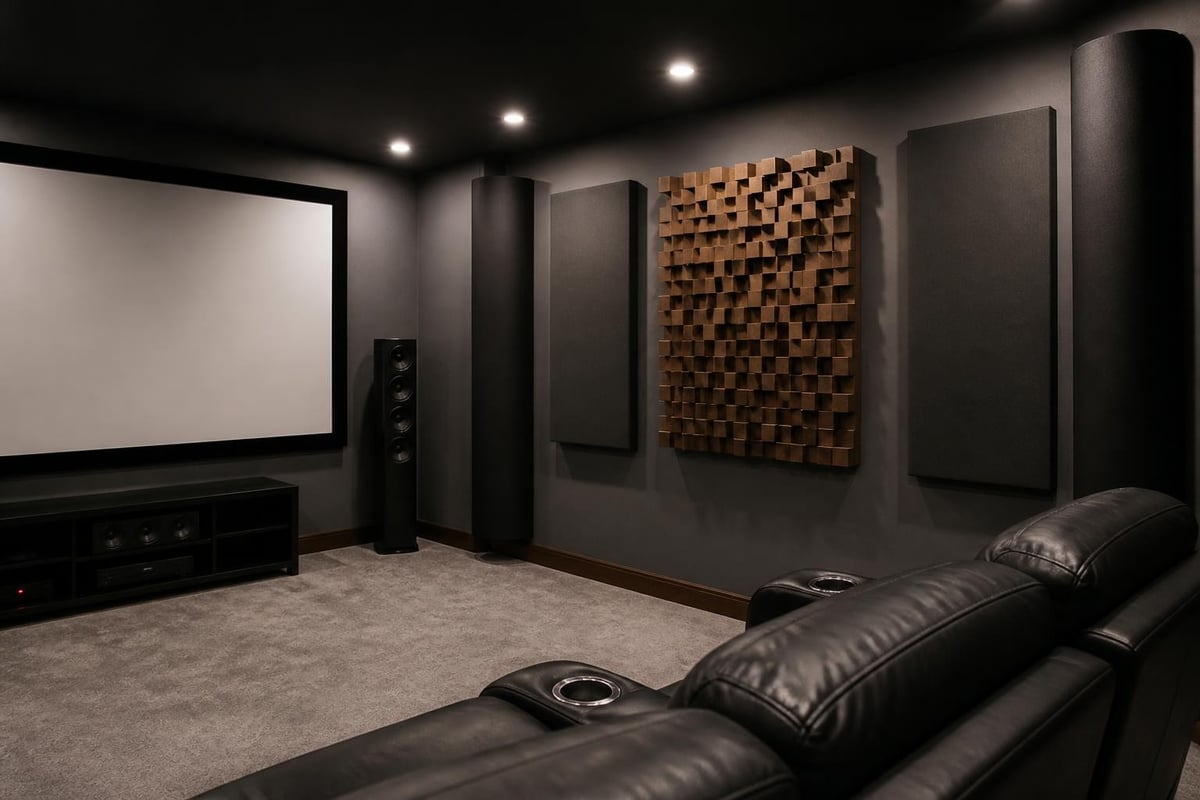
Room acoustics present one of the most challenging aspects of home theater design. Even premium speakers perform poorly in untreated rooms where sound waves bounce unpredictably. Professional installers measure room modes, identify reflection points, and implement absorption and diffusion treatments that create balanced, immersive soundscapes.
Service Tiers and What They Include
Home theater installation services typically fall into distinct categories, each addressing different needs and budgets. Understanding these tiers helps you identify which level matches your requirements when searching for home theater near me options.
| Service Level | Typical Features | Best For |
|---|---|---|
| Basic Setup | Equipment installation, basic calibration, standard wiring | Simple soundbar or 5.1 systems in existing rooms |
| Enhanced Installation | Custom speaker placement, advanced calibration, in-wall wiring, basic acoustic treatment | Dedicated media rooms with quality components |
| Premium Cinema Conversion | Full room design, comprehensive acoustic treatment, custom seating, advanced automation, professional-grade equipment | Dedicated home cinema rooms seeking reference-level performance |
The investment in professional installation pays dividends in system performance and longevity. Incorrectly positioned speakers, improper calibration, or inadequate power management can compromise even the most expensive equipment.
Evaluating Local Home Theater Specialists
Finding the right installer requires more than selecting the first result when searching home theater near me. Several factors distinguish exceptional specialists from basic equipment retailers offering installation services.
Credentials and Experience Matter
Look for installers with industry certifications demonstrating technical competence and ongoing education. Organizations like CEDIA (Custom Electronic Design & Installation Association) provide standardized training in residential electronic systems. Certified installers stay current with evolving technologies and installation best practices.
Experience with specific brands and technologies proves equally important. Setting up modern home theater systems requires familiarity with Dolby Atmos configurations, HDR video standards, and network-based audio distribution. Ask potential installers about recent projects similar to yours.
Questions to ask during consultations:
- How many years have you specialized in home theater installation?
- What industry certifications do your technicians hold?
- Can you provide references from recent projects similar to mine?
- What brands do you recommend and why?
- How do you handle warranty service and technical support?
Portfolio and Project Examples
Reputable home theater specialists maintain portfolios showcasing completed projects. These examples reveal design capabilities, attention to detail, and the quality level you can expect. Pay attention to projects with similar scope and budget to yours.
During consultations, discuss your vision and observe how installers respond. Exceptional specialists ask detailed questions about your viewing preferences, existing equipment, and budget constraints. They offer multiple approaches rather than pushing a single solution.
Room Design Considerations for Home Theaters
The physical space significantly impacts your home theater's performance potential. When consulting with specialists found through home theater near me searches, they'll evaluate several critical room characteristics.
Dedicated Rooms Versus Multi-Purpose Spaces
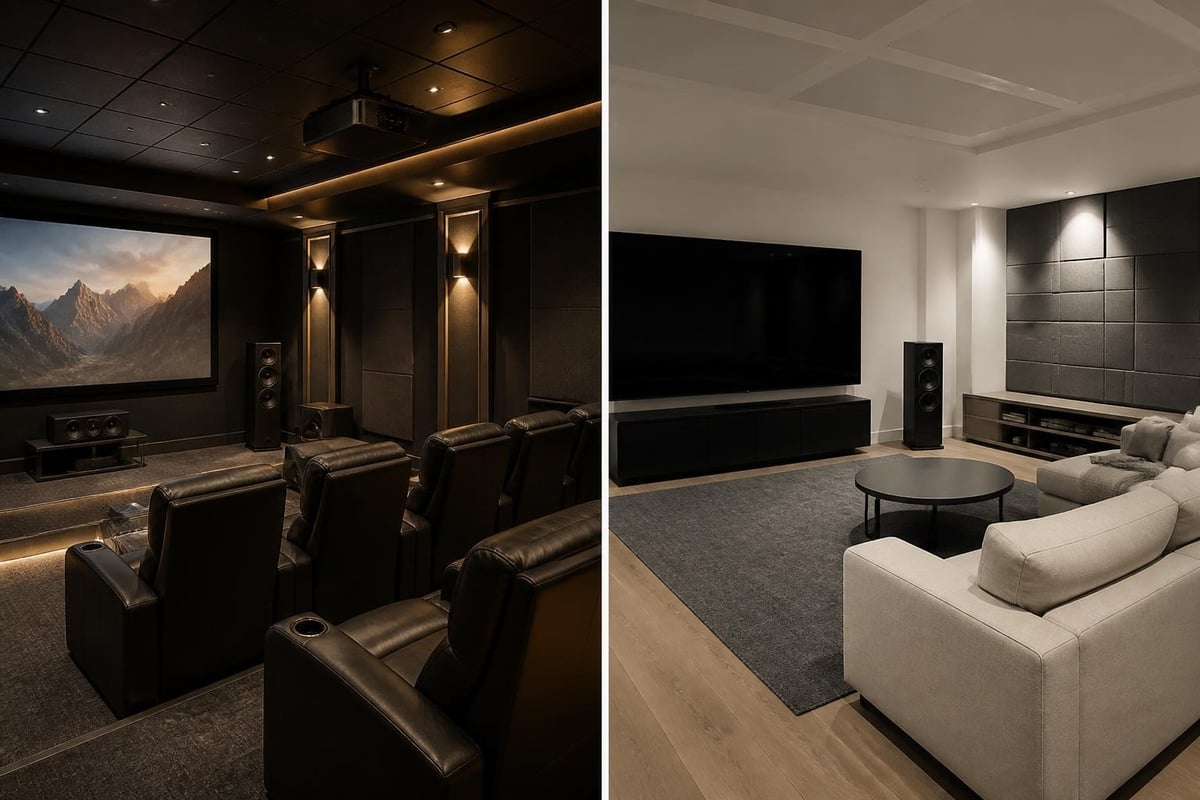
Dedicated home cinema rooms offer maximum control over acoustics, lighting, and equipment placement. Without windows or competing uses, designers optimize every element for audiovisual performance. However, many homeowners integrate theaters into existing living spaces, requiring different approaches.
Multi-purpose rooms demand careful balance between theater performance and everyday functionality. Creating effective home theater setups in living rooms requires addressing ambient light, furniture placement, and acoustic challenges while maintaining the room's versatility.
Room dimensions influence acoustic performance profoundly. Rooms with equal or multiple dimensions create standing waves that cause uneven bass response. Professional installers use mathematical ratios and acoustic treatments to mitigate these issues.
Acoustic Treatment Strategies
Sound quality depends heavily on how rooms handle reflections, resonances, and frequency response. Untreated rooms create echoes, muddy dialogue, and uneven bass that no amount of expensive equipment can overcome.
Professional acoustic treatment addresses three main concerns:
Absorption controls excessive reflections using panels and bass traps positioned at reflection points and room corners. Diffusion scatters remaining reflections to create spaciousness without deadening the room. Isolation prevents sound transmission to adjacent spaces, maintaining peace with family and neighbors.
The investment in custom home cinema room conversions includes comprehensive acoustic design as a fundamental component. This holistic approach ensures every element works together harmoniously.
Technology Selection and System Design
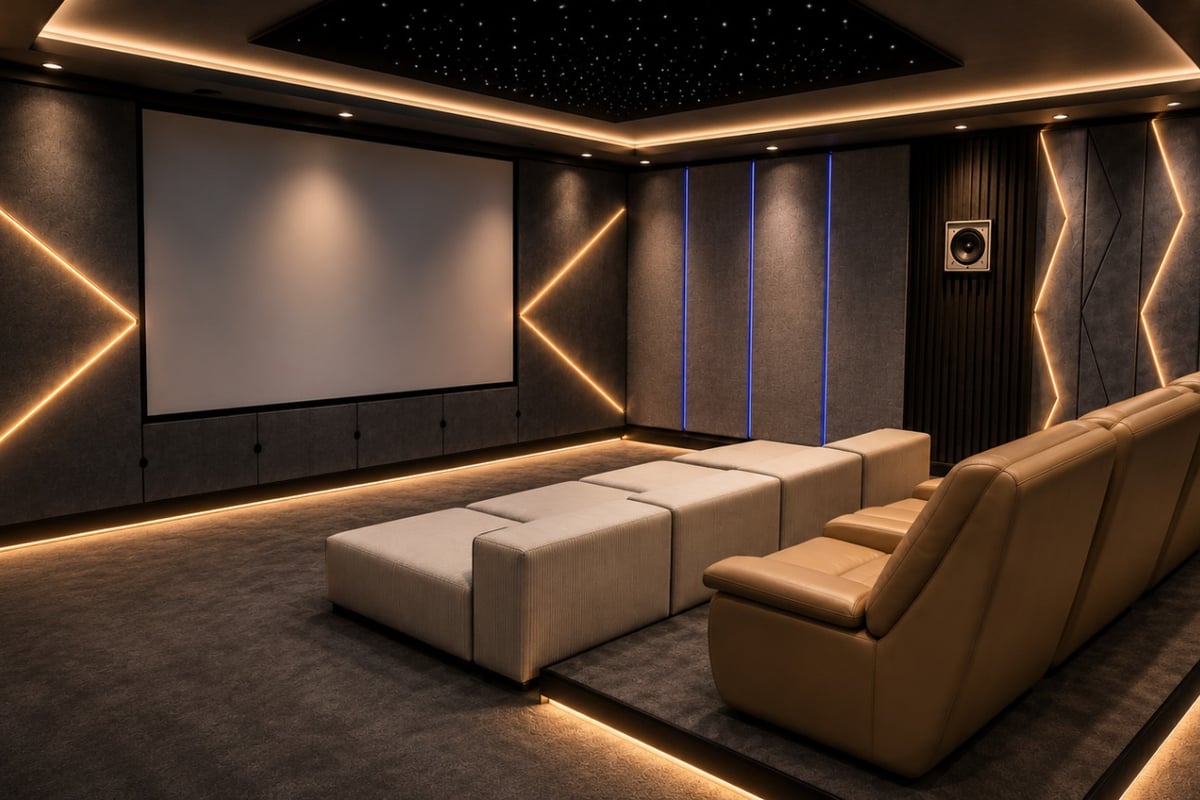
Modern home theaters integrate numerous technologies, each contributing to the overall experience. When working with local installers, understanding component categories helps you make informed decisions.
Display Technology Options
Display selection forms the visual foundation of your home theater. In 2026, choices range from ultra-short-throw laser projectors to massive microLED displays, each offering distinct advantages.
Projection systems provide the most cinema-like experience with screen sizes exceeding 150 inches. Modern laser projectors deliver exceptional brightness and color accuracy while eliminating lamp replacement. They require controlled lighting and proper screen selection.
Large-format displays eliminate ambient light concerns and offer superior brightness. OLED technology provides perfect blacks and infinite contrast, while QLED displays achieve higher peak brightness. Screen sizes now reach 100 inches and beyond.
Your room dimensions, ambient light levels, and viewing preferences guide display selection. Professional installers measure your space and recommend options that deliver optimal performance within your budget.
Audio System Configurations
Speaker configuration defines your theater's immersive capabilities. Modern systems range from simple soundbars to elaborate Dolby Atmos arrays with height channels creating three-dimensional soundscapes.
| Configuration | Channels | Immersion Level | Ideal Room Size |
|---|---|---|---|
| 3.1 | Front L/R, Center, Subwoofer | Basic | Small to Medium |
| 5.1 | Add Surround L/R | Enveloping | Medium |
| 7.1 | Add Rear Surround L/R | Highly Immersive | Medium to Large |
| 5.1.2 / 7.1.4 | Add Height Channels | Object-Based 3D Audio | Medium to Large |
Selecting the right AV receiver proves critical as it processes all audio and video signals while providing power to your speakers. Modern receivers support Dolby Atmos, DTS:X, and increasingly sophisticated room correction systems that optimize sound for your specific space.
Professional installers calibrate systems using precision measurement equipment and reference materials. This process adjusts speaker levels, crossover frequencies, equalization, and timing to create cohesive, balanced sound across all listening positions.
Installation Process and Timeline
Understanding what happens during professional installation helps you prepare appropriately and set realistic expectations when engaging home theater near me specialists.
Pre-Installation Planning Phase
Before any equipment arrives, thorough planning ensures smooth execution. Installers create detailed system designs, equipment lists, and wiring diagrams. This phase includes:
- Site survey and measurements documenting room dimensions, electrical access, and structural considerations
- System design specifying equipment, speaker locations, screen position, and seating layout
- Budget finalization confirming equipment selections and installation costs
- Timeline coordination scheduling installation phases with minimal disruption
Preparation may include electrical upgrades, structural modifications for in-wall speakers, or acoustic treatment installation. These tasks often occur before equipment delivery, extending overall project timelines.
Installation and Calibration
Physical installation proceeds systematically, typically following this sequence:
- Rough-in stage: Running cables through walls, installing backing for equipment mounts, completing electrical work
- Equipment installation: Mounting displays/screens, installing speakers, positioning electronics racks
- Connection phase: Terminating cables, connecting components, verifying signal paths
- Calibration and testing: Measuring acoustic response, calibrating video, programming control systems
Complex installations in dedicated rooms may span several days to weeks. The timeline depends on room preparation requirements, equipment complexity, and custom elements like motorized seating or architectural acoustic treatments.
Professional home theater installation stages from initial room assessment and wiring through equipment mounting, system integration, and final calibration testing
Maximizing Your Investment
After installation, understanding system operation and maintenance preserves performance and protects your investment. Quality installers provide comprehensive training and ongoing support.
Training and Documentation
Professional installation includes detailed training sessions covering system operation, source switching, audio modes, and control systems. Experts emphasize that proper room design and setup fundamentally determine performance outcomes, making understanding your specific system essential.
Installers should provide documentation including equipment manuals, wiring diagrams, calibration settings, and control system programming details. This information proves invaluable for future service or system expansions.
Maintenance and Future Upgrades
Home theater technology evolves continuously. Systems designed with upgrade paths adapt as new standards emerge. Quality installers specify equipment with expansion capabilities and design infrastructure supporting future enhancements.
Routine maintenance tasks include:
- Software and firmware updates for receivers and processors
- Cleaning display surfaces and projection lenses
- Verifying speaker connections and cable integrity
- Recalibration after room changes or equipment additions
Establishing relationships with local home theater near me specialists ensures access to expertise when you need system adjustments, troubleshooting, or expansion planning.
Integration with Smart Home Systems
Modern home theaters integrate seamlessly with broader smart home ecosystems, creating unified control over lighting, climate, security, and entertainment. This integration transforms home theater near me searches into conversations about comprehensive home automation.
Control System Options
Dedicated control systems from manufacturers like Control4, Crestron, and Savant provide sophisticated interfaces managing complex installations. These platforms create custom interfaces tailored to your system, offering one-touch operation for complete viewing experiences.
Integration capabilities include:
- Automated lighting scenes dimming as movies begin
- Climate control maintaining optimal viewing comfort
- Motorized shades blocking ambient light
- Security system integration pausing content when doorbells ring
- Voice control through Alexa, Google Assistant, or Siri
Less complex systems achieve basic integration through universal remotes or smartphone apps. The approach depends on system complexity and your preference for automation depth.
Network Infrastructure Requirements
Modern home theaters rely heavily on network connectivity. Streaming services, firmware updates, multiroom audio, and control systems all demand robust network infrastructure. Professional installers assess your network capacity and recommend upgrades ensuring reliable performance.
Building efficient, tidy setups requires careful cable management and equipment organization. Clean installations not only look better but simplify maintenance and future modifications.
Budget Planning and Value Considerations
Home theater investments range from modest upgrades to comprehensive room conversions. Understanding cost structures helps you plan appropriately when exploring home theater near me options.
Cost Components and Typical Ranges
Total project costs divide into equipment, installation labor, room preparation, and accessories. Each category scales based on performance goals and room complexity.
| Budget Category | Equipment Quality | Typical Total Investment |
|---|---|---|
| Entry Level | Consumer-grade components, basic installation | $3,000 – $8,000 |
| Mid-Range | Quality branded equipment, professional installation and calibration | $10,000 – $30,000 |
| Premium | High-end components, dedicated room with full acoustic treatment | $40,000 – $100,000+ |
Room preparation costs vary dramatically based on existing conditions. Converting spare bedrooms requires less structural work than basement or garage conversions. Acoustic treatment, specialized seating, and architectural elements like coffered ceilings add significantly to premium installations.
Prioritizing Spending for Maximum Impact
Budget-conscious buyers achieve excellent results by prioritizing components most affecting perceived quality. Industry experts consistently recommend investing in:
- Quality speakers that deliver clean, dynamic sound across frequency ranges
- Proper acoustic treatment allowing speakers to perform optimally
- Capable AV receiver with current format support and adequate power
- Professional calibration optimizing system performance for your specific room
Display technology evolves rapidly, making displays reasonable upgrade targets as prices decrease and capabilities improve. Speaker systems and acoustic treatments remain relevant for decades when properly implemented.
Finding the Right Partner
Selecting the best home theater near me option requires evaluating multiple factors beyond proximity. The ideal installer combines technical expertise, design sensibility, and commitment to customer satisfaction.
Red Flags and Warning Signs
Certain indicators suggest installers may not deliver the quality results you expect:
- Unwillingness to provide references or portfolio examples
- Pressure toward specific brands without explaining reasoning
- Quotes significantly lower than competitors without clear justification
- Limited technical knowledge about current standards and technologies
- Poor communication or vague project timelines
Conversely, quality installers demonstrate patience answering questions, provide detailed proposals, maintain professional certifications, and offer comprehensive warranties covering both equipment and labor.
The Value of Local Expertise
While national chains offer standardized services, local specialists often provide superior personalized attention and long-term support. They understand regional considerations affecting installation and maintain relationships supporting ongoing service needs.
Local installers depend on reputation within their communities, incentivizing exceptional service quality. Comprehensive guides from leading manufacturers provide foundational knowledge, but local experts apply that knowledge to your specific circumstances and preferences.
Creating an exceptional home theater requires balancing technical knowledge, design expertise, and quality equipment within your budget and space constraints. The transformation from ordinary room to immersive cinema environment demands professional skills honed through years of specialized experience. ANR media brings that expertise to every project, from multiroom audio solutions to fully custom bespoke home cinema room conversions. Whether you're ready to begin your home theater journey or exploring possibilities, connecting with specialists who understand both technology and your vision ensures results that exceed expectations for years to come.