

When you're investing in a premium home cinema experience, understanding the capabilities and configuration of a bose 5.1 surround sound system becomes essential for achieving theater-quality audio in your home. This comprehensive system configuration has become the gold standard for home entertainment, delivering immersive sound that transforms how you experience movies, music, and gaming. Whether you're planning a complete room conversion or upgrading your existing setup, knowing how these systems work and how to optimize them will ensure you get the most from your investment.
Understanding the 5.1 Surround Sound Configuration
The 5.1 surround sound format represents a specific speaker arrangement that has dominated home cinema installations for over two decades. The numerical designation tells you exactly what you're getting: five discrete audio channels plus one dedicated subwoofer channel.
Breaking down the components, you'll find three front speakers, two rear speakers, and one subwoofer. The center channel handles dialogue and anchors the soundstage to your screen. Left and right front speakers create stereo imaging and handle the majority of soundtrack elements. Rear speakers, properly called surround speakers, deliver ambient effects and directional cues that pull you into the action.
Why Bose Stands Out in Surround Sound
Bose has built its reputation on proprietary acoustic technologies that maximize performance in real-world rooms. Unlike some manufacturers who design speakers for perfect laboratory conditions, a bose 5.1 surround sound system accounts for the acoustic challenges you'll actually face in your home.
Key differentiators include:
- PhaseGuide technology that creates wider sound dispersion
- ADAPTiQ audio calibration for room-specific optimization
- Compact speaker designs that deliver disproportionate power
- Wireless rear speaker options for cleaner installations
- QuietPort technology for distortion-free bass
The company's approach emphasizes ease of integration without sacrificing audio quality. This matters particularly when you're working with existing room layouts where traditional large-format speakers would dominate the visual space.
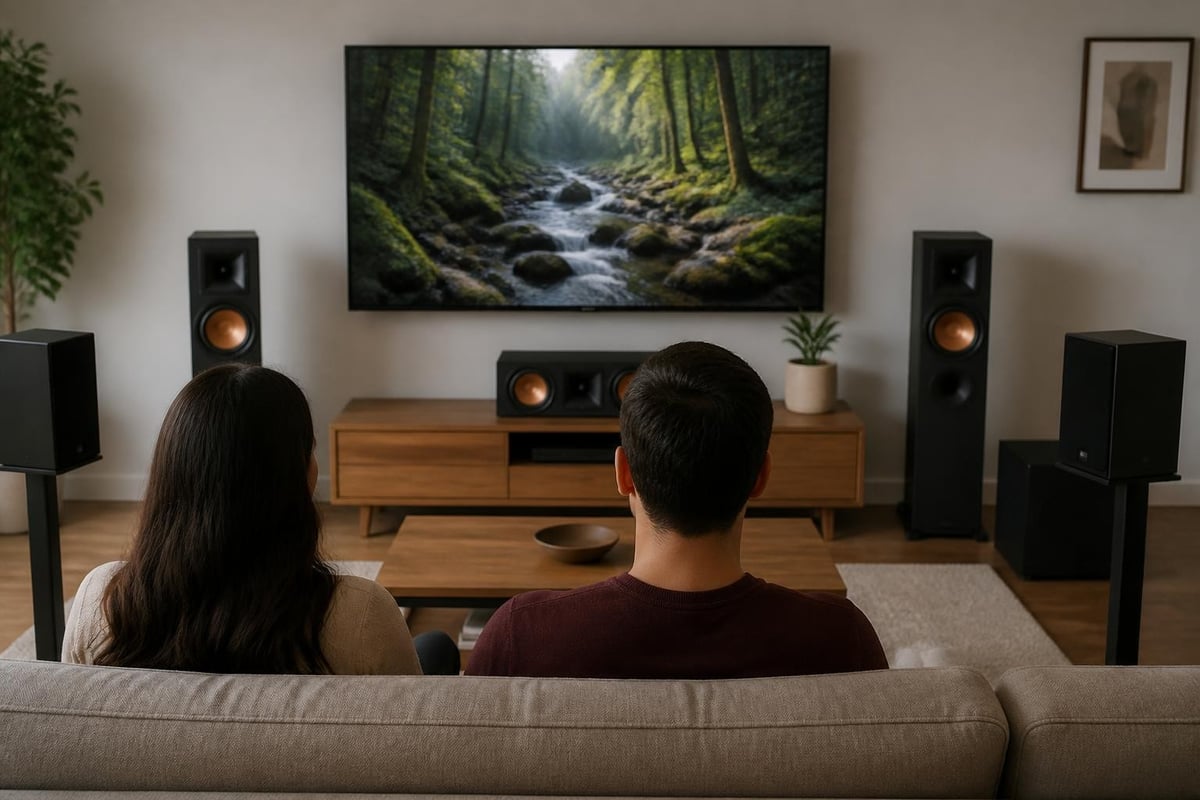
Speaker Placement for Optimal Performance
Proper positioning makes the difference between adequate sound and truly immersive audio. The speaker placement guidelines for a 5.1 system follow specific geometric principles that maximize the psychoacoustic effect.
Front Speaker Array
Your center channel should sit directly above or below your display at ear level when seated. This speaker handles roughly 60% of movie dialogue, making its positioning critical for clarity. Angle it slightly upward or downward to aim directly at the primary listening position.
Front left and right speakers form a 22-30 degree angle from your main seating position. Place them at equal distances from the center speaker, creating a symmetrical arc. Height should match the center channel when possible, though slight variations can be compensated through calibration.
| Speaker Position | Distance from Listener | Angle from Center | Height Recommendation |
|---|---|---|---|
| Center Channel | 8-12 feet | 0° | Ear level ± 2 feet |
| Front Left/Right | 8-12 feet | 22-30° | Ear level ± 2 feet |
| Surround Left/Right | 6-10 feet | 90-110° | 2 feet above ear level |
| Subwoofer | Variable | N/A | Floor level |
Surround Speaker Configuration
Position surround speakers to the sides or slightly behind your seating area. The ideal placement creates a 90-110 degree angle from the center viewing position. Mount these speakers approximately two feet above ear level to enhance the enveloping effect without localizing effects to specific speakers.
Many installers make the mistake of placing surrounds directly behind the listening position. This configuration works for 7.1 systems but compromises the intended soundfield for a bose 5.1 surround sound system. Side placement provides better spatial awareness and more convincing ambient effects.
Room Acoustics and Environmental Considerations
Your room itself functions as a component of the audio system. Hard surfaces reflect sound waves, creating echoes and standing waves that muddy clarity. Soft materials absorb energy, particularly at higher frequencies, which can deaden the soundstage.
The optimal home cinema room balances reflection and absorption strategically. First reflection points, where sound bounces off walls between speakers and listeners, benefit from acoustic treatment. These typically occur on side walls at the midpoint between front speakers and the seating position.
Ceiling height impacts bass response significantly. Standard eight-foot ceilings create strong room modes at specific frequencies, causing some bass notes to boom while others disappear. Taller ceilings generally provide smoother low-frequency response, though proper subwoofer placement matters more than ceiling height alone.
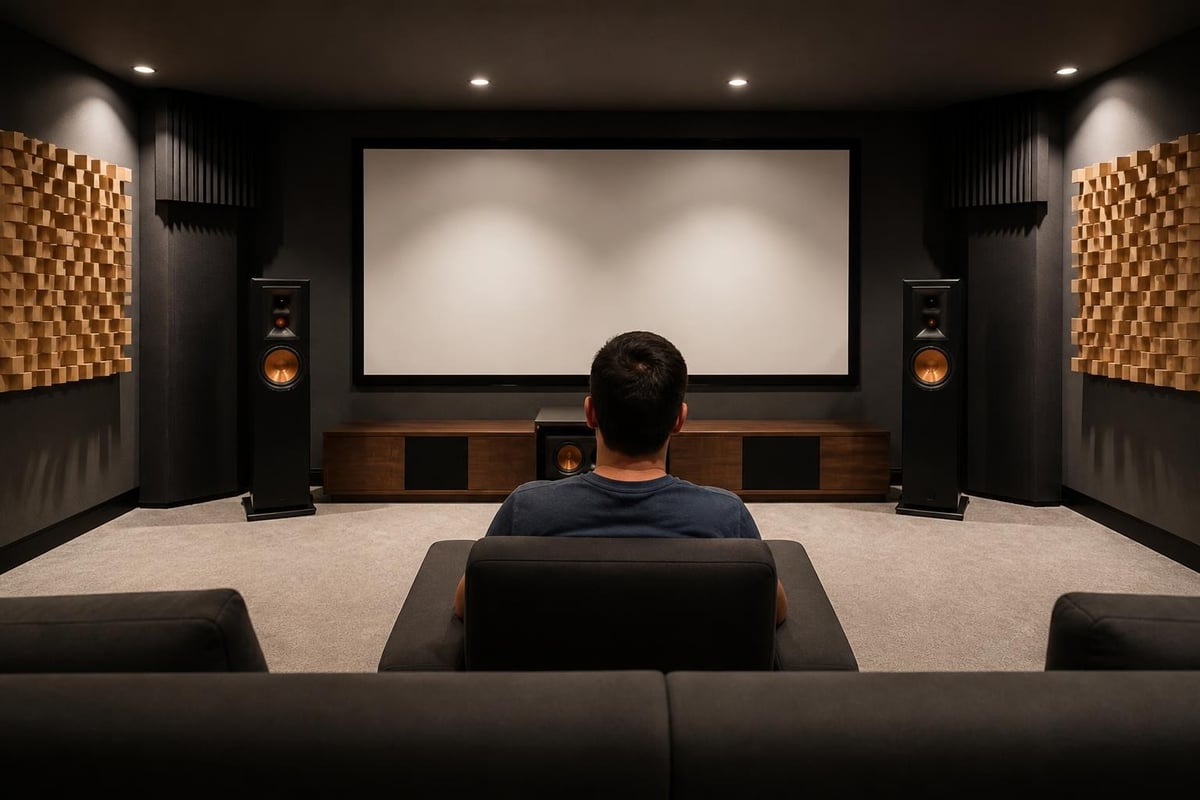
Subwoofer Placement Strategy
Finding the optimal subwoofer location requires experimentation. The "subwoofer crawl" technique provides the most reliable results: place the subwoofer in your primary listening position, then crawl around the room's perimeter while bass-heavy content plays. Where you hear the smoothest, most powerful bass is where the subwoofer should go.
Corner placement maximizes output by leveraging boundary reinforcement but often creates uneven response with exaggerated peaks at certain frequencies. Midwall positions typically provide smoother response but with reduced maximum output. Some installers use two smaller subwoofers in different locations to smooth out room modes more effectively than a single larger unit.
Calibration and Fine-Tuning
Modern bose 5.1 surround sound system packages include sophisticated calibration tools that analyze your room's acoustic signature. The ADAPTiQ system uses a specialized headset with microphones to measure response at multiple listening positions, then creates custom equalization curves that compensate for room-induced colorations.
This automated process handles complex tasks like:
- Level matching between all six channels
- Distance compensation for asymmetric speaker placement
- Frequency response correction for room resonances
- Crossover optimization between speakers and subwoofer
- Dynamic range adjustments for different content types
Run calibration after initial setup, then again if you move speakers or make significant room changes. The Dolby setup guide provides additional optimization tips that complement Bose-specific calibration.
Manual Adjustments Worth Making
While automated calibration handles the heavy lifting, some manual refinements improve the final result. Subwoofer phase adjustment can strengthen or weaken bass response at the listening position. If bass sounds thin after calibration, try inverting the subwoofer's phase (usually a 0°/180° switch on the back panel).
Center channel level often benefits from a slight boost beyond calibration settings. Movies mix dialogue conservatively to ensure intelligibility on less capable systems. Increasing the center channel by 2-3 dB makes dialogue pop without sounding unnatural.
Integration with Modern Source Components
Today's bose 5.1 surround sound system connects to multiple source devices through an AV receiver or processor. HDMI has become the standard connection, carrying both ultra-high-definition video and high-resolution audio through a single cable.
Ensure your receiver supports current HDMI standards. The HDMI 2.1 specification enables features like:
- 8K video passthrough at 60Hz
- 4K video at 120Hz for gaming
- Enhanced audio return channel (eARC) for lossless surround formats
- Variable refresh rate for smoother gaming
- Auto low latency mode for reduced input lag
| Connection Type | Maximum Audio Quality | Advantages | Limitations |
|---|---|---|---|
| HDMI eARC | Dolby TrueHD, DTS-HD MA | Single cable, lossless audio | Requires compatible TV and receiver |
| HDMI ARC | Dolby Digital Plus | Simplified connections | Compressed audio only |
| Optical (TOSLINK) | Dolby Digital 5.1 | Widely compatible | Limited to compressed formats |
| Analog 5.1 | Uncompressed stereo per channel | Universal compatibility | Six cables required, no processing |
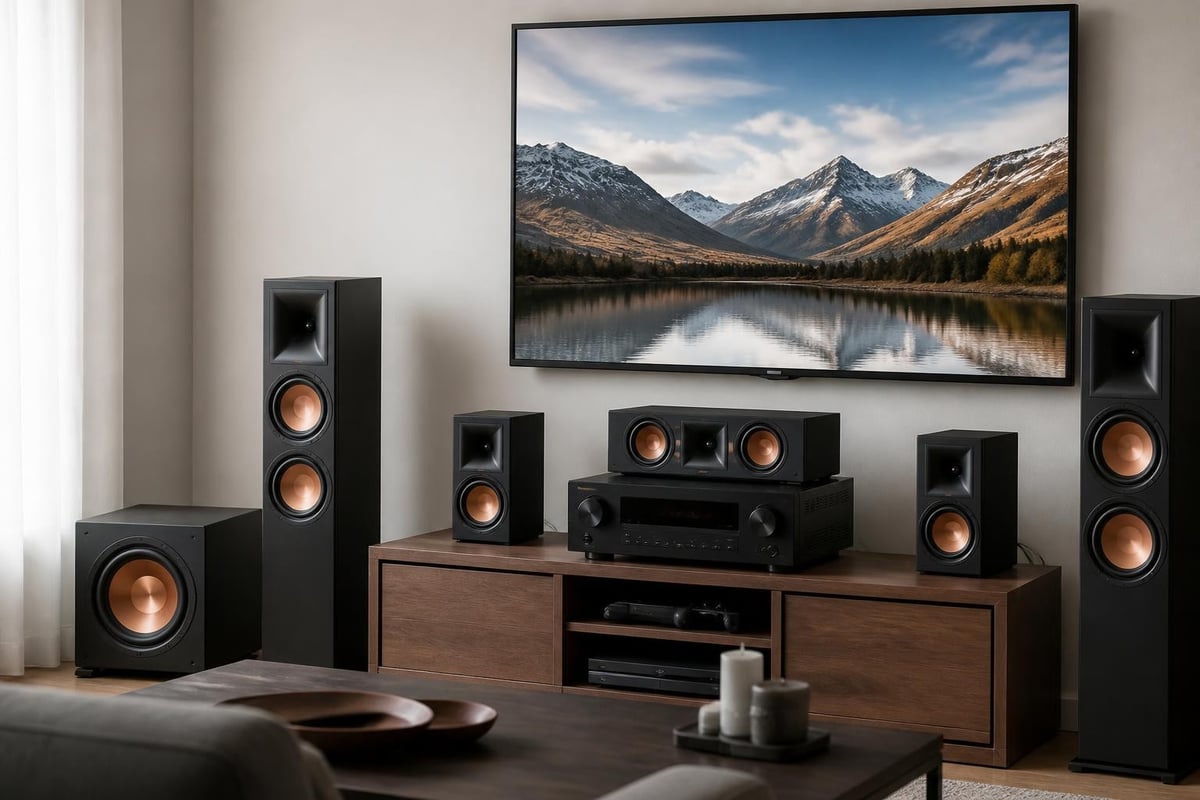
Comparing Soundbars to Discrete Systems
The market offers numerous soundbar alternatives that promise 5.1 performance from a simplified form factor. These systems use psychoacoustic tricks and digital signal processing to create the illusion of discrete surround speakers from a limited number of drivers.
Premium soundbars with wireless rear speakers come closest to matching discrete systems. Models like the Majority Bowfell Halo Atmos demonstrate how far soundbar technology has advanced, though they still compromise on soundstage width and precise imaging compared to properly positioned discrete speakers.
For serious home cinema applications, discrete speakers remain superior. A bose 5.1 surround sound system with separate speakers creates more convincing spatial effects because sound actually originates from the correct locations rather than being virtualized. This authentic directionality enhances immersion in ways that psychoacoustic processing cannot fully replicate.
For those committed to exceptional audio quality, working with experienced installers who specialize in Home cinema room conversions ensures your system achieves its full potential. Professional installation accounts for room-specific challenges and optimizes every element for cohesive performance.
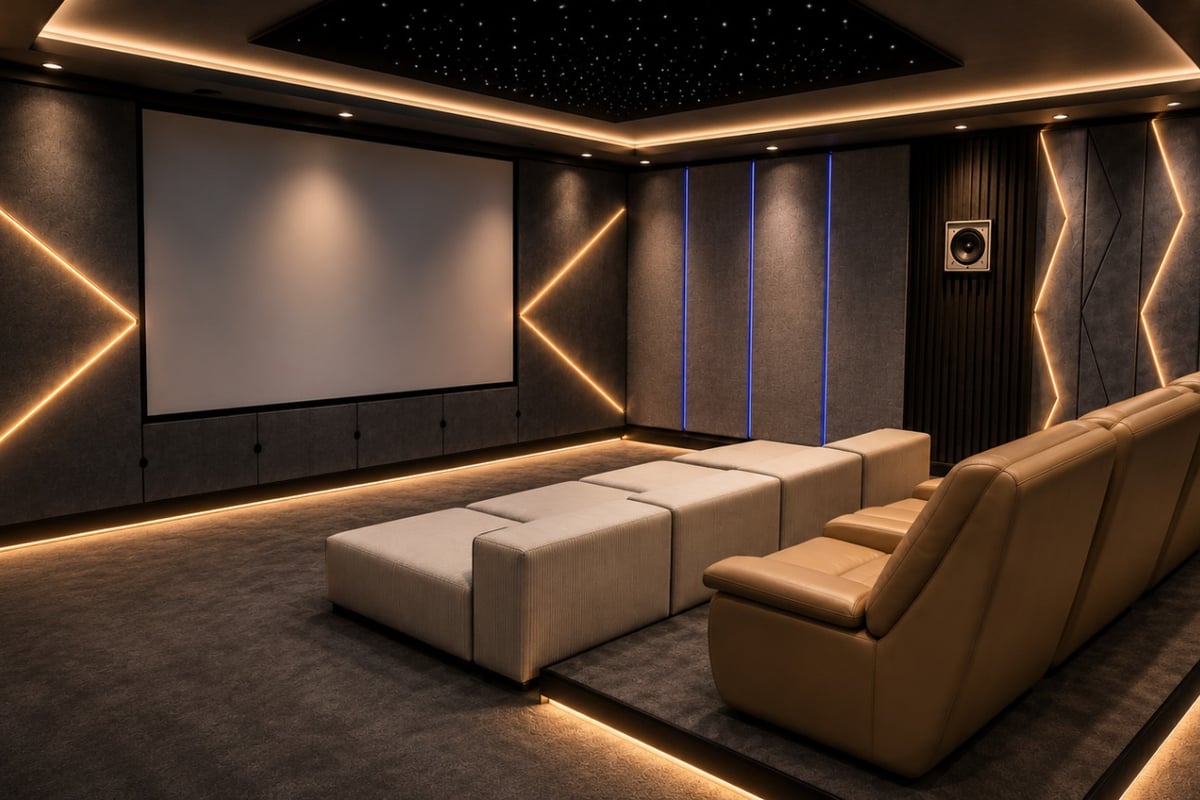
Wireless vs. Wired Rear Speakers
Cable management presents one of the biggest practical challenges in 5.1 installations. Running speaker wire from front-mounted equipment to rear speakers requires either exposed cables, wall fishing, or under-floor routing. Each approach has trade-offs in cost, aesthetics, and installation difficulty.
Bose offers wireless rear speaker options that eliminate cable runs for surround channels. These systems transmit audio digitally from the main unit to powered rear speakers, leaving only power cables to manage. The wireless approach works beautifully in retrofit installations where accessing wall cavities is impractical.
Potential Wireless Limitations
Wireless convenience comes with considerations. Battery-powered wireless speakers require regular charging, which may interrupt extended viewing sessions. AC-powered wireless speakers still need access to electrical outlets, which may not exist in optimal speaker locations.
Latency between wireless transmission and actual sound output can create synchronization issues. Quality wireless systems maintain sub-10-millisecond latency, imperceptible in practice, but budget implementations may introduce audible delays that destroy immersion.
Content Considerations and Format Support
Your bose 5.1 surround sound system performs best with content specifically mixed for surround sound. Blu-ray discs and 4K UHD discs carry lossless audio formats like Dolby TrueHD and DTS-HD Master Audio that fully utilize discrete channel capabilities.
Streaming services have improved audio offerings significantly. Netflix, Apple TV+, Disney+, and Amazon Prime Video deliver Dolby Digital Plus 5.1 on most original content. While compressed compared to disc-based formats, streaming audio quality has reached a level where most listeners cannot distinguish differences in properly configured systems.
Traditional broadcast television typically offers only stereo or compressed Dolby Digital. Your receiver's upmixing algorithms can extract surround information from stereo sources, though results vary by content. Music concerts and live sports benefit more from upmixing than dialogue-driven programs.
Upgrading and Future-Proofing
Home cinema technology evolves continuously. The differences between 5.1 and 7.1 systems illustrate how formats expand to enhance spatial audio, while newer object-based formats like Dolby Atmos add height channels for three-dimensional sound.
Building flexibility into your installation protects your investment. Choose an AV receiver with more channels than you currently need, allowing future speaker additions without replacing the centerpiece component. Pre-wire for potential expansion points even if you're not adding those speakers immediately.
Consider room layout changes over time. Furniture rearrangement, display upgrades, or seating modifications all impact optimal speaker positioning. Mounting hardware that allows angle and height adjustment simplifies re-optimization when your room evolves.
Budget Allocation Strategies
Investing in a bose 5.1 surround sound system requires balancing immediate needs against long-term goals. Industry professionals typically recommend allocating your budget as follows:
- 40% on speakers (the most audible component)
- 30% on AV receiver (enables current and future formats)
- 15% on subwoofer (foundation for impactful audio)
- 10% on cables and accessories (quality without excess)
- 5% on acoustic treatment (often overlooked, always valuable)
This allocation assumes DIY installation. Professional installation typically adds 25-40% to total system cost but delivers optimized results that maximize every component's potential. The expertise in connecting surround sound to modern displays alone justifies professional involvement for complex installations.
Multi-Room Audio Expansion
Many homeowners start with a dedicated home cinema room then expand to whole-home audio. A bose 5.1 surround sound system can anchor a larger multi-room installation where the same receiver drives secondary zones with distributed audio.
Zone 2 and Zone 3 outputs on modern receivers send different sources to other rooms simultaneously. You might watch a movie with full surround in the main theater while family members stream music in the kitchen or play games with TV audio in a bedroom.
Network-based multi-room systems offer more flexibility than traditional zone outputs. These systems stream audio over your home network, allowing independent source selection and volume control in each room via smartphone apps. Integration with voice assistants enables hands-free control throughout the home.
Maintenance and Long-Term Care
Quality speaker systems require minimal maintenance but benefit from periodic attention. Dust accumulation on speaker grilles reduces high-frequency output over time. Gentle vacuuming with a soft brush attachment every few months maintains optimal performance.
Connection integrity matters more than many realize. Oxidation on speaker terminals and cable connections increases resistance, reducing dynamic range and detail. Disconnecting and reconnecting speaker cables annually scrapes away oxidation, restoring clean metal-to-metal contact.
Receiver firmware updates address bugs and sometimes add new features or format support. Check manufacturer websites quarterly for updates, or enable automatic update notifications if available. These updates ensure your system maintains compatibility with evolving content formats and connected devices.
A properly configured bose 5.1 surround sound system delivers an immersive home cinema experience that transforms how you enjoy entertainment, combining precise engineering with thoughtful room integration to create truly cinematic audio. Whether you're starting fresh with a dedicated theater space or optimizing an existing living room setup, the principles outlined here ensure exceptional results. For those seeking expert guidance through every phase from planning to calibration, ANR media specializes in custom home cinema installations that maximize your system's potential while seamlessly integrating into your lifestyle and space.