

A 2.1 surround sound system represents the foundation of quality home audio, offering a significant upgrade from standard television speakers without the complexity and expense of multi-channel configurations. This setup consists of two main speakers (left and right) plus a dedicated subwoofer for low-frequency effects, creating a balanced soundstage that brings movies, music, and gaming to life. For homeowners seeking to enhance their entertainment experience, understanding the components, setup, and optimization of a 2.1 surround sound system provides the knowledge needed to make informed decisions about audio investments.
Understanding the 2.1 Configuration
The numerical designation "2.1" describes the speaker arrangement in precise terms. The first number indicates the quantity of full-range speakers, while the decimal number represents the subwoofer count. This straightforward configuration delivers stereo imaging through left and right channels while the subwoofer handles bass frequencies below 80-120 Hz.
Component Breakdown
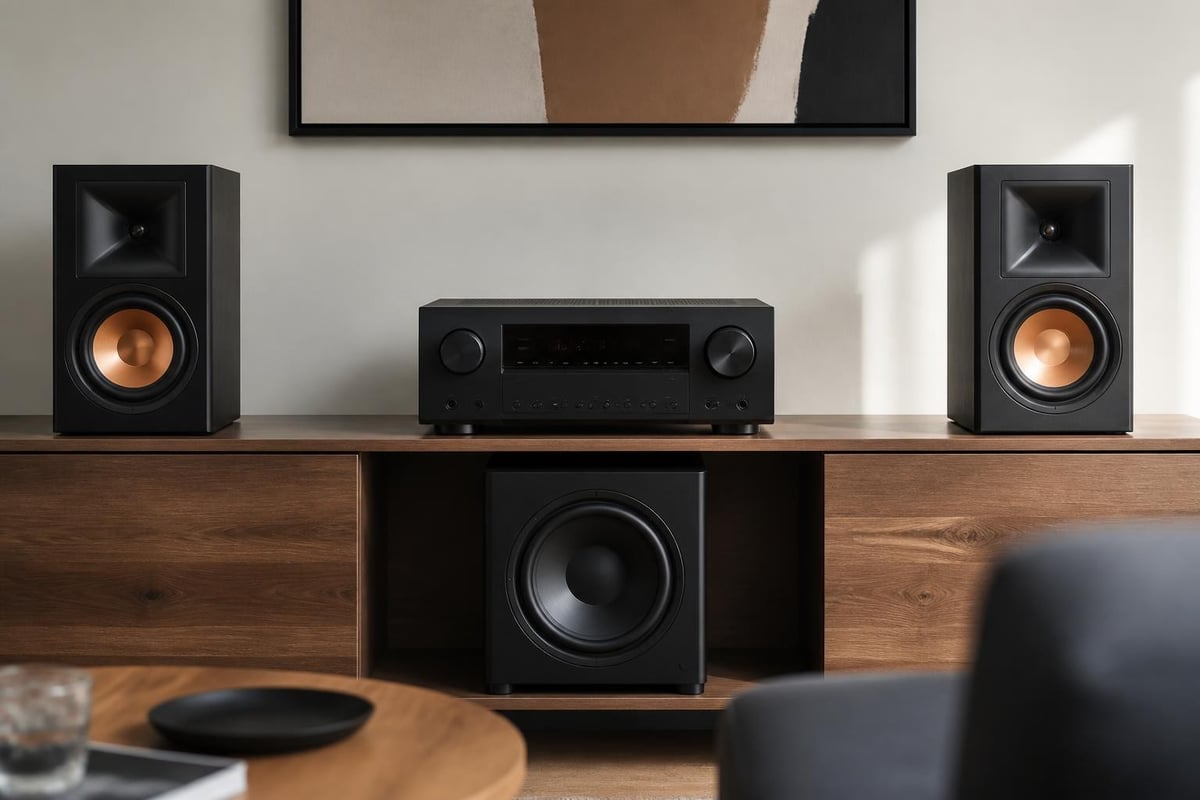
Each element in a 2.1 surround sound system serves a specific purpose in audio reproduction:
- Left and right speakers: Handle mid-range and high frequencies, creating the stereo field
- Subwoofer: Reproduces low-frequency effects and bass content
- Amplifier or receiver: Powers the speakers and manages audio signals
- Source components: Blu-ray players, streaming devices, or gaming consoles
The division of labor between components allows each to specialize in its frequency range, resulting in clearer dialogue, more detailed effects, and deeper bass than full-range speakers attempting to reproduce the entire spectrum.
Advantages Over Other Configurations
A 2.1 surround sound system offers distinct benefits that make it the preferred choice for specific environments and user requirements. Space efficiency stands as a primary advantage, particularly in apartments, smaller living rooms, or bedrooms where mounting multiple surround speakers proves impractical.
Budget considerations also favor the 2.1 configuration. With fewer speakers to purchase, homeowners can allocate more resources toward higher-quality components rather than spreading budgets across five or seven speakers. This cost-effective approach makes premium audio accessible to enthusiasts who prioritize sound quality over channel count.
| Configuration | Speaker Count | Space Required | Relative Cost | Setup Complexity |
|---|---|---|---|---|
| 2.1 System | 3 units | Minimal | $ | Simple |
| 5.1 System | 6 units | Moderate | $$ | Moderate |
| 7.1 System | 8 units | Substantial | $$$ | Complex |
The simplified setup process represents another practical benefit. Running speaker wire to only two locations plus a subwoofer eliminates the cable management challenges inherent in multi-channel systems. Room acoustics also play more favorably with fewer speakers, as there are fewer reflection points and phase issues to address.
Music Reproduction Excellence
While often discussed in home cinema contexts, a 2.1 surround sound system excels at music playback. Stereo recordings were mixed for two-channel reproduction, meaning a 2.1 configuration presents music exactly as artists and engineers intended. The added subwoofer extends bass response beyond what bookshelf or tower speakers typically achieve alone, providing fuller representation of instruments like kick drums, bass guitars, and synthesizers.
Component Selection Criteria
Choosing the right components determines the ultimate performance of any 2.1 surround sound system. The process begins with matching speakers to room dimensions and acoustic properties, then selecting amplification capable of driving those speakers effectively.
Speaker Considerations
Main speakers should be selected based on several technical specifications:
- Sensitivity rating: Measured in decibels, indicating volume produced per watt of power
- Frequency response: The range of frequencies the speaker reproduces accurately
- Impedance: Electrical resistance measured in ohms, typically 4, 6, or 8 ohms
- Power handling: Maximum wattage the speaker can manage safely
Premium manufacturers design speakers specifically for cinema applications, with voicing that emphasizes clarity in the critical midrange frequencies where dialogue resides. When building a custom home cinema installation, these specialized speakers deliver performance that generic consumer models cannot match.
Subwoofer Fundamentals
The subwoofer completes the 2.1 surround sound system by reproducing frequencies below the main speakers' range. Key specifications include:
- Driver size (typically 10, 12, or 15 inches)
- Amplifier power (measured in watts RMS)
- Frequency response (how low it can reproduce bass)
- Cabinet design (sealed, ported, or passive radiator)
Larger drivers and more powerful amplification generally produce deeper, louder bass, but quality matters more than specifications alone. A well-engineered 10-inch subwoofer often outperforms a poorly designed 12-inch model. Placement flexibility also varies by design, with sealed subwoofers offering more predictable performance in various locations.
Professional Installation Considerations
While a 2.1 surround sound system appears straightforward, professional installation ensures optimal performance and longevity. Custom integration specialists understand room acoustics, proper calibration techniques, and cable management best practices that typical consumers may overlook.
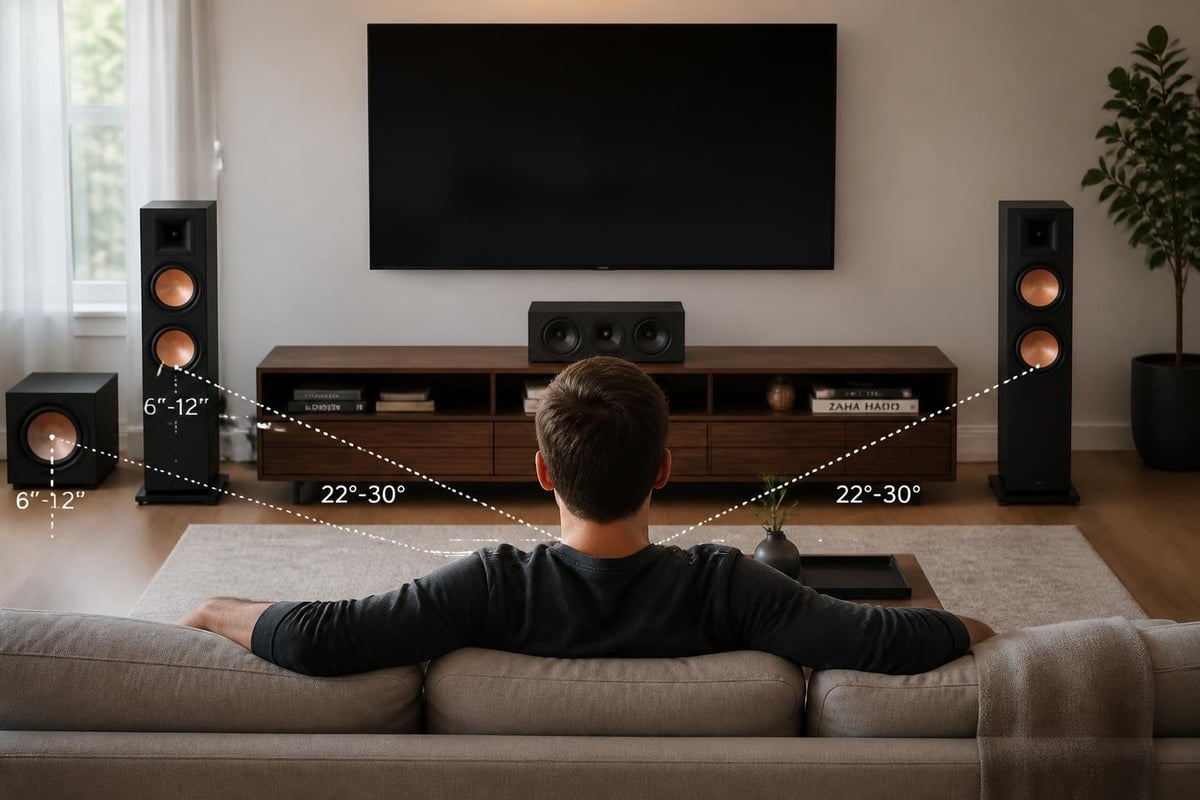
Speaker placement follows specific geometric relationships to the listening position. Professional setup guides recommend positioning main speakers at equal distances from the primary seat, angled inward to create an optimal stereo image. The listening position should form an equilateral triangle with the two speakers for ideal imaging.
Subwoofer placement proves more complex due to room modes and standing waves. Bass frequencies interact with room dimensions in ways that create peaks and nulls at different locations. Professional installers use measurement tools to identify positions that minimize these issues, ensuring even bass response throughout the listening area.
For those investing in a complete Home cinema room conversion, integrating the 2.1 surround sound system during construction allows for in-wall wiring, acoustic treatment installation, and architectural speaker mounting that would be difficult or impossible to add later. This approach delivers a clean, integrated appearance while maximizing audio performance through proper acoustic design.
Calibration and Tuning
After physical installation, calibration optimizes the 2.1 surround sound system for the specific room environment:
- Set speaker distances in the receiver based on actual measurements
- Adjust levels so all speakers play at equal volume from the listening position
- Configure crossover frequency between main speakers and subwoofer
- Fine-tune subwoofer phase to ensure proper integration
- Apply room correction if the receiver includes this feature
Many modern receivers include automatic calibration systems using microphones to measure room response. While these systems provide good starting points, manual adjustments often yield superior results when performed by experienced technicians who understand the interaction between speakers and room acoustics.
Comparing System Configurations
Understanding how a 2.1 surround sound system compares to other configurations helps determine whether it suits specific needs. The differences between 2.1, 5.1, and 7.1 systems extend beyond speaker count to encompass spatial characteristics and content compatibility.
A 5.1 configuration adds a center channel for dialogue anchoring and two surround speakers for ambient effects. This creates a more immersive experience for film content mixed in surround formats but requires additional space, wiring, and investment. For rooms where rear speaker placement proves difficult, a 2.1 surround sound system delivers superior performance compared to a poorly implemented 5.1 setup with compromised surround placement.
Content Compatibility
Modern content comes in various audio formats, and a 2.1 surround sound system handles them through downmixing. When playing 5.1 or 7.1 source material, the receiver combines channels to create a stereo presentation. Advanced receivers apply intelligent algorithms that preserve spatial cues and maintain dialogue clarity during this process.
Stereo content plays natively without conversion, while mono sources can be distributed across both speakers. Music streaming services, vinyl records, and stereo television broadcasts all benefit from the full-range presentation that a properly configured 2.1 surround sound system provides.
Optimizing Room Acoustics
The listening environment significantly impacts audio quality regardless of component quality. Hard surfaces like windows, hardwood floors, and drywall create reflections that blur imaging and reduce clarity. Strategic acoustic treatment improves performance without requiring expensive upgrades.
First reflection points represent the most critical treatment areas. These are wall and ceiling locations where sound from speakers bounces before reaching the listener. Placing absorption panels at these points reduces early reflections that interfere with direct sound, improving stereo imaging and detail retrieval.
Bass Management Strategies
Low frequencies present unique challenges in residential spaces. Room dimensions create resonances at specific frequencies, causing some bass notes to sound louder than others. Understanding these characteristics helps optimize subwoofer placement and calibration for even response.
Corner placement often maximizes subwoofer output but can exaggerate room modes. Midwall positions typically provide smoother response with less total output. Some enthusiasts use multiple subwoofers to minimize modal issues, though this extends beyond the traditional 2.1 surround sound system configuration.
Bass traps in room corners absorb low-frequency energy, smoothing response and reducing boominess. These treatments prove especially valuable in smaller rooms where bass buildup becomes problematic.
Receiver and Amplification Requirements
The amplifier or receiver powering a 2.1 surround sound system must provide adequate power while offering necessary connectivity and features. Power requirements depend on speaker sensitivity and desired playback levels, but general guidelines suggest 50-100 watts per channel for typical applications.
| Receiver Feature | Purpose | Importance for 2.1 |
|---|---|---|
| Subwoofer output | Dedicated LFE channel | Essential |
| Bass management | Crossover control | High |
| HDMI switching | Video/audio routing | High |
| Room correction | Acoustic optimization | Moderate |
| Wireless connectivity | Streaming integration | Moderate |
Modern receivers include HDMI inputs for video switching, allowing connection of multiple sources through a single interface. This centralizes control and simplifies operation while maintaining signal quality through digital transmission.
Dedicated subwoofer outputs with adjustable crossover frequencies enable proper integration between main speakers and the subwoofer. This ensures seamless handoff of bass frequencies without gaps or overlaps in the frequency response.
Upgrading From Basic Audio
Transitioning from television speakers or soundbars to a 2.1 surround sound system requires understanding the practical differences in performance and setup requirements. The improvement in clarity, dynamics, and bass extension typically exceeds expectations, revealing details in familiar content that were previously masked.
Dialogue intelligibility improves dramatically with dedicated speakers positioned at ear level. Television speakers, often downward or rearward firing, create indirect sound paths that reduce clarity. Properly positioned bookshelf or tower speakers direct sound toward the listener, improving both volume and articulation.
Bass effects gain both depth and control. Television speakers and basic soundbars cannot reproduce the lowest frequencies in film soundtracks, resulting in truncated explosions, limited musical impact, and reduced immersion. A dedicated subwoofer extends response into the 20-30 Hz range where cinematic content lives, bringing physical impact to action sequences and concert footage.
Soundbar Comparison
While soundbars offer convenience and simplified setup, comparing 2.1 soundbars to component systems reveals significant performance differences. Component systems provide superior stereo separation due to physical speaker spacing, while soundbars rely on psychoacoustic processing to simulate wider soundstages.
Upgradeability represents another advantage of component 2.1 surround sound systems. Speakers can be replaced individually as budgets allow, and the system can expand to 5.1 or beyond by adding channels. Soundbars typically function as integrated units with limited upgrade paths.
Wireless and Modern Connectivity
Contemporary 2.1 surround sound systems increasingly incorporate wireless technologies for streaming and control. Bluetooth, Wi-Fi, and proprietary wireless protocols enable connections to smartphones, tablets, and computers without physical cables.
However, wireless transmission introduces latency that can cause audio/video synchronization issues. For critical home cinema applications, wired connections remain preferable despite the convenience wireless systems offer. Streaming music during casual listening tolerates minor delays, but film dialogue must perfectly align with on-screen action.
Some manufacturers offer wireless subwoofer transmission, eliminating the need for long cable runs to optimal subwoofer positions. These systems use dedicated wireless protocols with minimal latency, though purists still prefer wired connections for ultimate reliability and performance.
Maintenance and Longevity
Quality components in a 2.1 surround sound system provide decades of service with minimal maintenance. Speaker drivers rarely fail unless subjected to excessive power or physical damage. Surrounds (the flexible material connecting the driver to the basket) may deteriorate over extended periods, but replacement kits restore performance economically.
Regular cleaning maintains appearance and prevents dust accumulation in ports and drivers:
- Vacuum grilles gently using brush attachments
- Wipe cabinets with microfiber cloths
- Inspect connections annually for corrosion
- Verify mounting security for wall or ceiling installations
Receiver components benefit from adequate ventilation to prevent heat buildup. Stacking components or placing receivers in enclosed cabinets without cooling can reduce lifespan. Maintaining clear airflow around amplification ensures reliable long-term operation.
Future Expansion Possibilities
Starting with a 2.1 surround sound system establishes an audio foundation that can grow with changing needs and budgets. Adding a center channel creates a 3.1 configuration, improving dialogue clarity and center imaging for film content. This proves particularly valuable in wider rooms where listeners sit off-axis to the main speakers.
Expanding to 5.1 by incorporating surround speakers completes a full home theater system. The existing main speakers and subwoofer remain in place, making this a cost-effective upgrade path. Receivers purchased initially should include sufficient channels to support planned expansion, even if all outputs aren't immediately used.
Understanding the progression from 2.1 to more complex configurations helps make strategic initial purchases. Selecting quality main speakers and a capable subwoofer ensures these components remain relevant even as channels are added around them.
A properly configured 2.1 surround sound system delivers exceptional audio quality for home cinema applications, balancing performance, cost, and simplicity in ways that more complex configurations sometimes cannot match. Whether you're planning a dedicated theater room or enhancing your existing living space, ANR media brings specialized expertise in custom home cinema and audio video solutions, from component selection and acoustic optimization to complete room conversions that transform how you experience entertainment at home.