

Onkyo has established itself as a cornerstone brand in the home cinema and audio industry, delivering sophisticated AV receivers and audio solutions for over seven decades. The Japanese manufacturer's commitment to high-fidelity sound reproduction and innovative technology has made it a preferred choice for custom home cinema installations worldwide. As home entertainment systems become increasingly complex, understanding what Onkyo brings to the modern audio-visual landscape helps homeowners and installers make informed decisions about building exceptional theater experiences.
The Onkyo Heritage and Modern Renaissance
Founded in 1946 in Osaka, Japan, Onkyo Corporation built its reputation on precision engineering and acoustic excellence. The company name translates to "audio" or "sound" in Japanese, reflecting its singular focus on delivering authentic audio reproduction. Through decades of innovation, Onkyo developed proprietary technologies that addressed the unique challenges of home theater sound, from room acoustics to digital signal processing.
The brand experienced significant transformation in recent years, culminating in a strategic relaunch that repositioned Onkyo for the contemporary market. This rebirth maintained the engineering philosophy that made the brand legendary while adapting to modern consumer expectations around connectivity, streaming, and ecosystem integration. The renewed focus on core competencies has strengthened Onkyo's position in the premium home cinema segment.
What Sets Onkyo Apart in AV Technology
Onkyo's differentiation stems from several engineering priorities that directly impact home cinema performance:
- Wide Range Amplification Technology (WRAT): Minimizes phase distortion across the full frequency spectrum for cleaner, more accurate sound reproduction
- Dynamic Audio Amplification: Adapts power delivery based on real-time signal analysis, maximizing headroom during demanding passages
- AccuEQ Room Calibration: Advanced acoustic measurement and correction technology that optimizes speaker output for specific room characteristics
- Hi-Res Audio Certification: Support for high-resolution audio formats certified by the Japan Audio Society, preserving studio-quality detail
- THX Certification: Select models meet rigorous THX standards for cinema-reference performance
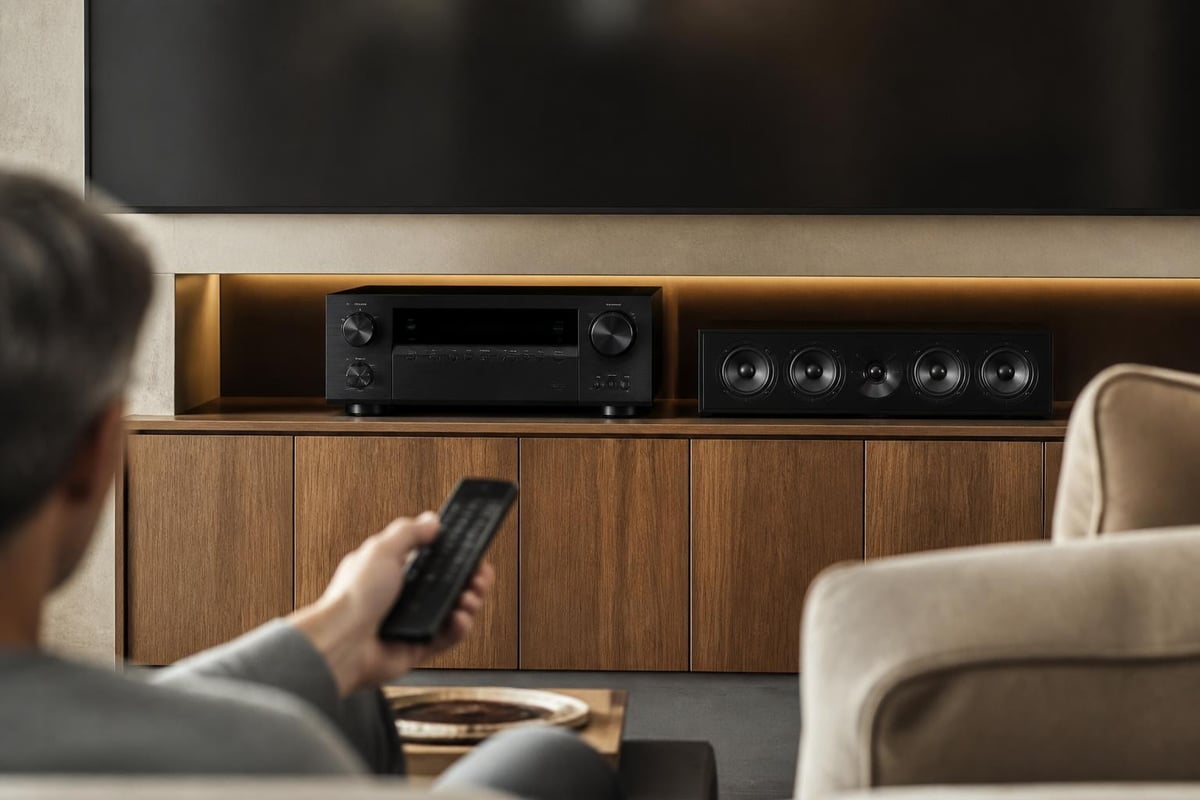
AV Receiver Technology for Custom Installations
Modern Onkyo AV receivers serve as the central hub for sophisticated home cinema systems, managing video routing, audio processing, and smart home integration simultaneously. The brand's receiver lineup addresses different installation scales, from dedicated theater rooms to whole-home multiroom audio systems.
Channel Configuration and Power Delivery
Onkyo offers receivers in configurations from 5.2 channels up to 11.2 channels, supporting immersive audio formats including Dolby Atmos and DTS:X. Power output specifications vary by model, with flagship units delivering 170 watts per channel into 6 ohms. This substantial power reserve ensures dynamic range capability essential for reproducing film soundtracks at reference levels without compression or distortion.
| Receiver Class | Channel Config | Power Output | Typical Application |
|---|---|---|---|
| Entry Premium | 5.2 / 7.2 | 80-100W/ch | Small to medium rooms |
| Mid-Range | 7.2 / 9.2 | 120-140W/ch | Medium to large dedicated spaces |
| Flagship | 9.2 / 11.2 | 150-170W/ch | Reference theaters, large venues |
The brand's amplifier topology emphasizes low-impedance drive capability, maintaining stable performance with demanding speaker loads. This characteristic proves particularly valuable in custom installations where premium speakers with complex crossover networks require substantial current delivery.
Video Processing and 8K Readiness
Current Onkyo receivers incorporate HDMI 2.1 specifications supporting 8K/60Hz and 4K/120Hz video pass-through. These capabilities future-proof installations as 8K content delivery expands and gaming consoles leverage higher frame rates. High Dynamic Range (HDR) format support includes HDR10, HDR10+, Dolby Vision, and HLG, ensuring compatibility across content sources.
The video section handles bandwidth up to 40Gbps through select HDMI inputs, accommodating uncompressed high-resolution signals. Video upscaling technology improves lower-resolution sources, though professional installations typically bypass receiver processing in favor of dedicated video processors for ultimate image quality.
Immersive Audio Formats and Processing
Onkyo receivers decode and render object-based audio formats that create three-dimensional soundscapes beyond traditional channel-based surround sound. Dolby Atmos and DTS:X processing allows sound designers to position individual audio elements anywhere in the listening space, including overhead zones.
Height Channel Implementation
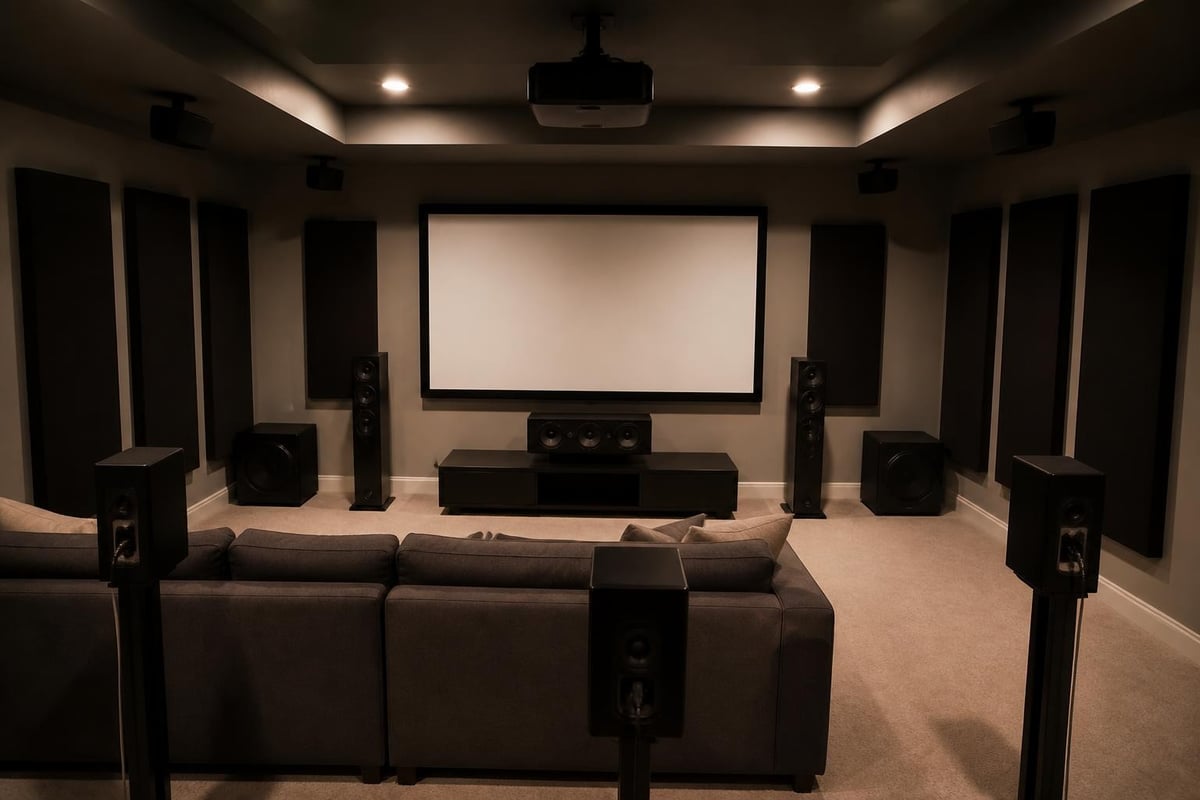
Achieving the full impact of immersive audio requires height speakers positioned above the listening area. Onkyo receivers support multiple height channel configurations:
- Ceiling-mounted speakers: Four to six in-ceiling speakers positioned strategically above seating
- Front height speakers: Wall-mounted units placed above the main left/right speakers
- Dolby Atmos-enabled speakers: Upward-firing drivers that reflect sound off the ceiling
- Combination approaches: Mixing installation methods based on room constraints
The AccuEQ calibration system measures each speaker's output and applies individual equalization, delay, and level adjustments. This automated room correction compensates for acoustic anomalies that would otherwise compromise sonic accuracy. Professional calibrators often use Onkyo's calibration as a starting point before applying manual refinements based on measurement microphones and analysis software.
Network Streaming and Multiroom Capabilities
Modern home cinema extends beyond the dedicated theater room into whole-home entertainment systems. Onkyo receivers integrate network streaming capabilities that distribute audio throughout the living space while maintaining centralized control.
Supported Streaming Protocols
- Chromecast built-in: Direct casting from compatible apps without additional hardware
- AirPlay 2: Seamless integration with Apple devices and multi-speaker synchronization
- DTS Play-Fi: Platform-agnostic multiroom audio with hi-res streaming capability
- Spotify Connect, Tidal, Deezer: Direct service integration with native app control
- DLNA/UPnP: Network streaming from local media servers and NAS devices
The combination of multiple streaming protocols provides installation flexibility while ensuring client device compatibility. A household with mixed Apple and Android devices benefits from supporting both AirPlay 2 and Chromecast simultaneously, eliminating ecosystem friction.
Multiroom Audio Architecture
Onkyo's multiroom implementation allows a single receiver to power a second zone while the main theater operates independently. More extensive systems utilize multiple networked receivers communicating through the home network. DTS Play-Fi enables synchronized playback across Onkyo and third-party compatible devices, creating whole-home audio without proprietary cabling.
Zone 2 and Zone 3 outputs provide analog and digital connections for remote rooms. These zones can access different sources simultaneously, allowing one user to watch a film in the main theater while another streams music in the living area. Professional installations often combine Onkyo receivers with dedicated amplifiers for remote zones, maximizing power efficiency and flexibility.
Integration with Custom Home Cinema Rooms
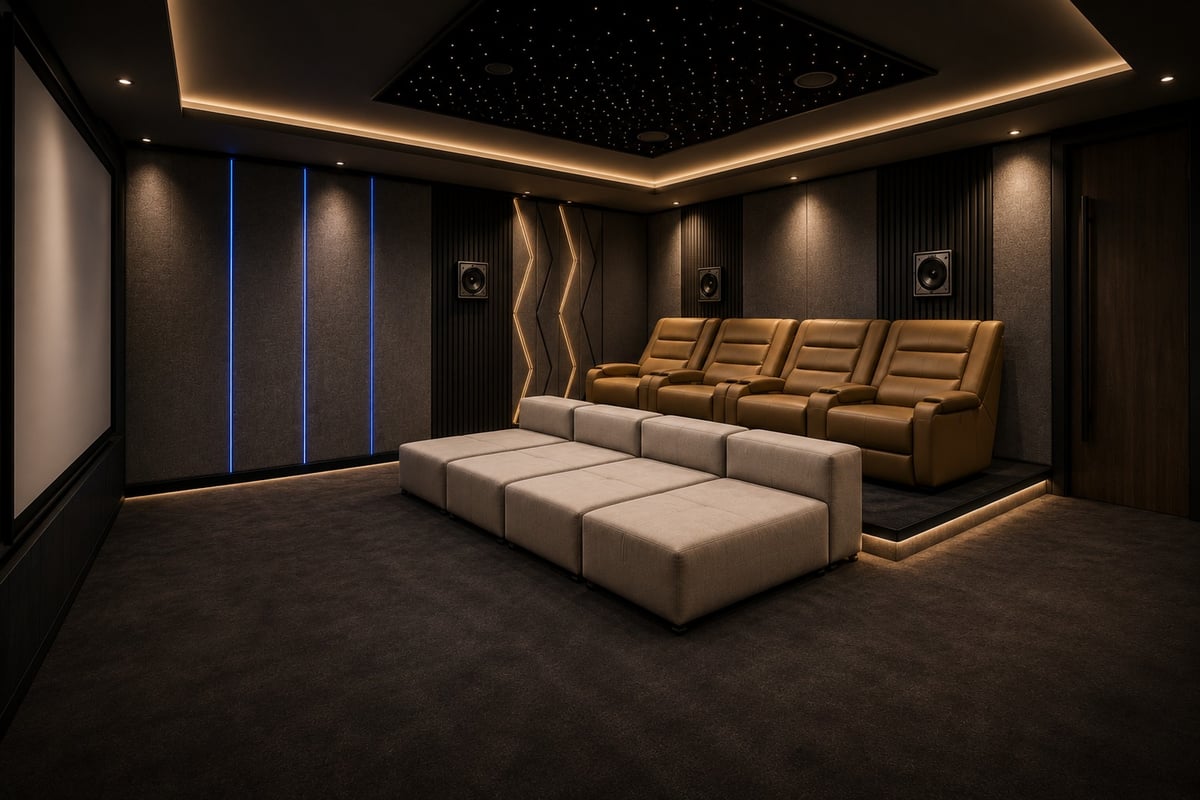
When designing a dedicated home cinema space, the AV receiver selection significantly impacts overall system performance and user experience. Onkyo receivers pair effectively with premium speaker systems designed for cinema reproduction, providing the power and processing capability these transducers require.
For those investing in a Home cinema room, matching the receiver's capabilities to the acoustic environment and speaker selection ensures optimal performance. A properly specified Onkyo receiver forms the foundation of systems ranging from modest dedicated spaces to reference-grade theaters, scaling appropriately based on room volume, speaker efficiency, and desired SPL capability.
Control System Integration
Professional home cinema installations typically incorporate control systems from manufacturers like Control4, Crestron, or Savant. Onkyo receivers support IP control protocols and RS-232 serial communication, enabling deep integration with these platforms. Installers can program custom interfaces that simplify operation for clients unfamiliar with AV equipment complexity.
Network control also enables remote diagnostics and firmware updates. Installers can verify receiver status, adjust settings, and troubleshoot issues without physical site visits, reducing service costs and improving response times. This capability proves particularly valuable for clients with multiple properties or remote locations.
Technical Specifications That Matter
Understanding which specifications directly impact home cinema performance helps separate marketing claims from meaningful technical advantages. Onkyo publishes detailed specification sheets for each receiver model, but certain parameters deserve particular attention.
Signal-to-Noise Ratio and THD
Signal-to-noise ratio (SNR) measurements above 100dB indicate excellent background noise performance, essential for reproducing quiet film passages without audible hiss. Total Harmonic Distortion (THD) below 0.08% at rated power demonstrates clean amplification that preserves source fidelity. These measurements appear in technical documentation alongside implementation details for advanced features.
| Specification | Excellent | Good | Acceptable |
|---|---|---|---|
| SNR (dB) | >110 | 100-110 | 90-100 |
| THD (%) | <0.05 | 0.05-0.08 | 0.08-0.1 |
| Frequency Response | 10Hz-100kHz ±3dB | 20Hz-50kHz ±3dB | 20Hz-20kHz ±3dB |
Frequency response extension beyond the audible range (20Hz to 20kHz) indicates generous design margins that prevent phase shift and ringing within the audible spectrum. While humans cannot hear 50kHz signals, amplifier designs with extended bandwidth typically exhibit better transient response and lower distortion in the range we do perceive.
HDMI Input Quantity and Features
The number and capability of HDMI inputs determines source device connectivity without external switching. Modern systems commonly connect gaming consoles, media streamers, Blu-ray players, and set-top boxes simultaneously. Onkyo receivers typically provide 6-8 HDMI inputs, with 1-2 supporting full HDMI 2.1 specifications for 8K and enhanced gaming features.
Enhanced Audio Return Channel (eARC) support through the HDMI ARC output enables lossless audio formats from smart TV apps to pass back to the receiver for processing. This configuration simplifies system operation while maintaining audio quality when accessing streaming services through television interfaces.
Market Position and Industry Perspective
The home audio market in 2026 features intense competition among established brands and emerging manufacturers. Onkyo occupies the premium mid-range segment, positioned between mass-market brands and ultra-premium specialist manufacturers. This positioning reflects the brand's engineering heritage while acknowledging market realities around pricing and feature expectations.
Industry analysts note that Onkyo’s market reentry brings both opportunities and challenges regarding brand identity and product differentiation. The competitive landscape requires clear value propositions that resonate with both professional installers and discerning consumers. Onkyo's strength lies in proven acoustic engineering combined with modern connectivity features that address contemporary use cases.
Professional Installation Considerations
Custom integrators evaluate AV equipment based on reliability, support infrastructure, and client satisfaction. Onkyo has built strong relationships with professional installation channels through dedicated support programs, technical training, and favorable terms. Warranty coverage, replacement part availability, and responsive technical support influence brand selection as much as product specifications.
The brand's product announcements and updates provide installers with roadmap visibility for planning long-term projects. Understanding upcoming features and discontinuation timelines helps designers specify systems that remain current throughout extended construction schedules.
Firmware Updates and Ongoing Development
Modern AV receivers function as sophisticated computers running complex software that manages audio processing, video routing, networking, and user interfaces simultaneously. Onkyo releases firmware updates that add features, improve compatibility, and address discovered issues. These updates extend product lifecycle and enhance value over time.
Network-connected receivers can receive update notifications and download firmware automatically, though professional installations typically disable automatic updates in favor of controlled deployment. Installers test updates in lab environments before rolling them out to client systems, preventing unexpected behavior or compatibility issues.
Bug Fixes and Feature Additions
Recent firmware updates from Onkyo have addressed HDMI handshake issues with specific displays, improved AirPlay 2 stability, and enhanced voice control integration. These incremental improvements maintain product competitiveness as ecosystem partners update their own software and introduce new capabilities.
Feature additions through firmware demonstrate manufacturer commitment to existing customers. When Onkyo adds support for new streaming services or audio formats via software update, it validates the investment clients made in their receiver purchase years earlier.
Acoustic Technologies and Sound Quality
Beyond specifications and features, subjective sound quality determines whether a home cinema system delivers emotional engagement during film viewing. Onkyo's acoustic engineering philosophy emphasizes neutrality and accuracy rather than artificial enhancement or coloration. This approach allows premium speakers to perform as their designers intended.
Dynamic Range Preservation
Film soundtracks contain enormous dynamic range between quietest whispers and loudest explosions. Preserving this range without compression creates visceral impact during action sequences while maintaining dialogue intelligibility. Onkyo's amplifier designs provide substantial headroom above rated power, allowing transient peaks without clipping or distortion.
The brand's Dynamic Audio Amplification continuously monitors signal demands and adjusts bias current in real time. During quiet passages, the amplifier reduces standing current to minimize heat generation and power consumption. When the soundtrack demands sudden power delivery, bias increases instantly to provide clean amplification without lag or compression.
Practical Setup and Calibration
Achieving optimal performance from an Onkyo receiver requires methodical setup and calibration. While automated systems handle basic configuration, professional installations benefit from manual refinement based on measurement and critical listening.
Speaker Calibration Process
- Physical positioning: Place speakers according to reference standards (THX, Dolby, DTS recommendations)
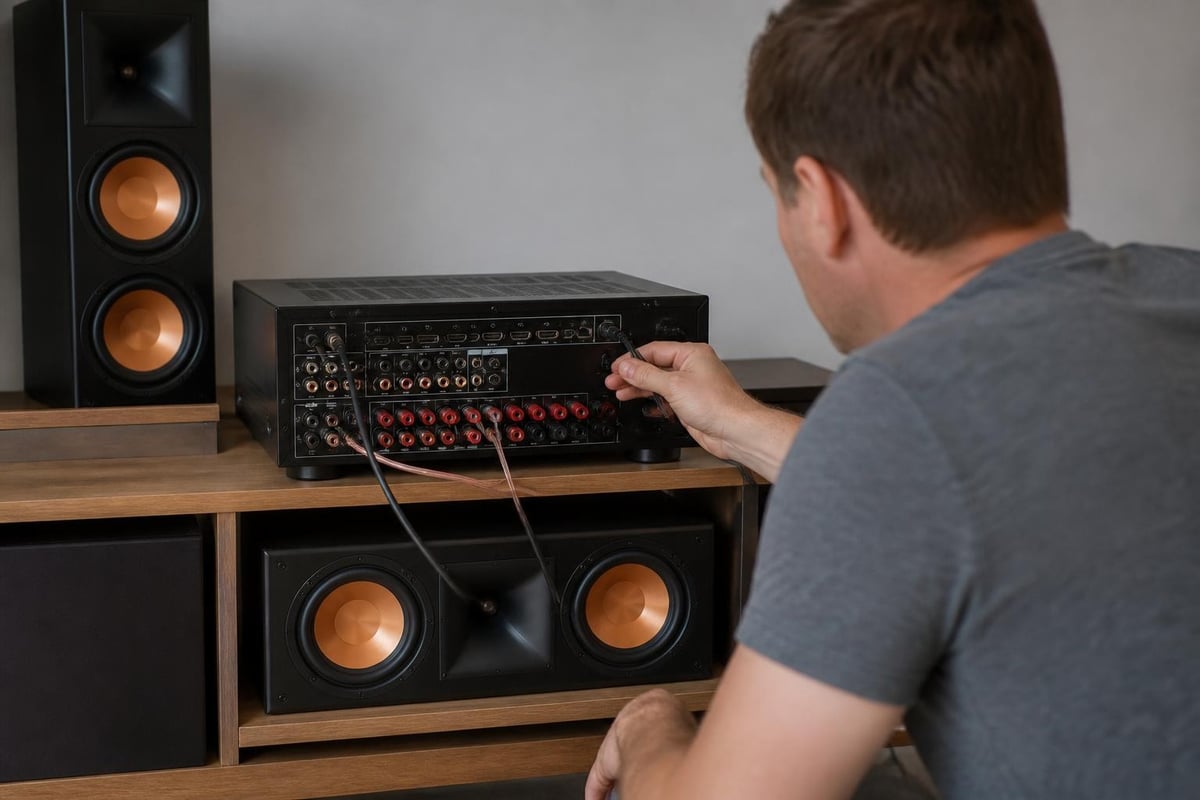
- Initial connection: Verify all speakers connect with correct polarity and impedance
- AccuEQ measurement: Run automated calibration with microphone at multiple seating positions
- Manual verification: Measure each speaker's frequency response and compare to AccuEQ results
- Subwoofer integration: Set crossover frequencies, phase alignment, and output levels
- Final listening evaluation: Play reference material and make subjective adjustments
Professional calibrators use measurement microphones and analysis software like REW (Room EQ Wizard) to verify the receiver's automated calibration results. This data-driven approach identifies issues the automated system might miss, such as room modes requiring acoustic treatment rather than electronic correction.
Source Configuration and Assignment
Modern systems connect diverse sources with varying audio capabilities. Configuring each input properly ensures the receiver applies appropriate processing:
- Blu-ray player: Set to bitstream output, allowing receiver to decode lossless audio formats
- Gaming console: Enable uncompressed PCM for lowest latency, or bitstream for Dolby Atmos in supported games
- Streaming devices: Configure for maximum quality output (Atmos/DTS:X if supported)
- Cable/satellite: Typically limited to Dolby Digital or compressed formats
Input naming, icon selection, and CEC (Consumer Electronics Control) settings create intuitive operation. Clients should power on a source and automatically switch to the correct input without manual receiver interaction.
Onkyo represents a compelling choice for custom home cinema installations that demand proven audio performance, extensive connectivity, and reliable operation. The brand's engineering heritage and modern feature set address the complex requirements of contemporary home theater systems. Whether you're planning a dedicated cinema room or a comprehensive multiroom audio solution, ANR media brings expertise in integrating Onkyo receivers with premium speakers and acoustic environments to create truly exceptional entertainment experiences. Contact us to discuss how we can design a custom system that meets your specific requirements and exceeds your expectations.