

Building an exceptional home theater experience requires careful component selection, precise calibration, and an understanding of how modern AV technology works together. Onkyo home theater systems have earned recognition among enthusiasts and custom installers for delivering robust amplification, advanced processing, and flexible configuration options. Whether you're designing a dedicated cinema room or upgrading a living space, understanding how to maximize an Onkyo-based system ensures you'll achieve the immersive audio performance that transforms movie nights, gaming sessions, and music listening into truly memorable experiences.
Understanding Onkyo Home Theater Architecture
An onkyo home theater system centers on the AV receiver, which serves as the command hub for all audio and video signals. These receivers decode surround sound formats, amplify channels, route video, and manage room correction. Modern Onkyo receivers support Dolby Atmos, DTS:X, and other object-based audio formats that create three-dimensional soundscapes.
The architecture typically follows this signal flow:
- Source components (Blu-ray player, streaming device, gaming console) connect to the receiver via HDMI
- The receiver decodes digital audio streams and processes them for the configured speaker layout
- Internal amplifiers drive each speaker channel with the appropriate signal
- Video passes through to the display with full HDR and 4K/8K support
- Room calibration systems measure and compensate for acoustic characteristics
Receiver Specifications That Matter
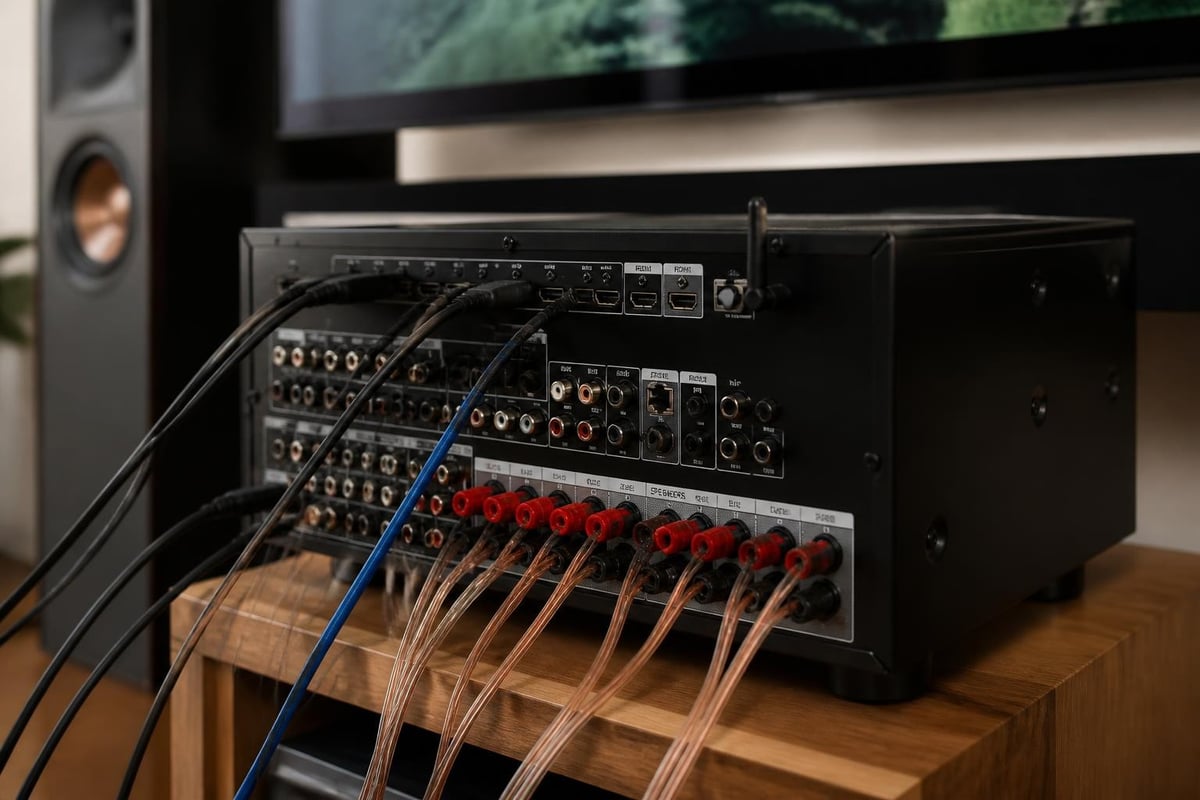
When evaluating an onkyo home theater receiver, certain specifications directly impact performance. Power output, measured in watts per channel, determines how effectively the receiver drives speakers across different impedances. The TX-RZ50 exemplifies current flagship features with 11.2-channel processing and robust amplification.
| Specification | Impact on Performance | Typical Range |
|---|---|---|
| Power per channel | Volume headroom, dynamics | 80-150W @ 8Ω |
| Channel count | Speaker configuration flexibility | 5.2 to 11.2+ |
| HDMI bandwidth | Video format support | 18-48 Gbps |
| DAC quality | Audio resolution | 24-bit/192kHz to 32-bit/384kHz |
Processing capabilities extend beyond basic decoding. Premium onkyo home theater receivers incorporate advanced DACs, digital signal processing, and streaming integration. These features ensure compatibility with high-resolution audio files, streaming services, and wireless multiroom systems.
Speaker Pairing and Configuration Strategies
Matching speakers to your onkyo home theater receiver requires attention to impedance, sensitivity, and power handling. Most Onkyo receivers perform best with speakers rated at 6-8 ohms impedance. Sensitivity ratings above 87 dB mean the speakers will play louder with less power, important for preserving headroom during dynamic movie soundtracks.
Optimal Speaker Layouts
Dolby Atmos configurations add height channels to traditional surround layouts. Following Dolby’s official setup guidelines ensures proper overhead sound placement. Common configurations include:
5.1.2 Layout (entry Atmos)
- Three front channels (left, center, right)
- Two surround channels
- One subwoofer
- Two height channels (ceiling or upfiring)
7.2.4 Layout (immersive cinema)
- Seven ear-level channels
- Two subwoofers for even bass response
- Four height channels for precise object placement
The CEDIA recommended practices provide detailed speaker placement angles and distances. For dedicated theater rooms, professional installers position speakers according to these standards, ensuring every seat receives balanced coverage.
Room size dictates practical limits. An onkyo home theater system in a 12×15-foot space performs well with 5.1.2 or 5.2.2 configurations. Larger dedicated rooms accommodate 7.2.4 or 9.2.4 layouts that deliver reference-level immersion. Custom installations benefit from in-wall and in-ceiling speakers that maintain clean aesthetics while meeting acoustic requirements.
Calibration and Room Correction Techniques
Raw speaker placement represents only half the equation. Room acoustics dramatically affect frequency response, imaging, and clarity. An onkyo home theater receiver with automatic calibration measures your room's acoustic signature and applies corrective filters.
Automatic vs. Manual Calibration
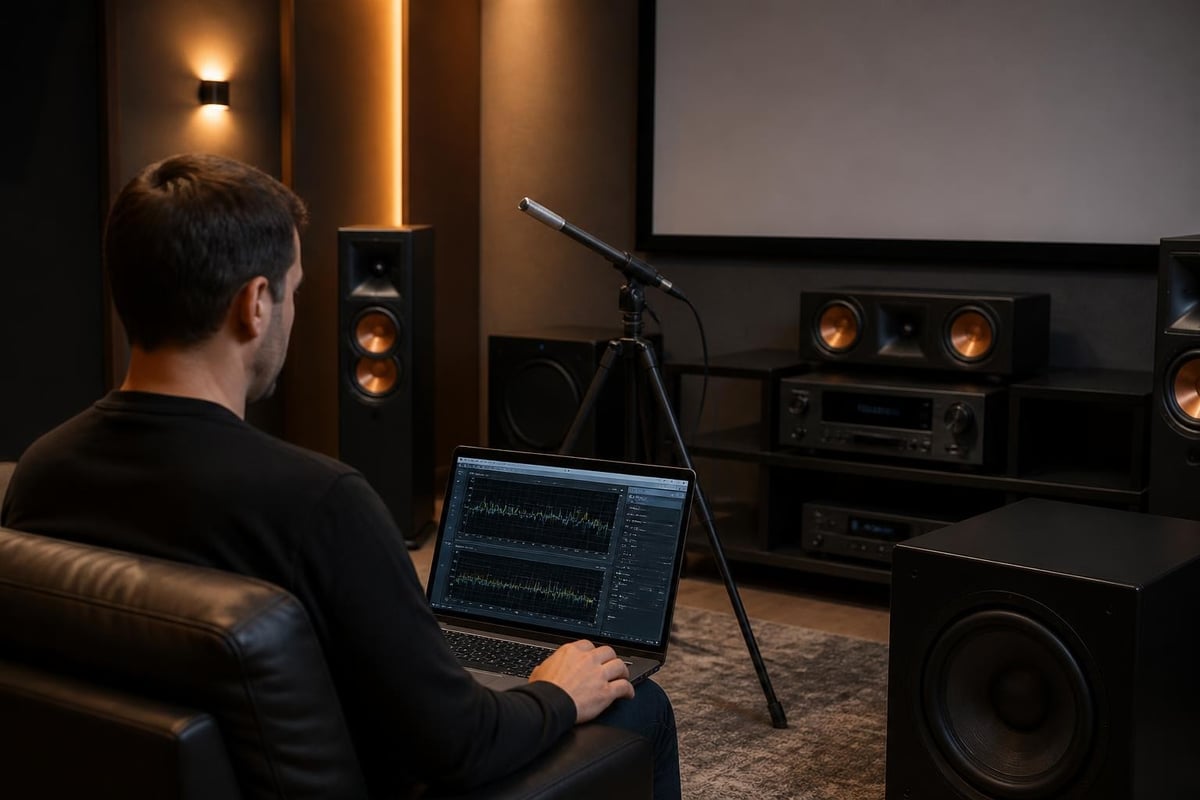
Most Onkyo receivers include microphone-based auto-setup systems. These measure each speaker's distance, level, and frequency response from the primary listening position. The receiver then:
- Sets individual speaker levels for balanced output
- Applies delay compensation for time alignment
- Creates equalization curves to flatten frequency response
- Determines optimal crossover points between speakers and subwoofers
Understanding the Audyssey MultEQ-X documentation helps installers fine-tune these automated systems. Advanced users run multiple measurement positions to create calibration curves that work across several seats.
Manual refinement often improves results. Using Room EQ Wizard with a calibrated measurement microphone reveals issues automatic systems miss. This free software generates detailed frequency response graphs, waterfall plots showing decay times, and impulse response measurements.
| Measurement Type | What It Reveals | Correction Method |
|---|---|---|
| Frequency response | Peaks and nulls across spectrum | Parametric EQ, bass traps |
| Impulse response | Reflections and ringing | Absorption panels, diffusion |
| Waterfall plot | Modal decay and resonances | Room modes treatment, multiple subs |
Professional installations often combine digital room correction with acoustic treatments. Bass traps control low-frequency room modes that EQ alone cannot fix. Absorption panels reduce early reflections that blur imaging. Diffusion elements scatter sound to create spaciousness without deadening the room.
Integration with Modern Source Components
An onkyo home theater system serves as the central hub for multiple sources. HDMI connections handle video and audio from Blu-ray players, streaming devices, and gaming consoles. Understanding HDMI specifications prevents compatibility issues with 4K, HDR, and high frame rate content.
HDMI 2.1 capabilities unlock the full potential of current-generation sources:
- 48 Gbps bandwidth supports 8K/60Hz and 4K/120Hz signals
- Enhanced Audio Return Channel (eARC) passes lossless Atmos from smart TV apps
- Variable Refresh Rate (VRR) eliminates screen tearing during gaming
- Auto Low Latency Mode (ALLM) switches to game mode automatically
Network connectivity expands source options. Onkyo receivers with built-in streaming support access services like Spotify, Tidal, and Amazon Music. AirPlay 2 and Chromecast built-in enable wireless casting from mobile devices. These features integrate the onkyo home theater into whole-home audio systems.
Multiroom Audio Distribution
Custom installations frequently extend audio beyond the primary theater space. Onkyo receivers with Zone 2 and Zone 3 outputs send different sources to additional rooms. This creates a cohesive multiroom experience where users control music and movie audio throughout the home.
Pre-amplifier outputs provide flexibility for external amplification. When driving multiple zones or difficult speaker loads, connecting external power amplifiers to the onkyo home theater receiver's pre-outs maintains clean signal routing while leveraging dedicated amplification for demanding speakers.
Performance Optimization for Dedicated Theaters
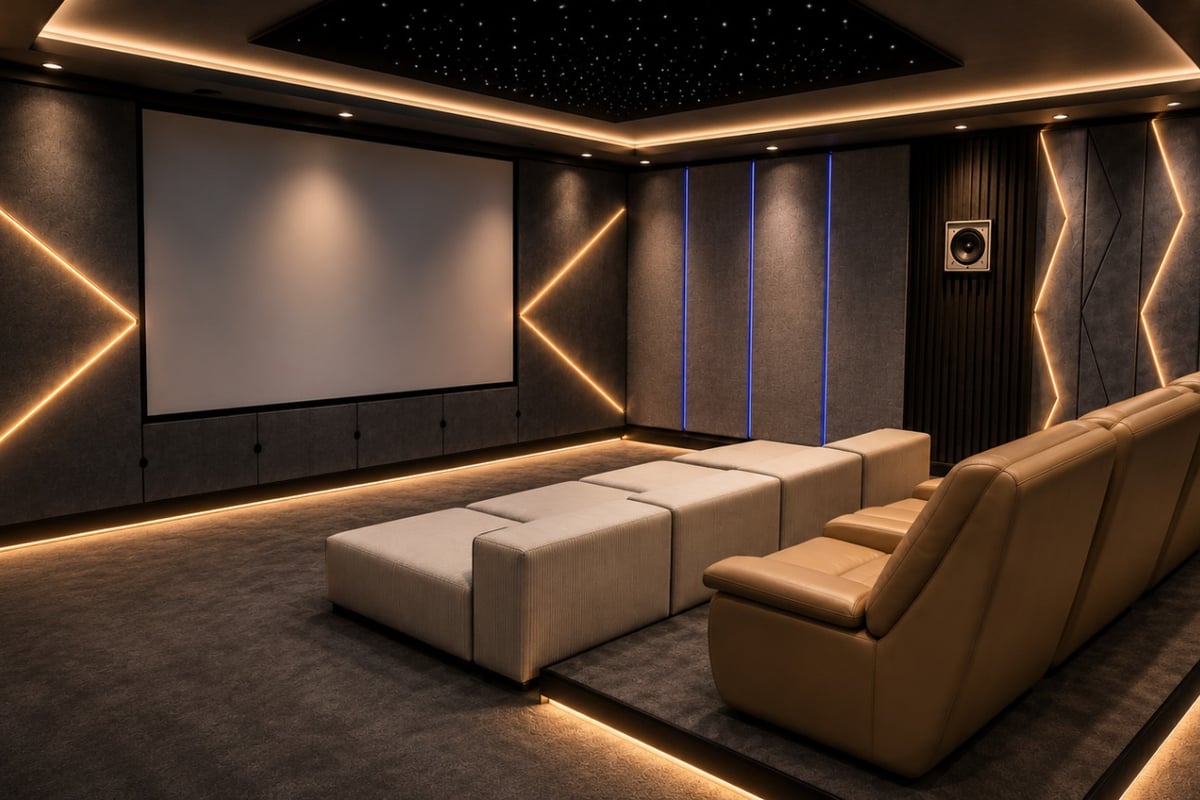
Dedicated home cinema rooms present unique opportunities for optimizing an onkyo home theater installation. Controlled environments eliminate compromises required in multipurpose spaces. Room dimensions, seating configuration, and acoustic treatment work together to extract maximum performance.
For clients investing in purpose-built spaces, a home cinema room solution integrates architectural planning with AV system design. These installations position speakers precisely according to reference standards, incorporate architectural acoustic treatments during construction, and select components matched to room volume and use case.
Advanced Signal Processing
Beyond basic decoding, premium onkyo home theater receivers offer processing modes that enhance different content types. Theater-Dimensional modes create virtual surround from stereo sources. Direct mode bypasses unnecessary processing for purist two-channel listening. Game mode reduces latency for competitive gaming.
Bass management deserves particular attention. Properly configured subwoofer integration extends low-frequency output while protecting smaller speakers from excessive excursion. Key settings include:
- Crossover frequency: Typically 80Hz, but varies with speaker capabilities
- Phase alignment: Ensures subwoofer output integrates seamlessly with mains
- Distance/delay: Compensates for subwoofer placement flexibility
- Level matching: Balances subwoofer output with other channels
Multiple subwoofers smooth bass response across seating areas. Positioning two or four subwoofers using the "subwoofer crawl" technique minimizes room modes. The onkyo home theater receiver's independent subwoofer outputs enable discrete placement and level control.
Maintaining Performance and Future Upgrades
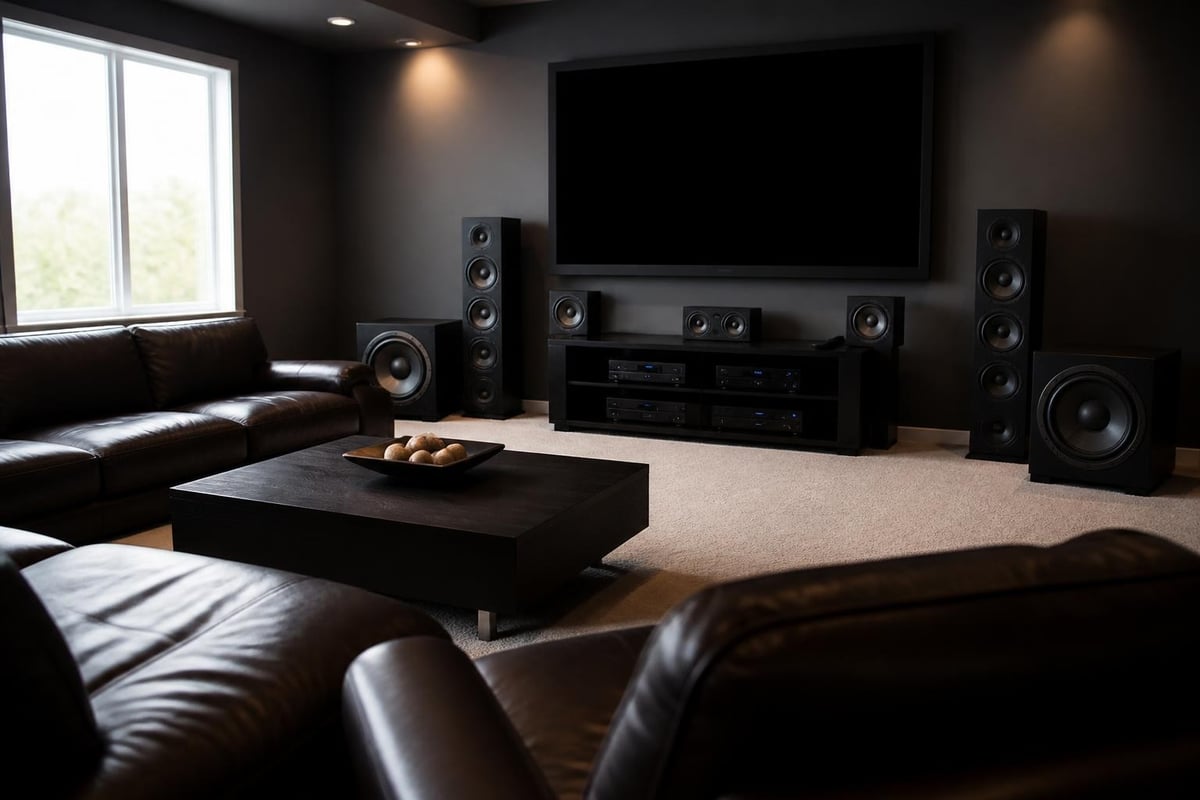
An onkyo home theater system requires periodic attention to maintain optimal performance. Firmware updates add features, fix bugs, and improve compatibility with new formats. Onkyo releases updates through network downloads, making the process straightforward for connected receivers.
Speaker connections benefit from periodic inspection. Oxidation on binding posts and banana plugs increases resistance, reducing power transfer. Cleaning connections and ensuring tight terminations maintains signal integrity. For installed systems with in-wall wiring, professional verification during annual service visits prevents degradation.
Upgrade Paths and Longevity
AV technology evolves rapidly, but quality receivers remain relevant for years. When planning an onkyo home theater installation, consider these upgrade vectors:
Incremental improvements:
- Add height speakers to existing 5.1 or 7.1 layouts for Atmos
- Incorporate additional subwoofers for smoother bass
- Upgrade center channel for improved dialogue clarity
- Add external amplification for headroom
System-level changes:
- Replace receiver when new format support becomes essential
- Upgrade displays as 8K content becomes mainstream
- Transition to separates (processor + amplifiers) for ultimate performance
The industry's direction toward immersive audio and higher video resolutions influences purchase decisions. Recent developments in Onkyo’s product strategy reflect the brand's evolution within the competitive AV market. Selecting current models with robust HDMI implementation and processing capabilities extends usable lifespan.
Measurement Standards and Validation
Professional onkyo home theater installations rely on objective measurements to validate performance. Adhering to industry standards ensures consistent results across different rooms and configurations. The Audio Engineering Society standards provide measurement frameworks used by installers and acousticians worldwide.
Key measurements include:
- Frequency response flatness: Target ±3dB from 80Hz to 16kHz at the primary listening position
- Channel balance: All speakers within 1dB of target level after calibration
- Impulse response: Clean decay without excessive ringing or reflections
- Time alignment: All speakers arriving within 1ms at reference position
Documentation creates accountability and provides baselines for future adjustments. Professional installations include measurement reports showing pre-calibration and post-calibration results. These records help troubleshoot issues and guide future upgrades.
Listening Tests and Subjective Evaluation
Measurements inform setup decisions, but critical listening validates real-world performance. Reference test tracks reveal specific aspects of onkyo home theater system behavior:
- Dialogue clarity: Center channel imaging and intelligibility
- Surround envelopment: Seamless ambient field without localization
- Dynamic range: Headroom for peaks without distortion
- Bass extension and control: Clean low frequencies without boom
Testing with diverse content types ensures balanced performance. Action films stress dynamic range and surround effects. Dialogue-heavy dramas reveal center channel quality. Concerts evaluate stereo imaging and tonal accuracy. Gaming content tests low-latency performance and spatial cues.
Custom Installation Considerations
Designing an onkyo home theater for custom installation demands attention to details often overlooked in DIY setups. Wire management, equipment ventilation, and control system integration separate professional installations from casual assemblies.
Infrastructure Planning
Proper infrastructure supports long-term reliability and future modifications. Essential considerations include:
Equipment rack location:
- Centralized position minimizes cable runs
- Adequate ventilation prevents thermal issues
- Accessible for service and upgrades
Cable pathway design:
- Conduit for HDMI and speaker cables
- Separate runs for power and signal to reduce interference
- Pull strings for future additions
Power management:
- Dedicated circuits prevent voltage drop
- Surge protection preserves equipment
- Sequenced power-up protects amplifiers and speakers
Professional-grade in-wall speaker wire uses oxygen-free copper with gauge appropriate for run length. For onkyo home theater installations, 14-gauge wire handles most applications, while longer runs or high-power speakers benefit from 12-gauge. Proper termination with quality connectors ensures maximum power transfer.
Control system integration simplifies operation. Universal remotes, smartphone apps, and dedicated control processors present intuitive interfaces for complex onkyo home theater systems. Programming scenes that switch inputs, adjust lighting, and lower projection screens enhances the user experience.
Building an exceptional onkyo home theater requires balancing technology selection, acoustic optimization, and professional installation practices. From receiver specifications and speaker configuration to room calibration and infrastructure planning, each decision compounds to create immersive experiences that rival commercial cinemas. Whether you're upgrading an existing system or designing a dedicated theater space, expertise in both AV technology and acoustic science ensures optimal results. ANR media specializes in custom home cinema installations that integrate premium components like Onkyo receivers with architectural design, acoustic treatment, and professional calibration to deliver reference-quality performance tailored to your space and preferences.