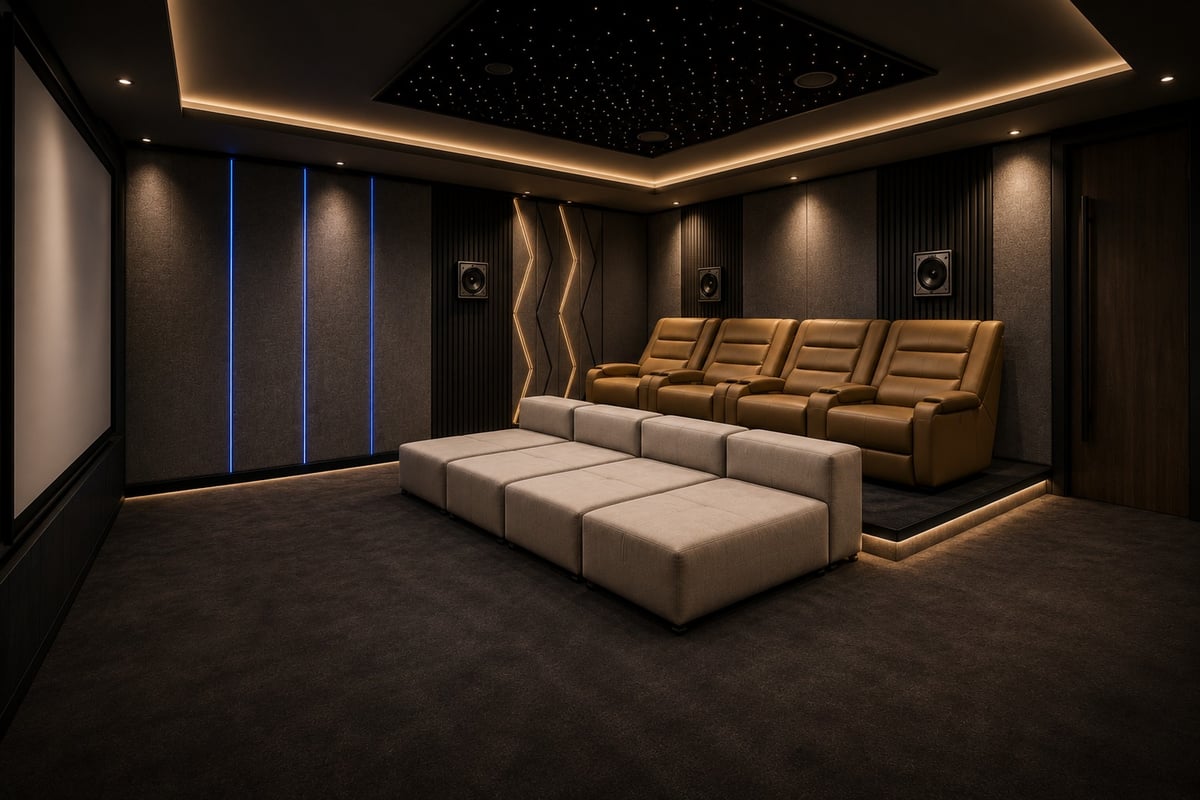
Creating a truly immersive home cinema experience requires more than just purchasing premium equipment and connecting a few cables. A professional home cinema installer brings specialized knowledge, technical expertise, and years of experience to transform an ordinary room into an extraordinary entertainment space. Whether you're converting a spare bedroom, designing a dedicated theater room, or building a new home with cinema plans in mind, understanding what a qualified installer brings to your project will help you make informed decisions and achieve results that exceed your expectations.
What Does a Home Cinema Installer Do?
A home cinema installer is a trained professional who designs, configures, and installs complete audiovisual systems tailored to your specific space and requirements. These specialists go far beyond simply mounting a television and connecting speakers. They assess room acoustics, design custom layouts, integrate complex control systems, and calibrate every component to work together seamlessly.
Core Responsibilities and Expertise
Professional installers handle multiple critical aspects of your cinema project:
- Acoustic analysis and treatment to optimize sound quality in your specific room dimensions
- Equipment selection and specification based on performance requirements and budget
- System design and integration ensuring all components communicate properly
- Cable infrastructure planning including in-wall routing and conduit placement
- Calibration and tuning to extract maximum performance from every component
- User training to ensure you can operate your system confidently
The difference between a DIY installation and professional work becomes apparent the moment you experience properly calibrated audio and video. An experienced home cinema installer understands how room modes affect bass response, how ambient light impacts picture quality, and how to position speakers for optimal imaging according to Dolby Atmos installation guidelines.
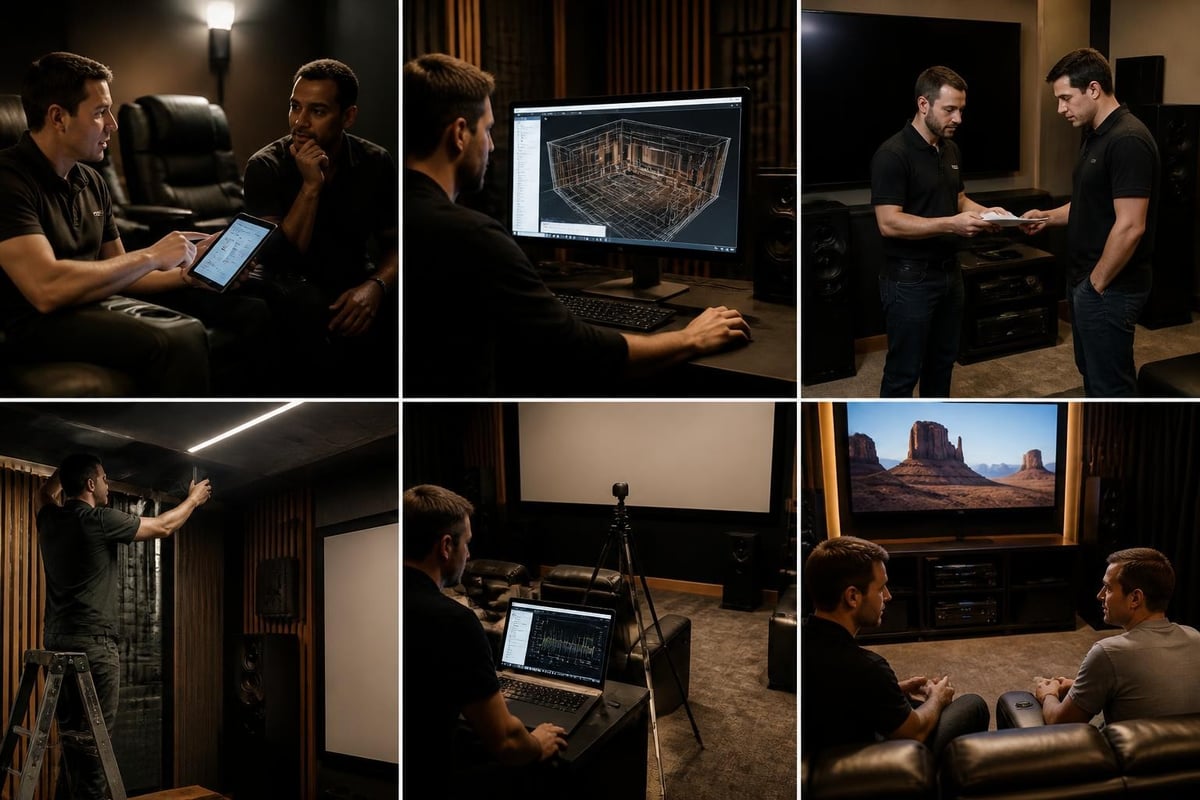
Technical Knowledge and Certifications
Professional installers invest significant time and resources into ongoing education. Many hold certifications from industry organizations that set and maintain professional standards. These credentials demonstrate a commitment to best practices and staying current with rapidly evolving technology.
| Certification | Organization | Focus Area |
|---|---|---|
| CEDIA Certified | CEDIA | Residential electronic systems integration |
| CTS (Certified Technology Specialist) | AVIXA | AV system design and installation |
| THX Certified Installer | THX Ltd. | Cinema audio and video performance |
| ISF Certified | Imaging Science Foundation | Video calibration and display technology |
The AVIXA standards hub provides comprehensive resources that professional installers reference when planning and executing installations to ensure compliance with industry best practices.
Choosing the Right Home Cinema Installer
Selecting the right professional for your project requires careful evaluation of multiple factors. Not all installers offer the same level of expertise, service, or attention to detail. Your choice will significantly impact both the installation experience and long-term satisfaction with your cinema.
Experience and Portfolio
Request to see completed projects similar in scope and budget to yours. A reputable home cinema installer maintains a portfolio showcasing diverse installations and can provide references from satisfied clients. Pay attention to the complexity of systems they've implemented and whether they have experience with the specific technologies you're considering.
Ask detailed questions about their process:
- How do they approach room analysis and acoustic treatment?
- What methods do they use for cable management and future-proofing?
- How do they handle unexpected challenges during installation?
- What calibration tools and techniques do they employ?
- What ongoing support and warranty do they provide?
Custom Design Capabilities
The best installers don't apply cookie-cutter solutions. They listen carefully to understand how you'll use the space, what content you watch most, and what aesthetic preferences you have. This consultation process reveals whether the installer truly understands custom integration or simply installs pre-packaged systems.
For example, ANR media specializes in custom bespoke home cinema room conversions with flexible design options. Their unique stacking design approach allows clients to choose configurations that match both their vision and budget, with Home cinema room solutions ranging from accessible entry points to premium installations featuring the latest immersive audio and video technologies.
The Home Cinema Installation Process
Understanding the typical project workflow helps set realistic expectations and ensures you're prepared to collaborate effectively with your installer. While each project varies based on complexity and scope, professional installations generally follow a structured approach.
Initial Consultation and Site Assessment
The process begins with a detailed discussion of your goals, preferences, and budget. A professional home cinema installer will visit your space to take precise measurements, evaluate structural considerations, identify potential acoustic challenges, and assess electrical capacity.
During this phase, the installer examines:
- Room dimensions and shape (which affect speaker placement and acoustic behavior)
- Existing lighting and windows (critical for controlling ambient light)
- HVAC placement (noise sources that may need addressing)
- Structural elements (beams, posts, or architectural features affecting layout)
- Electrical service and circuit availability (ensuring adequate clean power)
This thorough assessment allows the installer to create a proposal that addresses your specific situation rather than offering generic recommendations.
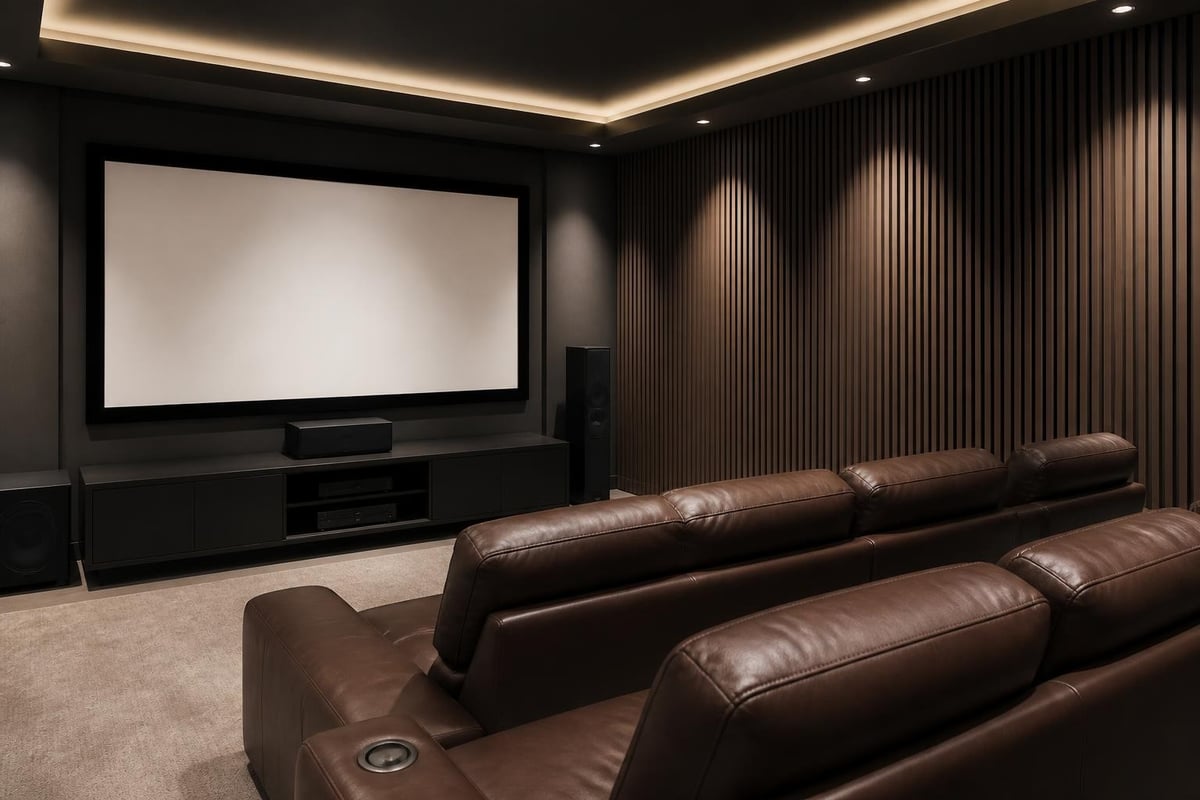
System Design and Equipment Selection
Based on the site assessment and your requirements, your installer develops a comprehensive system design. This blueprint specifies every component, cable run, mounting location, and control interface. The CEDIA guide on choosing AV systems for home theaters offers homeowners insight into the core considerations professionals evaluate during this phase.
Your installer should present options at different price points, explaining the performance trade-offs clearly. Transparency about equipment capabilities and limitations builds trust and ensures you make informed decisions aligned with your priorities.
| Budget Tier | Typical Features | Performance Expectations |
|---|---|---|
| Entry-Level | 5.1 surround, 4K display, basic AVR | Solid performance, limited upgradability |
| Mid-Range | 7.1.4 Atmos, premium display, advanced AVR | Excellent performance, good future-proofing |
| Premium | 9.1.6+ Atmos, reference speakers, dedicated components | Reference-grade performance, maximum flexibility |
Installation and Integration
The actual installation requires meticulous attention to detail and adherence to technical standards. Professional installers follow CEDIA recommended practices for immersive audio covering speaker placement tolerances, cable routing standards, and equipment rack configuration.
Proper installation includes:
- Running cables through walls using appropriate methods and meeting local building codes
- Installing acoustic treatments precisely where modeling indicates they're needed
- Mounting displays with correct viewing angle and height
- Positioning speakers according to manufacturer and format specifications
- Building and organizing equipment racks for serviceability and thermal management
- Implementing proper grounding and power distribution
A competent home cinema installer labels every cable, documents the system thoroughly, and leaves the installation site clean. These seemingly small details make a significant difference when troubleshooting or upgrading components years later.
Calibration and Optimization
Raw equipment installation is only half the job. Professional calibration transforms good hardware into an exceptional experience. Using specialized measurement tools and software, installers optimize multiple parameters:
Audio calibration addresses:
- Individual speaker levels and distances
- Crossover frequencies between speakers and subwoofers
- Equalization to compensate for room modes and frequency response irregularities
- Time alignment for coherent imaging
- Dynamic range and bass management settings
Video calibration focuses on:
- Grayscale tracking and white point accuracy
- Color gamut coverage and primary/secondary color accuracy
- Gamma curve and shadow detail
- Peak brightness and contrast ratio
- Motion handling and processing settings
This calibration process can take several hours for a comprehensive system. The precision achieved through professional measurement and adjustment is virtually impossible to replicate through casual adjustment by ear and eye.
Advanced Technologies and Formats
The home cinema landscape evolves rapidly, with new formats, standards, and capabilities emerging regularly. A knowledgeable home cinema installer stays current with these developments and can guide you toward technologies that enhance your experience without recommending unnecessary complexity.
Immersive Audio Formats
Dolby Atmos and DTS:X represent the current state-of-the-art in home cinema audio, adding height channels that create a three-dimensional soundstage. Proper implementation requires precise speaker placement, appropriate amplification, and content source devices that support these formats. The Dolby Atmos professional resources provide detailed technical guidance that professional installers reference during design.
When evaluating audio systems, consider how different speaker configurations impact the experience. A 7.1.4 system (seven ear-level speakers, one subwoofer, four height speakers) provides dramatically more immersive audio than traditional 5.1 surround, but requires more complex installation and calibration.
Display Technology Considerations
Choosing between projection and flat-panel displays involves multiple trade-offs. Your home cinema installer should explain the implications clearly:
Projection advantages:
- Ability to achieve very large screen sizes (100+ inches)
- More cinema-like experience in dedicated dark rooms
- Flexible aspect ratio support
- Often more economical for very large images
Flat-panel advantages:
- Superior performance in rooms with ambient light
- No lamp replacement costs or maintenance
- Typically higher peak brightness
- Simpler installation with fewer placement constraints
The choice depends on your room characteristics, viewing preferences, and how much control you have over lighting. Professional guidance helps you select the approach that best serves your specific situation.
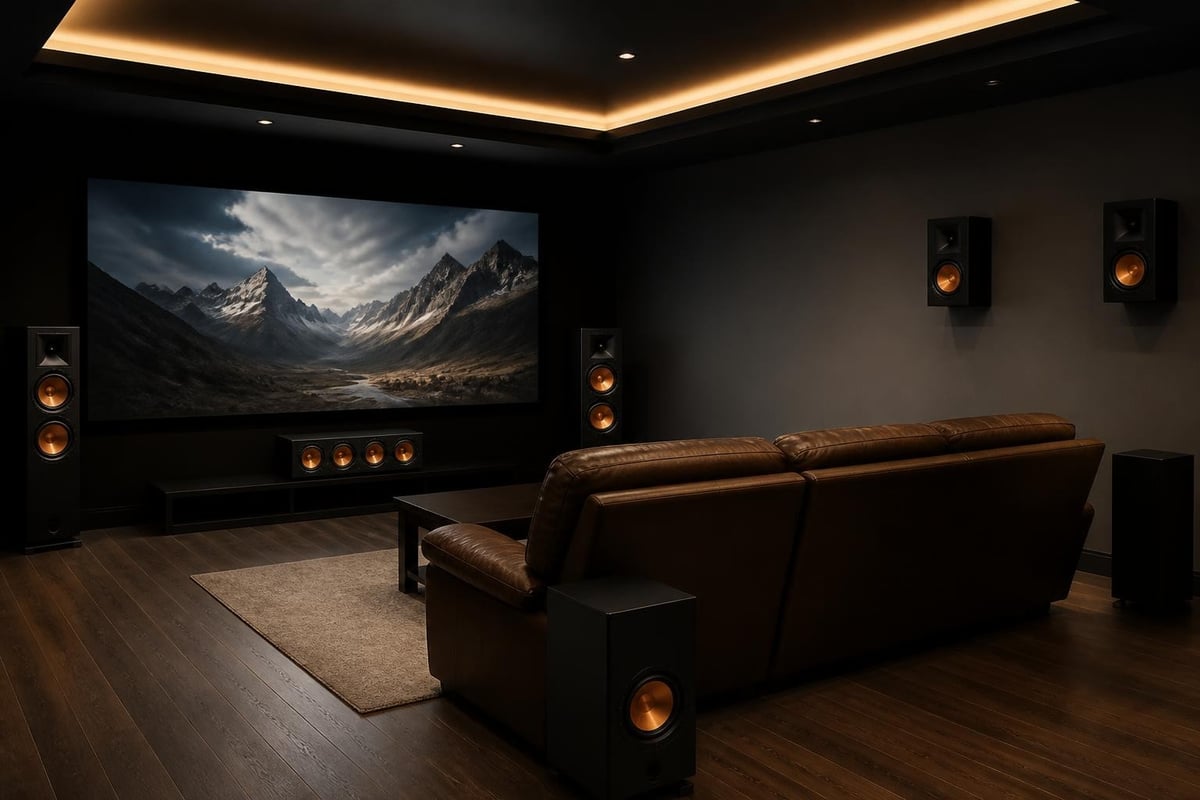
Control Systems and User Experience
Even the most capable home cinema system becomes frustrating if controlling it requires navigating multiple remotes and complex sequences. A professional home cinema installer designs control solutions that make operation intuitive and reliable.
Integrated Control Options
Modern control systems range from programmed universal remotes to sophisticated touch-panel interfaces and voice control integration. The right choice depends on system complexity and user preferences:
- Universal remotes work well for straightforward systems with limited source devices
- Touch panels and tablets excel when controlling multiple zones or complex automation
- Voice control provides convenient operation for supported functions
- Smartphone apps offer flexibility and personalization
Your installer should program macros or activities that handle multiple actions with single button presses. "Watch Movie" might dim lights, lower shades, power on the projector and AVR, select the correct input, and adjust volume to your preferred starting level.
Source Management and Networking
Managing multiple content sources efficiently requires thoughtful planning. Your home cinema installer ensures seamless switching between sources while maintaining signal quality and supporting advanced audio formats. Testing resources like RTINGS’ audio passthrough analysis help installers verify that display and AVR combinations properly handle the formats your content requires.
Network integration has become essential as streaming services deliver an increasing percentage of content. Your installer should implement robust, high-bandwidth networking that supports 4K streaming without buffering while maintaining adequate wireless coverage throughout the cinema space.
Acoustic Treatment and Room Optimization
Room acoustics profoundly impact audio quality, often more than differences between mid-range and premium speakers. A knowledgeable home cinema installer addresses acoustic issues through strategic treatment rather than relying solely on electronic correction.
Understanding Room Modes and Reflections
Every room has resonant frequencies determined by its dimensions. These room modes cause certain bass frequencies to be dramatically louder or softer than others, creating uneven response that electronic equalization can only partially address. Professional installers identify problematic modes and implement a combination of:
Absorption treatments that reduce energy at specific frequencies
Diffusion elements that scatter reflections rather than absorbing them
Bass traps strategically placed to control low-frequency buildup
Strategic furniture placement that breaks up flutter echoes and minimizes comb filtering
The goal isn't creating a completely dead acoustic environment. Properly treated rooms retain natural ambiance while controlling specific problems that would otherwise compromise clarity and imaging.
Balancing Aesthetics and Performance
Acoustic treatments need not compromise your room's visual appeal. Modern options include fabric-wrapped panels in custom colors, decorative diffusers that double as artwork, and integrated solutions built into architectural elements. Your home cinema installer should present treatment options that achieve acoustic goals while complementing your design vision.
Maintenance and Future Upgrades
A well-designed home cinema installation provides years of reliable service while remaining flexible enough to accommodate future improvements. Professional installers plan for this longevity from the beginning.
Infrastructure for Future Expansion
Smart cable management and infrastructure planning make future upgrades dramatically easier. This includes:
- Installing conduit for future cable runs
- Terminating more connection points than currently needed
- Selecting AVRs with additional amplifier channels for later speaker additions
- Implementing modular rack designs that accommodate new components
- Documenting the entire system thoroughly
These forward-looking measures add minimal cost during initial installation but provide tremendous value when technology evolves or your needs change.
Regular Maintenance and Recalibration
Even properly installed systems benefit from periodic maintenance. Projector lamps eventually need replacement, speaker grilles accumulate dust, and room changes (new furniture, curtains, or carpeting) can alter acoustic behavior. Establishing a relationship with your home cinema installer for ongoing service ensures your system continues performing optimally.
Some installers offer maintenance plans that include periodic recalibration, firmware updates, and system health checks. These proactive services prevent small issues from becoming major problems and keep you current with new features enabled through software updates.
Cost Considerations and Value
Professional home cinema installation represents a significant investment. Understanding where your money goes helps you make informed decisions and recognize value beyond equipment costs alone.
Installation Budget Components
| Cost Category | Typical Percentage | What It Covers |
|---|---|---|
| Equipment | 60-70% | Displays, speakers, electronics, sources |
| Labor | 15-25% | Design, installation, programming, calibration |
| Infrastructure | 5-10% | Cables, mounts, racks, power conditioning |
| Acoustic Treatment | 5-10% | Panels, bass traps, fabric, installation |
Professional installation labor deserves appropriate compensation. The expertise, precision, and efficiency a skilled home cinema installer brings typically saves money in the long run by avoiding costly mistakes, optimizing equipment performance, and ensuring reliable operation that doesn't require troubleshooting calls or repeated service visits.
Comparing DIY and Professional Installation
DIY installation appeals to technically inclined homeowners seeking to reduce costs. However, several factors often tip the value equation toward professional installation:
Time investment: Professional installers complete complex projects in days rather than weeks or months of weekend work. Your time has value, and extended project timelines create household disruption.
Tool and equipment costs: Proper installation requires specialized tools for cable termination, acoustic measurement, video calibration, and more. These tools represent substantial investment for one-time use.
Performance optimization: Even with the same equipment, professional calibration extracts significantly better performance. This performance gap widens as system complexity increases.
Warranty and support: Professional installations typically include warranties on labor and integration, plus ongoing support when questions arise.
For dedicated theater rooms with immersive audio, complex automation, and custom acoustic treatment, professional installation transforms from luxury to practical necessity.
Working With Your Installer
The relationship between homeowner and home cinema installer significantly impacts project success. Approaching the collaboration with clear communication and realistic expectations creates better outcomes for everyone involved.
Preparing for Your Installation
Help your installer work efficiently by:
- Clearing the installation area of furniture, decorations, and obstacles
- Providing access to electrical panels, attic spaces, or crawlspaces as needed
- Securing pets who might be stressed by unfamiliar people and activity
- Being available to answer questions about preferences when decisions arise
- Reviewing and approving designs promptly to keep the project on schedule
Professional installers appreciate clients who trust their expertise while remaining engaged in the process. Ask questions when you don't understand something, but avoid micromanaging details that fall within the installer's domain of expertise.
Communication During the Project
Establish clear communication channels and expectations for project updates. Understand that complex installations sometimes reveal unexpected challenges requiring design modifications. Flexibility and problem-solving collaboration lead to better results than rigid adherence to initial plans when circumstances warrant adjustment.
Document any changes or additions to the original scope in writing. This protects both parties and prevents misunderstandings about what work was included in the contracted price versus additional charges.
Professional home cinema installation transforms viewing from passive consumption into truly immersive experiences that engage all your senses and transport you into the content. The expertise, precision, and dedication a qualified installer brings ensures every element works in harmony to deliver performance that exceeds what even premium equipment achieves through casual setup. ANR media specializes in custom home cinema and audio video solutions, from multiroom systems to bespoke cinema room conversions designed specifically for your space, preferences, and budget. Contact their team to begin planning your ultimate home entertainment experience today.