

Creating an exceptional home audio experience requires more than simply purchasing premium equipment. The journey from selecting components to achieving reference-quality sound involves understanding acoustic principles, careful system design, and methodical calibration. Whether you're building a dedicated listening room, upgrading your existing setup, or implementing multi-room audio throughout your home, the fundamentals remain consistent: proper planning, quality components, and attention to acoustic detail determine whether your system delivers truly immersive sound or falls short of its potential.
Understanding Modern Home Audio Architecture
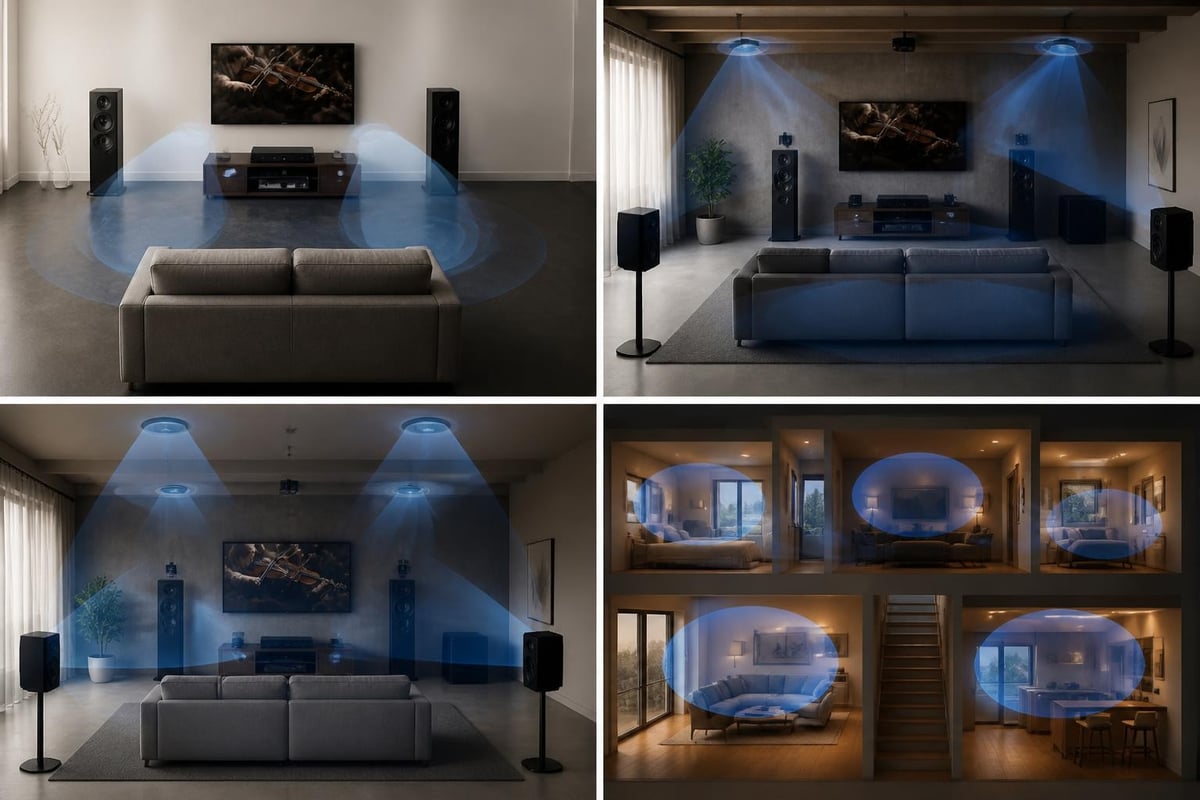
Today's home audio landscape offers unprecedented flexibility in system design. Traditional two-channel stereo systems remain popular among purists, while immersive formats like Dolby Atmos have redefined what's possible in residential environments.
A well-designed home audio system begins with clear objectives. Consider whether you prioritize critical music listening, cinematic reproduction, or versatile entertainment across multiple spaces. Each goal demands different component selection, room treatment, and calibration approaches.
System Configuration Options
Modern home audio systems typically fall into several categories:
- Stereo systems: Two-channel setups optimized for music reproduction
- Surround sound: 5.1, 7.1, or more complex configurations for film and gaming
- Immersive audio: Dolby Atmos, DTS:X, and Auro-3D with height channels
- Multi-room distributed audio: Synchronized or independent playback across zones
- Hybrid systems: Flexible configurations supporting multiple use cases
The choice between these architectures depends on your content preferences, room characteristics, and budget constraints. A dedicated two-channel system in an acoustically treated room can outperform a poorly implemented surround system for music, while cinematic content demands the spatial precision that height channels provide.
Speaker Selection and Placement Fundamentals
Speaker choice represents the most audible decision in any home audio system. Performance factors extend beyond frequency response specifications to include dispersion characteristics, power handling, and room integration capabilities.
Critical Speaker Characteristics
| Specification | Impact on Performance | Consideration |
|---|---|---|
| Frequency response | Tonal balance and extension | Look for ±3dB variance across range |
| Sensitivity | Required amplifier power | Higher sensitivity needs less power |
| Impedance | Amplifier compatibility | Match to amplifier's rated load |
| Dispersion pattern | Room coverage and imaging | Wide dispersion aids flexibility |
| Driver configuration | Speed and coherence | Coaxial designs offer point-source benefits |
Premium speaker manufacturers like Klipsch have built reputations on distinctive house sounds and engineering philosophies. High-efficiency horn-loaded designs excel in dynamic range and detail retrieval, while traditional cone drivers often provide smoother tonal characteristics. The choice depends on your sonic preferences and listening priorities.
Placement determines whether your speakers achieve their design potential. The common mistakes that compromise home audio performance often relate to positioning rather than equipment quality.
Stereo Speaker Positioning Guidelines
Proper stereo imaging requires geometric precision:
- Form an equilateral triangle between listening position and speakers
- Toe-in speakers 15-30 degrees toward the listening position
- Maintain symmetry in room placement to balance reflections
- Distance from boundaries affects bass response and imaging
- Ear-height alignment of tweeters optimizes frequency integration
Wall proximity increases bass output through boundary reinforcement. Speakers placed one meter from walls produce leaner bass than those positioned closer, requiring subwoofer integration or EQ compensation. Experimentation within these guidelines helps dial in performance specific to your room's acoustic signature.
Immersive Audio and Height Channel Integration
Dolby Atmos and competing immersive formats have transformed home audio expectations. Rather than channel-based mixing, object-based audio renders sounds to specific locations within a three-dimensional space, creating unprecedented realism.
Implementing Atmos in residential spaces requires careful attention to Dolby’s speaker setup guidelines. Height channels can be achieved through ceiling-mounted speakers, upward-firing modules that bounce sound off ceilings, or dedicated height speakers positioned on walls.
Atmos Configuration Layouts
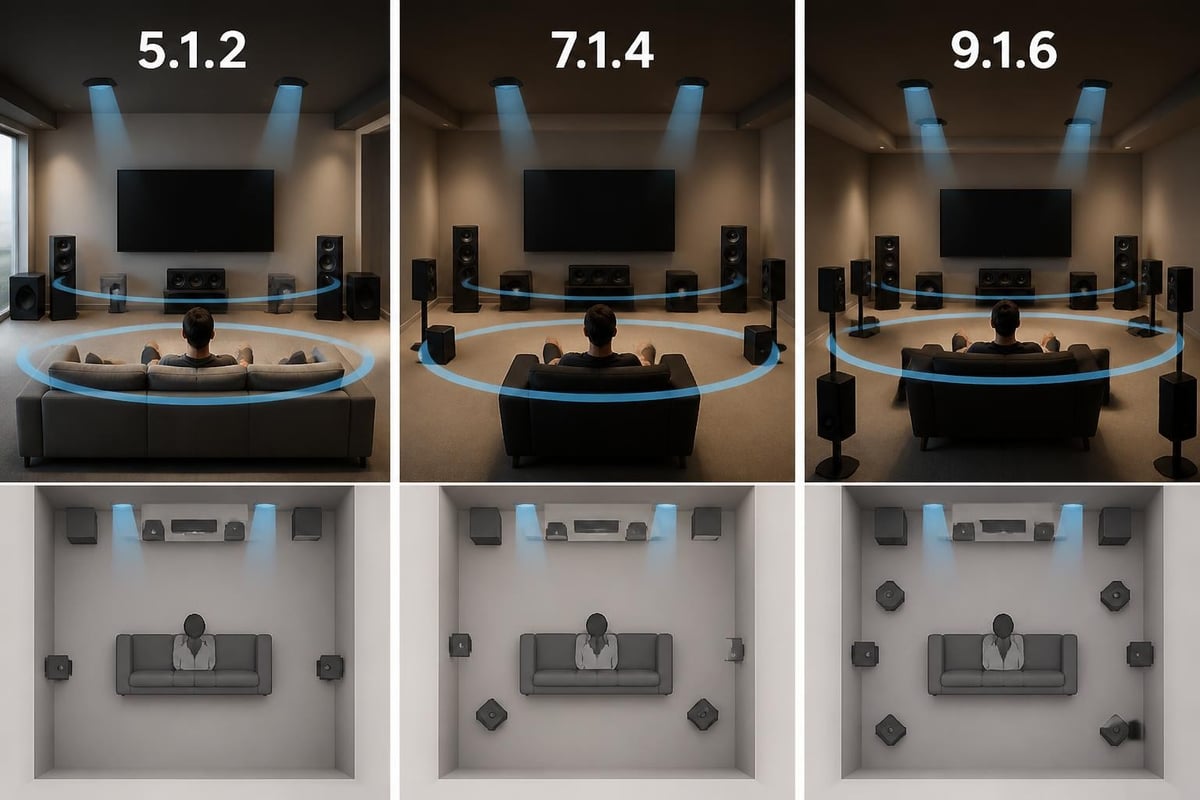
The most common residential Atmos configurations include:
- 5.1.2: Five ear-level channels, one subwoofer, two height channels
- 7.1.4: Seven ear-level channels, one subwoofer, four height channels
- 9.1.6: Nine ear-level channels, one subwoofer, six height channels
Each number sequence follows the pattern: ear-level channels.subwoofers.height channels. The detailed speaker setup guides from Dolby provide specific placement coordinates for each configuration, ensuring height channels create realistic overhead imagery rather than vague elevation cues.
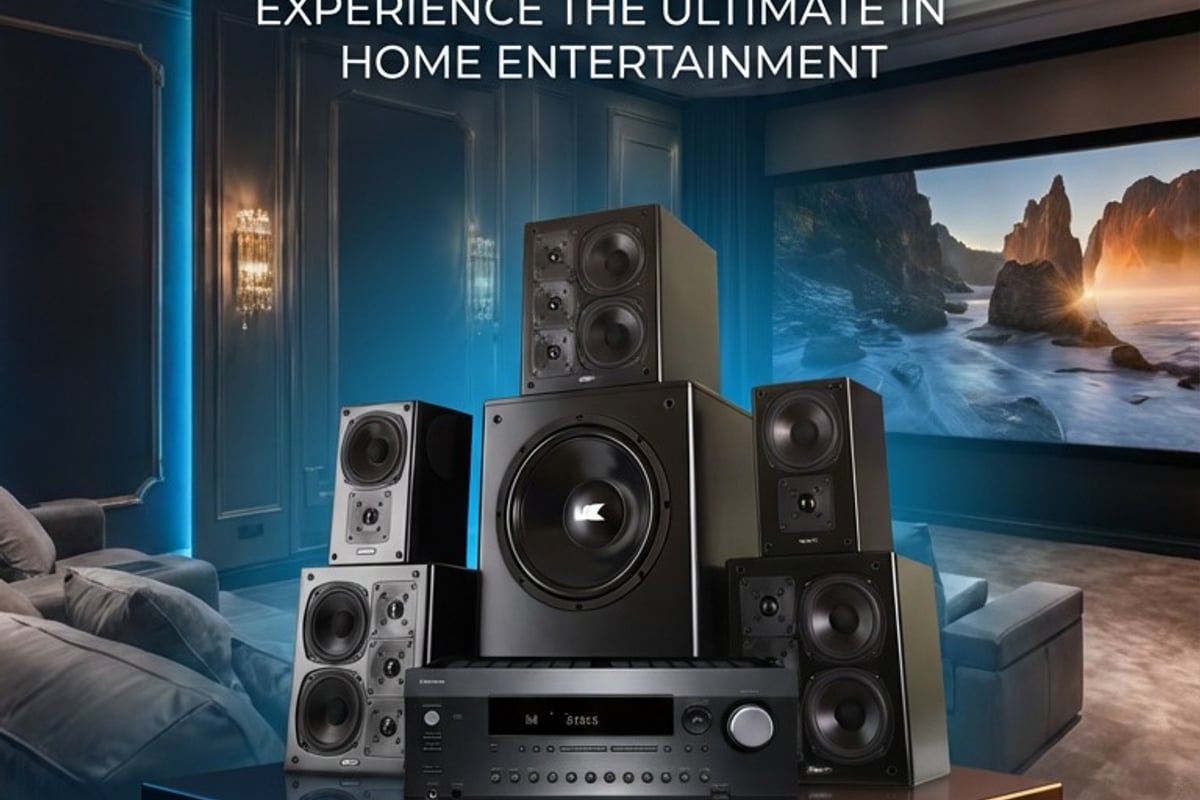
For those investing in premium home audio installations, specialized cinema speakers deliver the dynamic range and low distortion essential for reference-level reproduction. These purpose-built components handle the explosive transients and sustained output that film soundtracks demand without compression or audible strain.
Room Acoustics and Treatment Strategies
Even the finest home audio components underperform in acoustically problematic spaces. Room modes, flutter echoes, and excessive reverberation corrupt frequency response and spatial imaging, masking the detail and accuracy your equipment can deliver.
Primary Acoustic Challenges
Every room exhibits acoustic characteristics that require management:
Standing waves occur at frequencies where room dimensions create reinforcement or cancellation. A room measuring 5 meters in length exhibits a primary mode at 34 Hz, with harmonics at 68 Hz, 102 Hz, and higher multiples. These modes create uneven bass response across listening positions.
Early reflections from nearby surfaces arrive shortly after direct sound, smearing imaging and reducing clarity. First reflections from side walls are particularly destructive to stereo imaging, while floor and ceiling reflections affect tonal balance.
Reverberation time (RT60) measures how long sound takes to decay by 60 dB. Optimal RT60 for home audio ranges from 0.3 to 0.5 seconds, depending on room volume and intended use. Excessive reverberation reduces intelligibility and detail resolution.
Acoustic Treatment Implementation
Strategic treatment addresses specific issues without over-damping the space:
- Bass trapping in corners targets low-frequency modes
- First reflection absorption on side walls preserves imaging
- Diffusion on rear walls maintains spaciousness while controlling reflections
- Ceiling treatment reduces vertical modes and flutter echo
Treatment placement matters as much as quantity. Absorption at first reflection points typically uses 2-4 inch thick panels with fiberglass or mineral wool cores. Bass traps require greater depth, with corner-mounted devices often extending 12-24 inches into the room for effectiveness below 100 Hz.
Calibration and Measurement Techniques
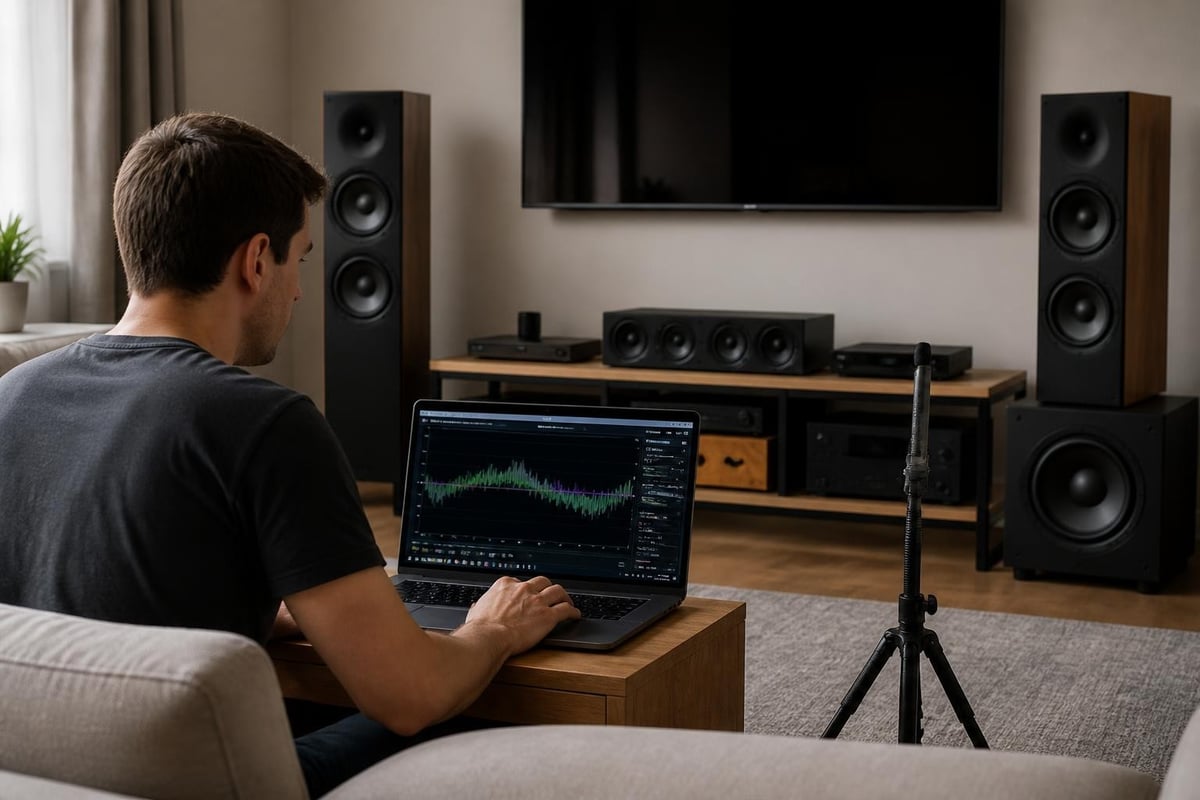
Professional-grade home audio performance requires measurement-based calibration. Automated room correction systems in modern AV receivers provide substantial improvement over uncalibrated systems, but manual optimization achieves superior results.
Room EQ Wizard has become the standard measurement platform for home audio optimization. This free software performs frequency response analysis, waterfall plots, impulse response measurements, and integration analysis that reveal precisely how your system performs in your specific space.
Measurement-Based Setup Process
| Step | Measurement | Action |
|---|---|---|
| 1. Baseline | Full-range frequency response | Identify major peaks and dips |
| 2. Subwoofer | Phase and delay alignment | Optimize integration with mains |
| 3. EQ | Parametric correction of peaks | Address modal issues and response irregularities |
| 4. Time alignment | Distance/delay settings | Ensure coherent arrival times |
| 5. Level matching | SPL calibration per channel | Set reference levels per ITU standards |
The ITU-R BS.1770-5 recommendation defines loudness measurement algorithms used across professional audio. While primarily targeting broadcast applications, these standards inform proper calibration levels in home audio systems. Reference level calibration typically targets 75-85 dB SPL for cinematic reproduction, ensuring headroom for peaks while maintaining comfortable average levels.
Subwoofer integration challenges many home audio enthusiasts. Multiple measurement positions help identify the flattest frequency response location, while phase and delay adjustments ensure seamless handoff between subwoofer and main speakers. The transition region around crossover frequency requires particular attention, as phase misalignment creates destructive interference that manifests as hollow, thin bass reproduction.
Multi-Room Audio Distribution
Whole-home audio systems extend high-quality reproduction throughout living spaces. Modern distributed audio leverages network infrastructure for synchronized playback or independent source selection per zone.
Distribution Architecture Options
Contemporary multi-room home audio systems employ several technical approaches:
Matrix switching systems route analog or digital signals from multiple sources to designated zones. These traditional architectures provide reliable performance but require dedicated wiring throughout the home.
Network-based streaming uses ethernet or WiFi to deliver audio content to powered speakers or zone amplifiers. Platforms supporting high-resolution formats maintain quality throughout the distribution chain.
Hybrid systems combine local sources with streaming services, allowing flexibility in content selection while maintaining signal quality for critical listening zones.
Zone design considers both acoustic requirements and usage patterns. Living areas might emphasize speech intelligibility and even coverage, while dedicated listening rooms demand full-range frequency response and precise imaging. Speaker selection varies accordingly, with in-ceiling models providing unobtrusive coverage in utility spaces while premium bookshelf or floor-standing speakers serve primary listening zones.
Power and Electronics Considerations
Amplification quality profoundly influences home audio system performance. The relationship between amplifier power, speaker sensitivity, and desired output levels determines appropriate amplifier sizing.
Amplifier Power Requirements
A speaker rated at 88 dB sensitivity (1W/1m) requires specific power for target SPL:
- 85 dB SPL at 3 meters: 16 watts
- 95 dB SPL at 3 meters: 160 watts
- 105 dB SPL at 3 meters: 1,600 watts
Peak transients in cinematic content can demand 10-20 dB above average levels, requiring substantial amplifier headroom. Underpowered amplifiers clip when driven beyond their capabilities, generating harsh distortion that can damage high-frequency drivers.
High-quality amplifiers maintain low distortion across their power range, deliver consistent performance into varying impedance loads, and provide adequate damping factor for tight bass control. Class D amplification has matured significantly, offering efficiency advantages with sonic performance rivaling traditional Class A/B designs in premium implementations.
Cable and Connectivity Infrastructure
While cable influence generates endless debate in home audio circles, basic electrical principles govern signal transmission. Proper connectivity ensures your system achieves its design performance without introducing noise or signal degradation.
Cable Selection Guidelines
Speaker cables require adequate conductor gauge for the run length:
- Up to 15 feet: 16 AWG sufficient for most speakers
- 15-50 feet: 14 AWG recommended
- 50-100 feet: 12 AWG maintains low resistance
- Over 100 feet: 10 AWG prevents power loss
Resistance matters more than exotic materials. Low-resistance pathways preserve damping factor and minimize power loss, particularly important for long runs in distributed systems.
Interconnects benefit from proper shielding in electrically noisy environments. Balanced connections using XLR connectors provide superior noise rejection over long runs compared to unbalanced RCA connections. Digital connections via coaxial or optical cables eliminate analog signal path concerns entirely, though implementation quality in DACs ultimately determines sound quality.
Source Component Selection
Digital sources dominate contemporary home audio systems. Network streamers, media servers, and disc players deliver content to processors and amplifiers, with varying degrees of sonic refinement.
High-resolution audio formats (24-bit/96kHz and above) preserve more musical information than standard CD quality, though audibility depends on playback chain quality and listening acuity. Lossless compression formats like FLAC maintain bit-perfect reproduction while reducing storage requirements compared to uncompressed WAV files.
DAC implementation influences tonal character and resolution. Premium converters employ sophisticated clock circuits, robust power supplies, and optimized analog output stages that extract maximum information from digital sources. Measurement performance in terms of dynamic range, THD+N, and jitter suppression correlates with subjective sound quality in well-executed designs.
Integration and Control Systems
Sophisticated home audio installations require intuitive control interfaces. Touch panels, smartphone apps, and voice integration provide convenient access to system functions without compromising performance.
Control system architecture should accommodate future expansion. Open protocols and standards-based implementations prevent vendor lock-in while enabling integration with lighting, climate, and security systems. Centralized equipment racks simplify maintenance and upgrades compared to distributed component placement.
Automated routines enhance usability. Scene programming activates multiple system functions simultaneously, such as powering on amplifiers, selecting sources, adjusting preset EQ curves, and setting appropriate volume levels. Well-designed automation reduces complexity while maintaining full manual override capabilities for advanced users.
Maintenance and Longevity Considerations
Quality home audio systems provide decades of service with appropriate care. Electronic components benefit from adequate ventilation, as heat accelerates component aging. Equipment racks should allow unrestricted airflow around amplifiers and processors.
Driver surrounds in speakers deteriorate over extended periods, particularly foam surrounds in humid climates. Rubber surrounds typically outlast foam alternatives. Regular inspection catches early signs of deterioration before complete failure occurs.
Firmware updates for network-enabled components add features and resolve compatibility issues. Maintaining current software ensures continued operation as streaming services and control protocols evolve. Some manufacturers discontinue support for older products, making upgrade planning part of long-term system strategy.
Connection integrity requires periodic verification. Oxidation on cable terminations increases resistance over time. Annual inspection and cleaning of connections maintains optimal signal transfer and prevents intermittent operation.
Designing and implementing exceptional home audio systems requires balancing technical knowledge with practical installation considerations and acoustic fundamentals. From speaker selection and placement through calibration and integration, each decision influences overall system performance. If you're ready to elevate your listening experience with a professionally designed and calibrated system, ANR media specializes in custom home cinema and audio video solutions, from multi-room installations to bespoke home cinema conversions that deliver reference-quality performance tailored to your space and preferences.