

The evolution of cinema surround sound has transformed how we experience movies at home. What began as basic stereo separation has grown into sophisticated immersive audio systems that place listeners inside the soundscape. Modern cinema surround sound technology delivers the theatrical experience through precise speaker placement, advanced processing, and formats designed to replicate the acoustic environment of commercial cinemas. Understanding these systems helps homeowners make informed decisions when designing dedicated theater spaces that rival professional installations.
Understanding Cinema Surround Sound Formats
Cinema surround sound encompasses several distinct audio formats, each with specific technical requirements and capabilities. The foundation starts with traditional channel-based systems and extends to object-based immersive audio.
Traditional Channel-Based Systems
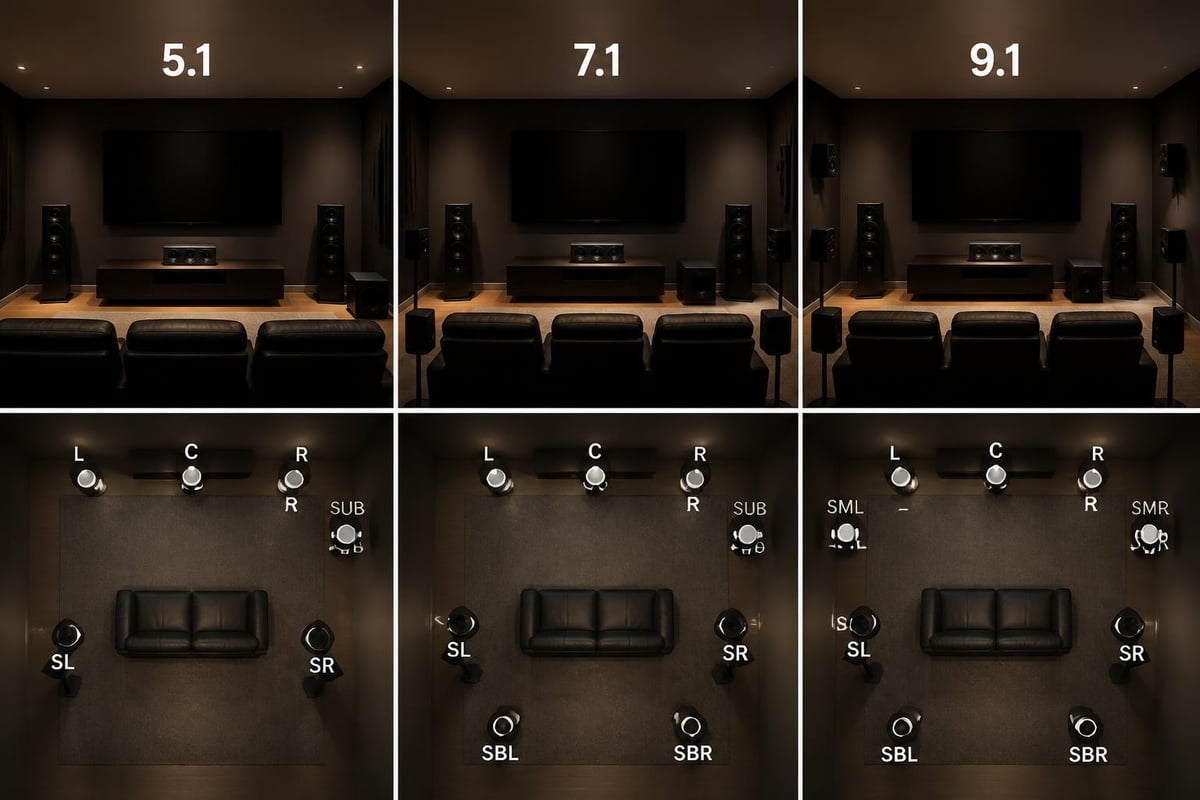
The most established cinema surround sound configuration is the 5.1 channel system, which includes left, center, and right front speakers, two surround speakers, and a subwoofer for low-frequency effects. This format became the theatrical standard in the 1990s and remains widely used today.
Seven-point-one (7.1) systems add two rear surround channels, creating more precise sound placement and better envelopment. The additional speakers improve localization for larger rooms where 5.1 configurations struggle to maintain coherent imaging across all seating positions.
Key channel-based formats include:
- 5.1 Surround: Five full-range channels plus subwoofer
- 7.1 Surround: Seven full-range channels plus subwoofer
- 9.1 and Beyond: Extended arrays for larger venues
These traditional formats rely on channel-based mixing, where sounds are assigned to specific speakers during post-production. The technical specifications outlined by Digital Cinema Initiatives ensure consistency across theatrical presentations.
Object-Based Immersive Audio
Object-based cinema surround sound represents a paradigm shift in how audio is created and reproduced. Instead of mixing sounds to fixed channels, audio engineers position sound objects in three-dimensional space with metadata describing their location and movement.
Dolby Atmos dominates this category, introducing overhead speakers and height channels that create a hemispherical sound field. The system can support up to 64 discrete speaker feeds in commercial cinemas, though home implementations typically use 7.1.4 to 9.1.6 configurations (the final number indicates height channels).
DTS:X offers similar capabilities with a more flexible approach to speaker placement. The format doesn't require specific channel configurations, instead adapting to available speakers through object rendering algorithms. Dolby’s technical white paper on Atmos provides comprehensive details on object-based audio implementation.
| Format | Channels | Height Speakers | Object-Based | Home Support |
|---|---|---|---|---|
| 5.1 | 5 + Sub | No | No | Universal |
| 7.1 | 7 + Sub | No | No | Wide |
| Dolby Atmos | Variable | Yes | Yes | Extensive |
| DTS:X | Variable | Yes | Yes | Growing |
| Auro-3D | Variable | Yes | Hybrid | Limited |
Auro-3D takes a layer-based approach, adding height and overhead channels in defined geometric arrangements. While less common in home cinema surround sound installations, it remains relevant in certain theatrical applications.
Speaker Placement and Acoustic Design
Proper speaker positioning fundamentally determines cinema surround sound performance. Even premium components deliver disappointing results when incorrectly placed or in acoustically compromised spaces.
Front Stage Configuration
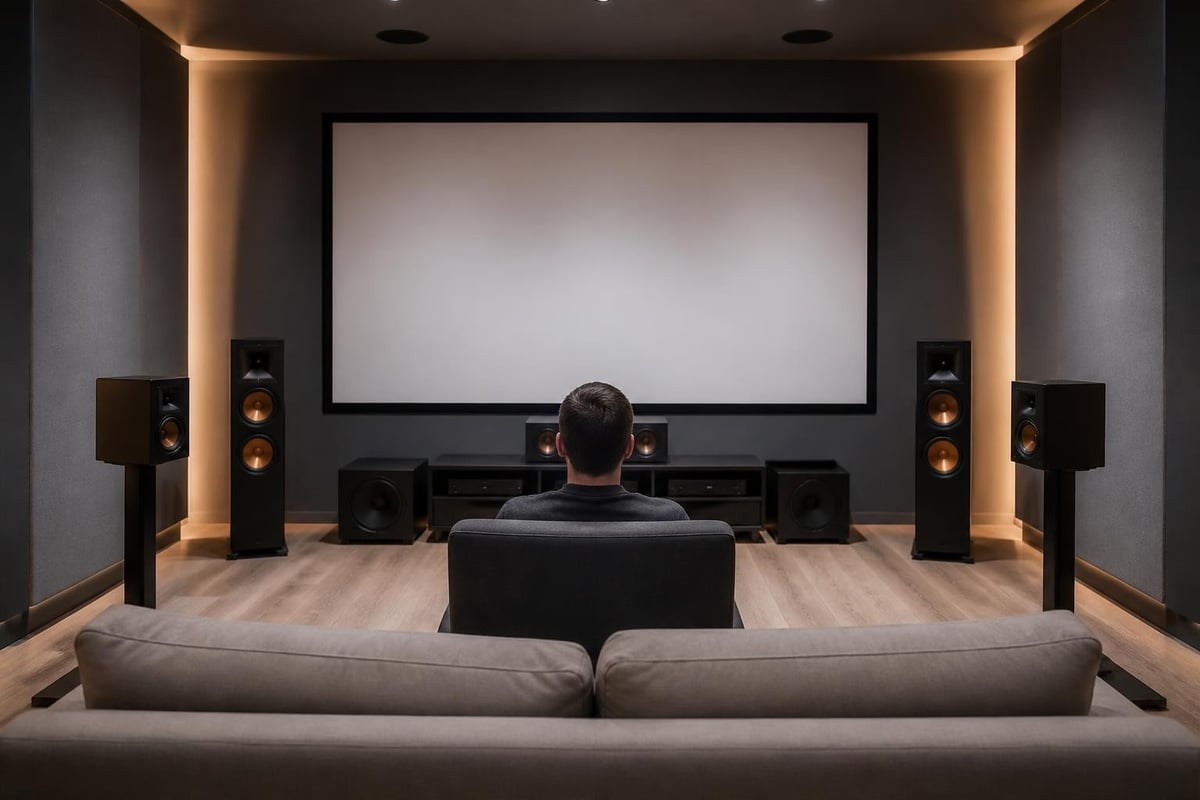
The front soundstage handles the majority of dialog, music, and on-screen effects. The center channel should align precisely with the screen center, positioned immediately above or below the display. Left and right main speakers typically sit at 22 to 30 degrees from the center listening position, creating a balanced stereo image.
Screen height impacts center channel placement significantly. For acoustically transparent screens, speakers can mount directly behind the screen at ear level. Standard screens require careful positioning to avoid blocking the image while maintaining proper height alignment.
Front stage considerations:
- Center channel at exact screen center
- Main speakers at equal angles from center seat
- Tweeters at or slightly above ear level when seated
- Matching timbral characteristics across all three front channels
Surround Speaker Arrays
Side and rear surround speakers create the immersive envelope that defines cinema surround sound. In 5.1 systems, surrounds mount 90 to 110 degrees from center, slightly behind and above the primary seating area. The elevation should be 1 to 2 feet above seated ear height.
Seven-point-one configurations split the surround field with side speakers at 90 to 110 degrees and rear speakers at 135 to 150 degrees. This arrangement provides better localization and smoother panning for sounds moving around the listener.
For object-based cinema surround sound formats, surround placement becomes more critical. Dolby Atmos recommends specific angular positions and elevations to ensure accurate object rendering. The system's metadata drives individual speakers based on their physical locations.
Height and Overhead Channels
Height channels differentiate traditional cinema surround sound from immersive formats. These speakers reproduce overhead effects and create vertical sound localization impossible with floor-level speakers alone.
In-ceiling speakers provide the most accurate overhead imaging when properly positioned. Dolby specifies four height speakers for basic Atmos configurations, positioned above the front and rear of the seating area. Six-speaker overhead arrays expand coverage for larger rooms.
Upfiring speakers bounce sound off ceilings when in-ceiling installation isn't feasible. These modules sit atop floor-standing speakers, firing at precise angles to reflect sound downward. Performance depends heavily on ceiling height, material, and geometry.
Acoustic Treatment and Room Optimization
Room acoustics profoundly affect cinema surround sound quality. Even perfectly positioned speakers struggle in acoustically hostile environments with excessive reverberation, flutter echo, or standing waves.
Controlling Reflections
First reflections from walls, floors, and ceilings create comb filtering and smeared imaging. Absorption panels at first reflection points preserve clarity and maintain proper soundstage imaging. Side wall treatments are particularly important for surround speakers.
The ceiling requires careful consideration in immersive cinema surround sound installations. Too much absorption deadens overhead effects, while completely reflective ceilings create harsh early reflections. Strategic placement of absorption and diffusion maintains liveliness without compromising clarity.
Essential acoustic zones:
- Front wall behind main speakers
- Side walls at reflection points
- Rear wall for bass control
- Ceiling between front stage and listening position
Bass management presents unique challenges. Low frequencies excite room modes that create dramatic variations in bass response across different seating locations. Multiple subwoofers positioned strategically smooth bass response more effectively than single subwoofer systems, regardless of size or output capability.
Room Dimensions and Geometry
Rectangle rooms with appropriate dimensional ratios avoid severe modal problems. Golden ratio approximations (1:1.6:2.6 for height, width, and length) minimize coincident room modes that create particularly troublesome resonances.
Perfectly square or cubic rooms generate the worst modal behavior. If room dimensions can't be optimized, strategic placement of absorption, bass traps, and multiple subwoofers mitigates issues. Professional room mode analysis identifies problematic frequencies and guides treatment placement.
Angled walls and non-parallel surfaces scatter reflections, reducing flutter echo and standing waves. Many dedicated home cinema surround sound installations incorporate angled rear walls or irregular ceiling geometries to improve acoustics naturally.
Calibration and System Integration
Technical calibration transforms well-designed cinema surround sound systems from good to exceptional. Modern AV receivers include sophisticated automated calibration systems, but manual refinement often proves necessary for optimal results.
Automated Room Correction
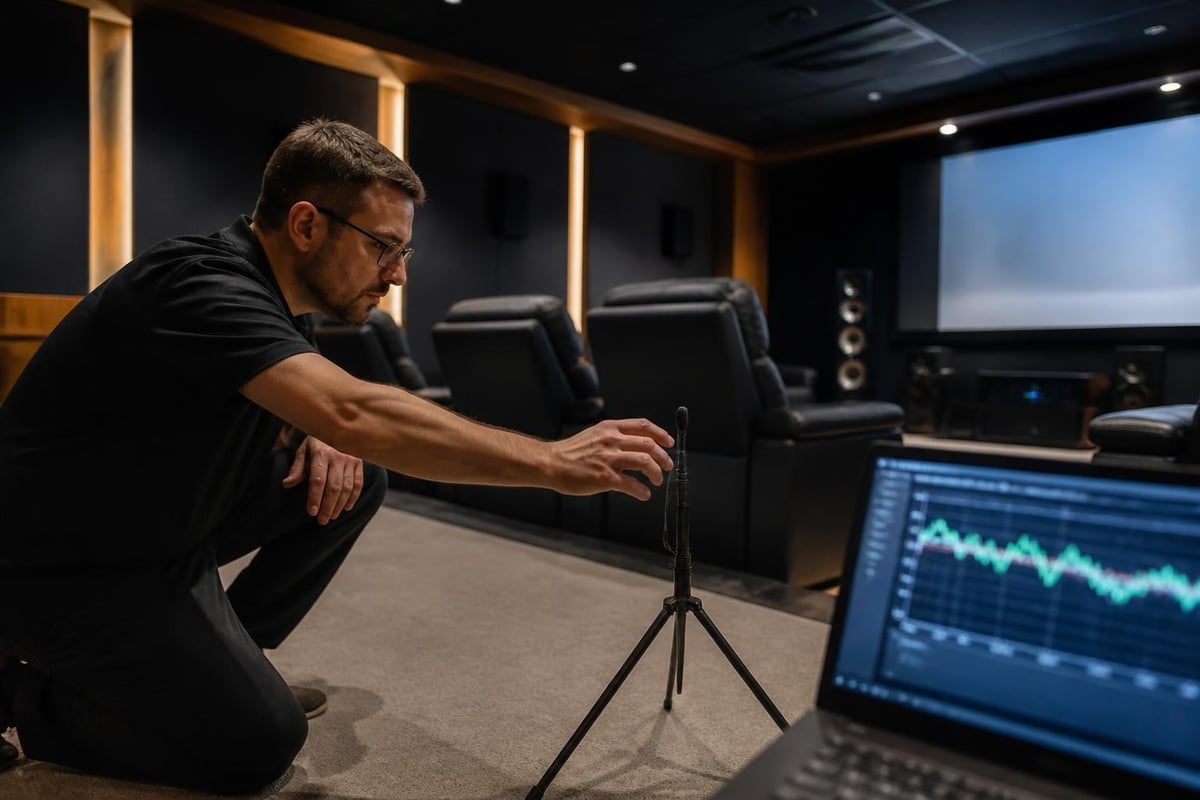
Audyssey, Dirac Live, and similar technologies measure room response using multiple microphone positions, then apply equalization and timing adjustments to compensate for acoustic problems. These systems correct speaker-to-speaker level matching, delay compensation, and frequency response anomalies.
The microphone placement significantly impacts correction results. Measuring from multiple positions throughout the seating area produces better average results than single-position calibration. Most systems average six to nine measurement points for balanced correction.
Automated systems excel at certain tasks like level matching and delay alignment but can struggle with severe room modes. Sound On Sound’s guides on immersive audio provide practical insights into calibration workflows and common challenges.
Manual Refinement
After automated calibration, manual adjustments often improve results. Real-time analyzers reveal residual frequency response issues, while test tones help verify proper level matching across all channels.
Subwoofer integration requires particular attention in cinema surround sound systems. The crossover point between subwoofer and main speakers should create seamless transitions without audible gaps or overlaps. Most installations benefit from 80Hz crossovers, though specific speakers and room characteristics may warrant adjustment.
| Calibration Parameter | Automated Systems | Manual Methods | Priority Level |
|---|---|---|---|
| Speaker Levels | Excellent | SPL meter | Critical |
| Distance/Delay | Excellent | Tape measure + calculation | Critical |
| Crossover Points | Good | Measurement + listening | High |
| EQ Fine-Tuning | Fair | RTA + adjustment | Medium |
| Phase Alignment | Variable | Subwoofer crawl + testing | High |
Phase alignment between subwoofers and main speakers affects bass impact and clarity. Adjusting subwoofer phase or polarity sometimes produces better integration than frequency-domain equalization alone.
Professional Installation Considerations
While enthusiasts can achieve excellent results with careful planning, professional installation brings expertise that elevates cinema surround sound systems beyond DIY capabilities.
Custom Integration
Professional installers design systems around specific room characteristics and client requirements. Custom home cinema installations often incorporate specialized cinema speakers from manufacturers like M&K Audio that deliver theatrical performance optimized for dedicated viewing rooms. These components integrate with sophisticated control systems, acoustic treatments, and infrastructure invisible to room occupants.
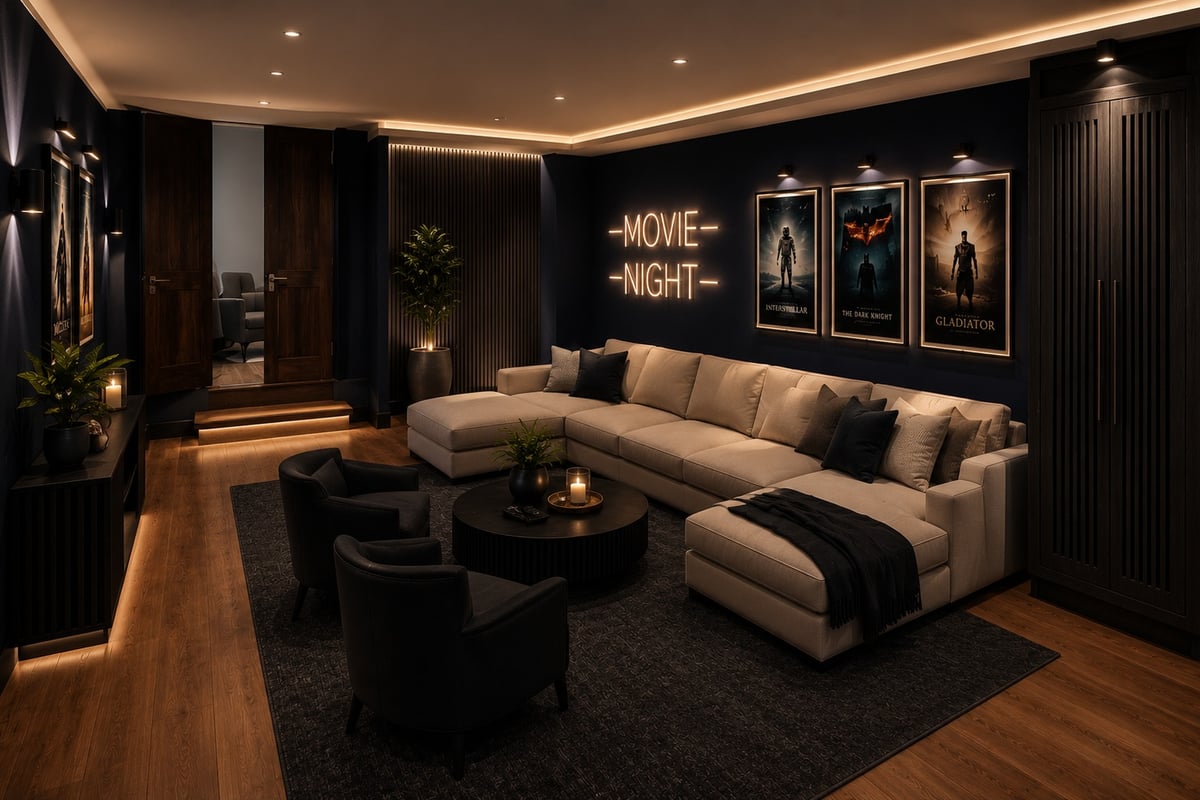
Wiring infrastructure for cinema surround sound requires planning before construction or renovation. In-wall and in-ceiling speaker wire, conduit for future upgrades, and proper termination points ensure clean installations without visible cable runs. Professional installers coordinate with builders and architects to integrate audio infrastructure seamlessly.
Compliance with Industry Standards
Commercial cinema installations follow strict standards for sound reproduction. The SMPTE standards for immersive audio define technical requirements that ensure consistency across different playback systems. While home installations need not meet theatrical specifications exactly, understanding these standards guides better design decisions.
Digital cinema packages delivered to theaters use specific encoding and metadata structures. Home cinema surround sound systems reproduce consumer releases that originate from these theatrical masters, so alignment with professional practices produces more authentic reproduction.
Content Considerations and Format Support
Hardware capabilities mean little without appropriate content. The cinema surround sound format landscape continues evolving, with streaming services, physical media, and broadcast each presenting different considerations.
Physical Media Formats
Ultra HD Blu-ray discs support Dolby Atmos and DTS:X with lossless audio compression, delivering bit-for-bit identical reproduction of theatrical soundtracks. These formats provide the highest home audio quality currently available.
Standard Blu-ray supports 7.1 channel audio and compressed Dolby Atmos through Dolby TrueHD carriers. While not technically lossless at the object level, these implementations sound effectively indistinguishable from uncompressed sources in home environments.
Streaming Services
Netflix, Disney+, Apple TV+, and other platforms deliver Dolby Atmos through lossy Dolby Digital Plus encoding. The compression reduces bandwidth requirements but maintains object-based metadata and height channel information. Results depend heavily on internet connection quality and streaming device capabilities.
Streaming considerations for cinema surround sound:
- Sufficient bandwidth (25+ Mbps recommended)
- Compatible streaming device with Atmos support
- HDMI eARC or optical connections to AV receiver
- Service subscription tier supporting enhanced audio
The IBC resources on immersive audio provide industry perspective on streaming audio quality and distribution challenges.
Gaming and Interactive Media
Modern gaming consoles support object-based cinema surround sound for heightened immersion. Games like racing simulators, first-person shooters, and flight simulators benefit dramatically from height channels and precise positional audio.
Interactive content presents unique challenges since audio must adapt to unpredictable player actions. Game audio engines render sound objects in real-time based on player position and game events, placing different demands on processing compared to fixed movie soundtracks.
Future Developments in Cinema Audio
Cinema surround sound technology continues advancing with new formats, reproduction methods, and content delivery systems emerging regularly. Understanding these trends helps future-proof installations and anticipate upcoming capabilities.
Wireless Speaker Technology
Wireless rear and height speakers eliminate cable runs that complicate installations in finished rooms. Current implementations use proprietary wireless protocols with varying latency and reliability characteristics. As wireless audio technology matures, truly cable-free cinema surround sound systems may become practical for critical applications.
Latency remains the primary technical barrier. Even microsecond delays between speakers create audible timing errors that destroy imaging and localization. Professional-grade wireless systems minimize latency through sophisticated buffering and synchronization, but wired connections still provide the most reliable performance.
Personalized Audio and Headphone Virtualization
Spatial audio processing for headphones attempts to recreate cinema surround sound experiences through binaural rendering. Apple Spatial Audio, Sony 360 Reality Audio, and similar technologies use head-tracking and HRTF (head-related transfer function) processing to simulate speaker-based surround sound.
While impressive for portable devices, these technologies don't replace properly implemented speaker systems in dedicated theater environments. They do, however, expand access to immersive audio experiences and may influence how content creators approach spatial audio production.
Expanded Object Counts and Resolution
Current object-based formats support far more discrete audio objects than early surround implementations. Future formats may expand these capabilities further, with higher spatial resolution and more sophisticated metadata describing sound characteristics beyond position and movement.
Enhanced metadata could include room acoustic parameters, directivity patterns, and semantic descriptions that help reproduction systems adapt to specific playback environments. These advances would narrow the gap between theatrical presentation and home reproduction.
Practical Implementation Strategies
Translating technical knowledge into functional cinema surround sound systems requires practical strategies that balance performance, budget, and space constraints.
Phased Installation Approach
Starting with quality 5.1 or 7.1 systems and expanding to immersive formats later spreads costs while maintaining upgrade paths. This approach works well when room infrastructure supports future expansion but budgets or component availability delays full implementation.
Pre-wiring for height channels during initial installation costs relatively little but saves significant expense and disruption later. Even if height speakers aren't installed immediately, having infrastructure ready simplifies future upgrades.
Phased approach milestones:
- Phase 1: High-quality 5.1 with proper placement and room treatment
- Phase 2: Expand to 7.1 with additional surrounds
- Phase 3: Add height channels for Dolby Atmos capability
- Phase 4: Optimize with advanced calibration and additional acoustic treatment
Component Selection Priorities
Allocating budgets appropriately maximizes overall system performance. Spending heavily on electronics while skimping on speakers or room treatment rarely produces satisfying results. Speaker quality and placement typically impact sound quality more than receiver specifications beyond basic feature requirements.
Room treatment deserves significant budget allocation in dedicated home cinema surround sound installations. Acoustic panels, bass traps, and proper construction techniques often improve sound quality more than component upgrades in already well-specified systems.
| Budget Category | Recommended Allocation | Priority Justification |
|---|---|---|
| Speakers | 40-50% | Direct sound reproduction impact |
| Electronics | 20-25% | Adequate features, room correction |
| Room Treatment | 15-20% | Addresses fundamental acoustic issues |
| Installation/Calibration | 10-15% | Ensures proper implementation |
| Seating/Décor | Variable | Affects comfort, not sound quality directly |
Subwoofers merit special consideration. Dual subwoofers in moderate-quality models often outperform single premium subwoofers due to improved room mode control and smoother frequency response across seating areas.
System Maintenance and Evolution
Cinema surround sound systems require ongoing attention to maintain optimal performance. Calibration drifts over time as speaker components age and room characteristics change with furnishings and seasonal humidity variations.
Regular Recalibration
Annual or biannual recalibration ensures systems continue performing as designed. Even without component changes, speaker positions shift minutely, dust accumulates on drivers, and room acoustics evolve. Quick calibration checks catch these gradual changes before they significantly degrade performance.
Firmware updates for AV receivers often improve room correction algorithms, add format support, or fix bugs affecting audio processing. Staying current with updates maintains compatibility with new content formats and streaming services.
Technology Refresh Cycles
Speaker technology evolves slowly compared to electronics. Quality speakers remain relevant for decades with proper care, while AV receivers typically require replacement every five to ten years as formats and connectivity standards evolve.
HDMI specifications illustrate this dynamic. HDMI 2.1 brings enhanced audio return channel (eARC) support crucial for lossless Atmos from streaming devices and gaming consoles. Older receivers lacking eARC struggle with these newer sources even if they technically support the audio formats.
Planning technology refresh cycles around connectivity and format evolution rather than arbitrary timeframes optimizes spending. Upgrading when new capabilities become genuinely useful makes more sense than routine replacement on fixed schedules.
Implementing cinema surround sound systems that deliver theatrical performance requires balancing technical precision, acoustic science, and practical installation realities. Whether starting with fundamental 5.1 configurations or pursuing cutting-edge immersive audio, success depends on proper planning, quality components, and professional execution. ANR media specializes in custom home cinema installations that bring these elements together, creating immersive audio experiences tailored to your specific space and requirements. Contact our team to discuss how we can transform your vision into a world-class cinema surround sound environment.