

Finding the best surround sound movie to showcase your home cinema system requires understanding both the technical capabilities of immersive audio formats and the creative artistry behind groundbreaking sound design. Whether you've invested in a dedicated cinema room or you're planning an upgrade, certain films push the boundaries of what's possible with multichannel audio, delivering experiences that can actually surpass commercial theater presentations when properly configured. The right demonstration material transforms your space from a simple viewing room into an immersive entertainment environment that rivals professional installations.
Understanding What Makes a Movie Exceptional for Surround Sound
The best surround sound movie isn't simply the loudest or most action-packed film in your collection. Exceptional surround sound design requires deliberate creative choices that place viewers inside the story's acoustic environment, using every available channel to create dimensional space, emotional resonance, and realistic sound propagation.
Key characteristics of outstanding surround sound design include:
- Discrete channel separation that assigns unique audio elements to specific speakers rather than generic ambient fill
- Height channel utilization that creates genuine overhead effects, not just reflected or upward-firing approximations
- Dynamic range that respects quiet moments while delivering impactful crescendos without compression
- Low-frequency extension with tight, articulate bass rather than boomy rumble
- Immersive ambience that establishes environmental realism through subtle cues and spatial accuracy
Modern object-based audio formats like Dolby Atmos have revolutionized how filmmakers approach sound design. According to the official Dolby Atmos technical specifications, this technology allows sound designers to position individual audio elements in three-dimensional space, treating sounds as objects that can move freely around the listening environment rather than being locked to specific channels.
The Technical Foundation for Evaluating Surround Performance
When assessing whether a film qualifies as the best surround sound movie for demonstration purposes, understanding the underlying audio format proves essential. Most modern releases support multiple audio tracks, but not all implementations receive equal attention during post-production.
| Audio Format | Maximum Channels | Object-Based | Typical Use Case |
|---|---|---|---|
| Dolby Atmos | 128 objects + 9.1 bed | Yes | Premium home cinema |
| DTS:X | Unlimited objects | Yes | High-end installations |
| Dolby TrueHD 7.1 | 8 discrete channels | No | Standard Blu-ray |
| DTS-HD Master | 8 discrete channels | No | Standard Blu-ray |
The distinction between channel-based and object-based audio fundamentally changes how films utilize your speaker configuration. Traditional 5.1 or 7.1 systems distribute sound across fixed channels, while Atmos and DTS:X allow precise positioning that adapts to your specific speaker layout.
Action and Science Fiction Films That Define Surround Excellence
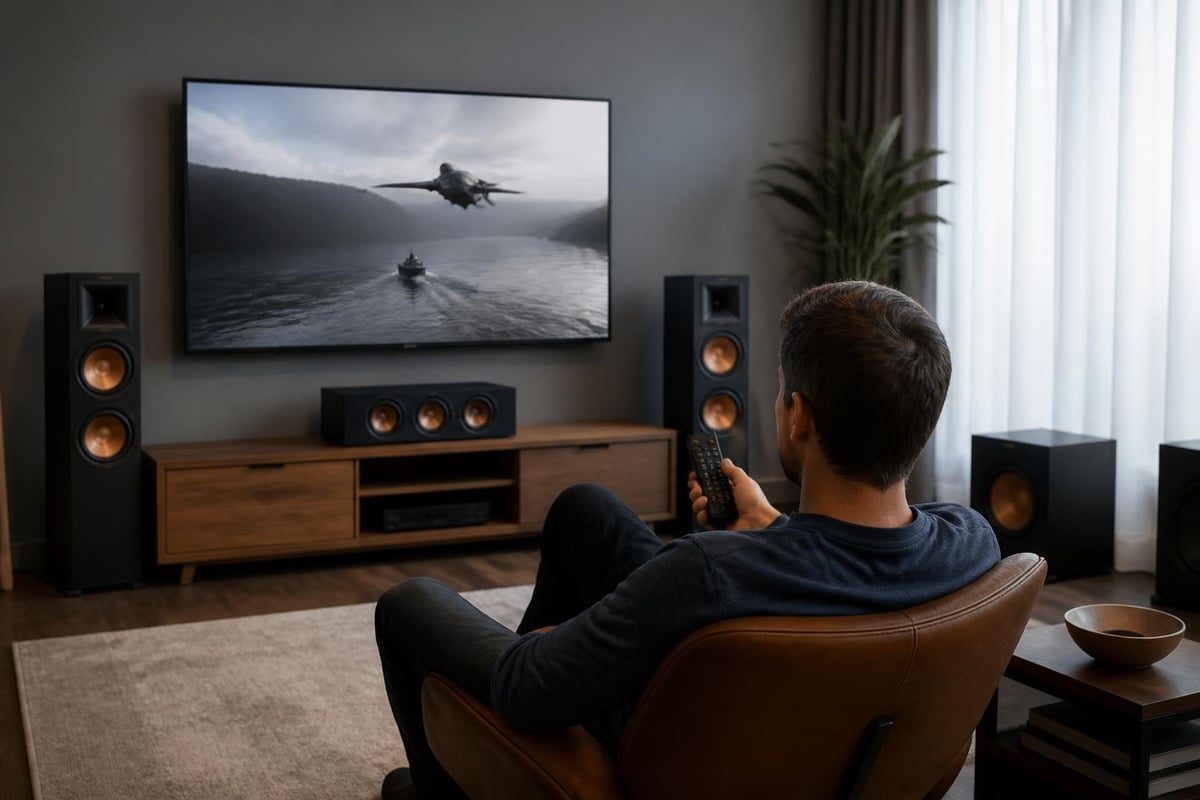
Action and science fiction genres consistently deliver the best surround sound movie experiences because they demand creative sound design that extends beyond conventional acoustic environments. These films justify the investment in premium speaker systems and proper acoustic treatment.
Mad Max: Fury Road (2015)
This film remains a reference standard more than a decade after release. The continuous 120-minute chase sequence creates an unrelenting sonic assault that tests every aspect of your system. Engine roars circle the room with precise directionality, sandstorm debris pelts from overhead channels, and the Doof Warrior's flame-throwing guitar resonates with chest-thumping authority.
What makes this exceptional:
- Constant discrete surround activity without artificial panning effects
- Low-frequency effects that emphasize impact and texture over raw volume
- Clear dialogue intelligibility despite overwhelming environmental chaos
- Vertical dimension usage that predated widespread Atmos adoption
The film's sound design earned both an Academy Award and continued recognition from audio professionals as demonstration-grade material. Every speaker in your configuration receives meaningful content throughout the runtime.
Blade Runner 2049 (2017)
Where Mad Max emphasizes kinetic energy, Blade Runner 2049 showcases atmospheric precision and sonic world-building. The soundscape creates oppressive urban density, with rainfall patterns that establish vertical space and environmental reverb that defines architectural scale.
Denis Villeneuve's collaboration with sound designer Mark Mangini produced a best surround sound movie that rewards careful listening. Subtle details like the hum of holographic projectors, distant traffic patterns, and the specific acoustic signature of different locations demonstrate how surround sound enhances storytelling beyond obvious action sequences.
The integration of Hans Zimmer's score with environmental effects creates seamless transitions between musical and diegetic sound. Bass frequencies extend deep without muddiness, while the upper range maintains clarity during complex overlapping elements. For systems with capable subwoofers and properly positioned surrounds, this film reveals details that remain hidden on lesser configurations.
Gravity (2013)
Alfonso Cuarón's space thriller presents unique challenges because sound doesn't propagate in vacuum. The creative solution-conveying impact vibrations through physical contact and using subjective perspective-results in one of the most immersive audio experiences ever captured.
The opening sequence alone justifies this film's reputation as demonstration material. Debris impacts track with absolute precision around the listening position, creating genuine spatial disorientation that mirrors Sandra Bullock's character experience. The contrast between silent void and the intense physical impacts transmitted through helmets and spacecraft creates dramatic tension impossible to achieve with conventional mixing.
Dramatic Films With Understated Surround Brilliance
The best surround sound movie isn't always an effects-heavy blockbuster. Dramatic films often demonstrate superior dynamic range and nuanced spatial design that showcases system refinement rather than raw power.
1917 (2019)
Sam Mendes' continuous-shot war film uses surround sound to create relentless environmental presence. The illusion of real-time progression demands authentic acoustic space that evolves as characters traverse trenches, no-man's-land, and ruined villages.
- Artillery fire approaches from specific distances and directions with realistic propagation delays
- Overhead aircraft generate authentic Doppler shifts and height-specific placement
- Environmental ambience changes naturally as characters move between acoustic spaces
- Low-frequency effects emphasize concussive force without overwhelming dialogue
This film proves that the best surround sound movie design supports storytelling rather than overwhelming it. Every sonic element serves narrative purpose, creating immersion that operates on subconscious levels.
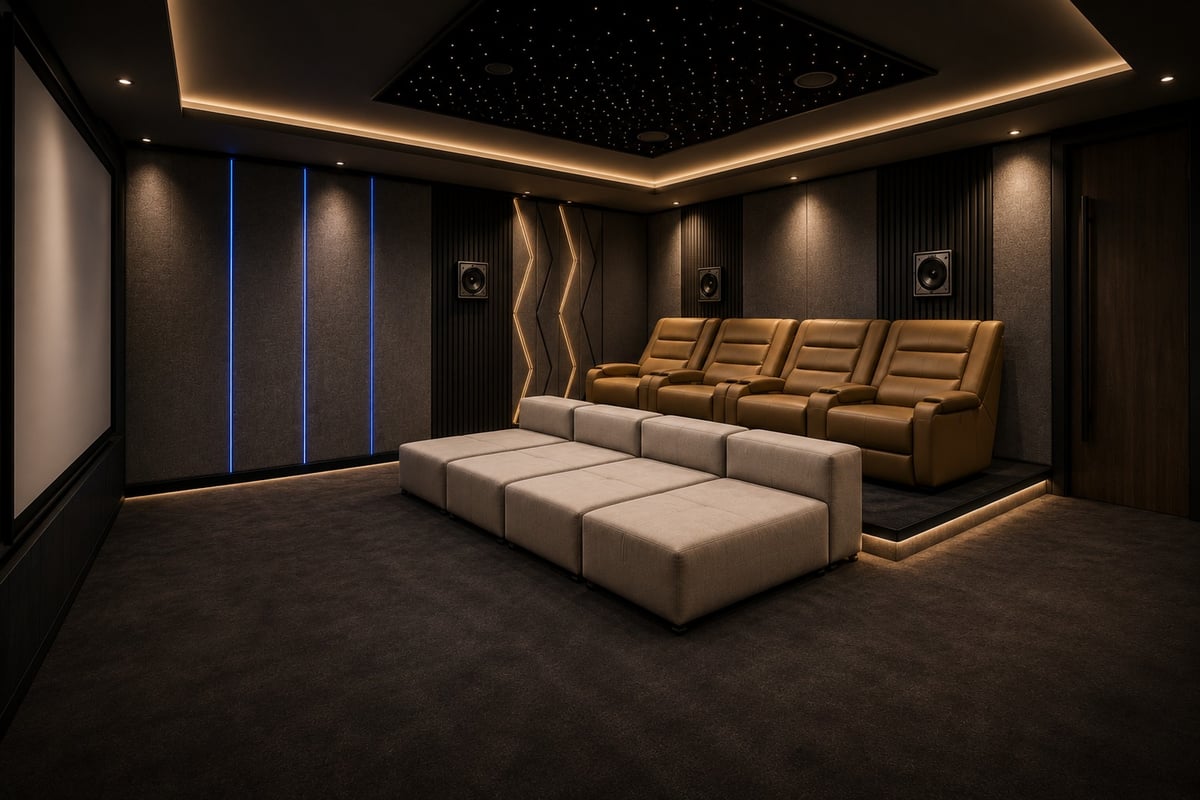
For those building a dedicated cinema room, this film demonstrates why proper acoustic treatment matters as much as speaker quality. The subtle environmental transitions and dynamic range require a room that controls reflections and maintains clarity across the full frequency spectrum. When you're ready to create a purpose-built environment that does justice to material like this, a professionally designed Home cinema room ensures every technical element works together seamlessly, from speaker positioning to acoustic optimization.
A Quiet Place (2018)
John Krasinski's thriller builds tension through the absence of sound, making every discrete effect count. The sparse sound design places intense focus on spatial accuracy and dynamic impact when sounds do occur.
Animated Films With Reference-Quality Audio
Animation studios often produce the best surround sound movie options because they build every audio element from scratch rather than relying on location recording. This control enables meticulous spatial design and creative sonic environments impossible in live-action productions.
How to Train Your Dragon: The Hidden World (2019)
DreamWorks Animation delivered exceptional Atmos implementation in this trilogy conclusion. Dragon flight sequences utilize overhead channels with remarkable precision, creating three-dimensional aerial choreography. Wind effects, wing beats, and environmental elements demonstrate how animated films can achieve acoustic realism that surpasses live-action constraints.
The underwater kingdom sequence showcases low-frequency extension and reverberant space that tests subwoofer articulation and surround speaker dispersion. Every speaker receives discrete content that contributes to environmental believability rather than generic ambient fill.
Spider-Man: Into the Spider-Verse (2018)
This film's experimental visual style extends to its audio design. Hip-hop musical elements integrate with environmental sound effects and character-specific acoustic signatures. The dimension-hopping plot justifies radical sonic transitions that demonstrate system versatility across different mixing styles and frequency ranges.
Bass-heavy musical sequences test subwoofer control and integration, while rapid action sequences demand transient response and clarity from all channels. The height channels create vertical dimension during web-swinging sequences and dimensional portal effects.
Horror Films That Exploit Spatial Audio
Horror cinema leverages surround sound for psychological manipulation, using spatial cues to create unease and misdirection. The best surround sound movie in this genre uses restraint as effectively as bombast.
Effective horror sound design techniques include:
- Off-screen sound placement that suggests unseen threats
- Extreme dynamic shifts that create startle responses
- Environmental ambience that establishes oppressive atmosphere
- Selective silence that heightens awareness of subtle cues
A Quiet Place Part II (2020)
Building on the original's foundation, the sequel expands environmental scope while maintaining intense focus on spatial accuracy. Multiple simultaneous threats require precise directional cues that prevent confusion while maximizing tension.
The opening sequence revisits Day One with urban chaos that fills every channel. This establishes system capabilities before returning to the sparse, hyper-detailed approach that defines the series. The contrast demonstrates why dynamic range matters more than constant loud output.
War Films With Historical Authenticity
War films demand authentic weapon reports, vehicle movement, and environmental chaos that creates visceral historical immersion. The best surround sound movie in this category balances historical accuracy with cinematic impact.
Dunkirk (2017)
Christopher Nolan's WWII epic uses sound design as narrative structure. Three interwoven timelines-land, sea, and air-each carry distinct acoustic signatures. Spitfire dogfights showcase overhead channel utilization, while beach evacuation scenes create claustrophobic density through overlapping elements.
Hans Zimmer's score integrates with sound effects through techniques like the "Shepard tone," creating perpetual escalation that mirrors narrative tension. The integration demonstrates how music and environmental sound can merge into unified design rather than competing for attention.
According to Dolby Professional’s home setup guidance, films like Dunkirk benefit enormously from proper speaker placement, particularly the height channels that create authentic aerial perspective during combat sequences.
Testing Your System With Demonstration Sequences
Identifying the best surround sound movie for your specific system requires understanding which technical aspects you want to evaluate or demonstrate.
| Film | Frequency Range | Dynamic Range | Surround Activity | Height Channels |
|---|---|---|---|---|
| Mad Max: Fury Road | Excellent | Exceptional | Constant | Very Good |
| Blade Runner 2049 | Outstanding | Exceptional | Detailed | Exceptional |
| Gravity | Excellent | Outstanding | Precise | Outstanding |
| Dunkirk | Very Good | Outstanding | Layered | Excellent |
| 1917 | Excellent | Exceptional | Immersive | Very Good |
Specific Demonstration Scenes
Rather than playing entire films, specific sequences efficiently showcase system capabilities:
For bass extension and impact: The opening sequence of Blade Runner 2049 when K's spinner descends through the protein farms, or the artillery bombardment in 1917.
For height channel precision: The debris field destruction in Gravity, or the aerial dogfight sequences in Dunkirk.
For dialogue clarity under stress: Any action sequence in Mad Max: Fury Road, which maintains intelligibility despite constant sonic chaos.
For dynamic range: The contrast between silence and gunfire in A Quiet Place, which reveals system noise floor and transient response.
For overall immersion: The continuous trenches-to-farmhouse journey in 1917, which demonstrates natural acoustic transitions and environmental presence.
The Role of Streaming Versus Physical Media
When pursuing the best surround sound movie experience, source quality matters significantly. While streaming services offer convenience, physical media typically delivers superior audio fidelity through higher bitrates and lossless encoding.
Netflix’s Dolby Atmos support has improved accessibility to immersive audio, but streaming implementations use lossy Dolby Digital Plus encoding rather than the lossless TrueHD found on Blu-ray discs. For critical listening and system demonstration, physical media provides measurable advantages in dynamic range preservation and detail resolution.
The SMPTE ST 2098-2 immersive audio specification defines technical standards for object-based audio distribution. Understanding these standards helps explain why different delivery methods produce varying results even when the master mix remains identical.
Building a Demonstration Library
Serious enthusiasts benefit from curating a collection of best surround sound movie titles that collectively demonstrate system capabilities across different genres and technical demands. This approach reveals strengths and weaknesses across various acoustic challenges rather than optimizing for a single type of content.
- Include at least one film emphasizing each frequency range extreme
- Select titles with different dynamic range philosophies
- Ensure representation of both constant surround activity and sparse, precise placement
- Add material that specifically exercises height channels versus traditional horizontal plane
- Include dialogue-driven content to verify intelligibility and center channel performance
Proper System Configuration for Maximum Impact
Owning the best surround sound movie collection provides limited value without proper system setup. Speaker placement, calibration, and acoustic treatment determine whether you experience the sound designer's intent or a compromised approximation.
Critical configuration elements include:
- Precise speaker positioning according to format specifications rather than room convenience
- Acoustic calibration using measurement tools rather than subjective adjustment
- Bass management that integrates subwoofers seamlessly across the crossover region
- Room treatment that controls reflections without over-damping the space
- Proper gain staging throughout the signal chain to preserve dynamic range
Resources from the Audio Engineering Society provide technical guidance on professional audio standards applicable to home installations. While home cinema doesn't require studio-grade precision, understanding professional practices improves results significantly.
The SMPTE immersive audio overview offers additional context about how object-based audio systems function and what they require from playback environments. This knowledge informs better installation decisions and helps optimize existing systems.
Future Developments in Immersive Home Audio
The best surround sound movie experiences continue evolving as technology advances and filmmakers explore creative possibilities. Current trends suggest several developments that will influence both content creation and home playback systems.
Increased object counts in consumer formats will enable more precise spatial placement without requiring additional physical speakers. Rendering engines will become more sophisticated at translating cinema configurations to various home layouts. Wireless speaker connections will reduce installation complexity without compromising audio quality.
Content creators are exploring binaural rendering for headphone listening that captures spatial information in two-channel playback. While this doesn't replace dedicated speaker systems, it demonstrates growing emphasis on immersive experiences across all playback scenarios.
The integration of room correction algorithms directly into AVRs continues improving, making professional-grade acoustic optimization accessible to broader audiences. Machine learning applications may eventually enable automated calibration that rivals manual measurement and adjustment by experienced installers.
Experiencing the best surround sound movie in a properly configured environment transforms film watching from passive entertainment into genuine immersion that engages multiple senses and creates lasting memories. Whether you're building your first dedicated theater or upgrading an existing system, selecting demonstration material that showcases your investment ensures every technical decision serves the ultimate goal of compelling, emotionally resonant experiences. ANR media specializes in custom home cinema installations that bring these reference-quality experiences to life, from speaker selection and placement through acoustic optimization and calibration, ensuring your system delivers the performance these exceptional films deserve.