

An atmos home theater system represents the pinnacle of immersive audio technology, transforming how we experience movies, music, and gaming at home. Unlike traditional surround sound that confines audio to a single horizontal plane, Dolby Atmos introduces a revolutionary object-based approach that positions sounds precisely in three-dimensional space, including overhead. This advancement allows filmmakers and sound designers to place individual audio elements exactly where they belong in a scene, creating a hemisphere of sound that envelops listeners from every direction. For homeowners considering a dedicated cinema space or upgrading their existing entertainment setup, understanding the core principles and implementation strategies of an atmos home theater system is essential to making informed decisions that deliver exceptional results.
Understanding Object-Based Audio Technology
Traditional surround sound systems assign audio to specific channels, such as left front, center, right front, and surround speakers. An atmos home theater system breaks free from this channel-based limitation by treating sounds as individual objects that can move freely through three-dimensional space.
How Atmos Differs from Conventional Surround
Each sound object carries metadata that tells the system exactly where to position it in real time. A helicopter flying overhead, rain falling from above, or a bullet whizzing past your ear can be placed with pinpoint accuracy. The system calculates which speakers should reproduce each object based on your specific speaker layout.
Key advantages of object-based audio:
- Scalability across different speaker configurations (5.1.2 to 7.2.4 and beyond)
- Precision placement of individual sound elements
- Vertical dimension adds realistic height information
- Adaptability to various room sizes and shapes
- Future-proof technology supported by all major streaming platforms
The height channels distinguish an atmos home theater system from legacy formats. Whether implemented through ceiling-mounted speakers, upward-firing modules, or in-ceiling installations, these elevated drivers create the overhead soundscape that defines the Atmos experience.
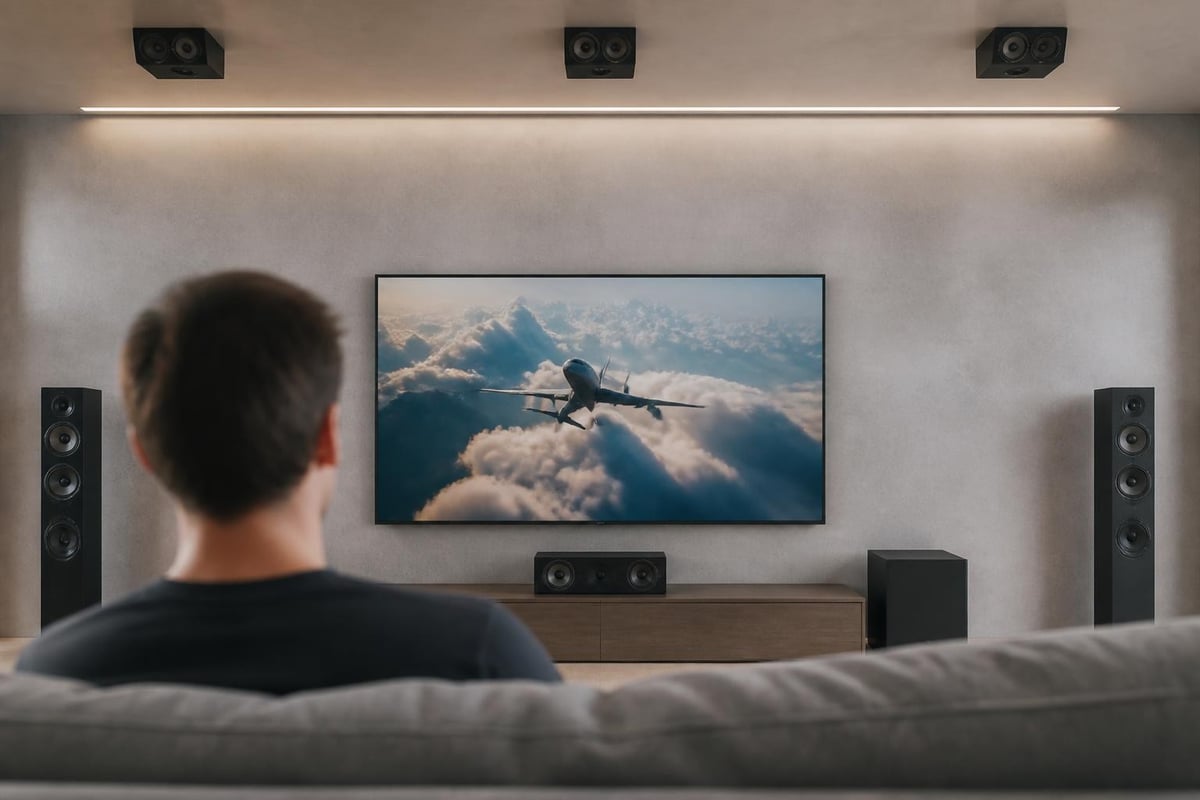
Speaker Configuration Options
Choosing the right speaker configuration determines the effectiveness of your atmos home theater system. The notation follows a three-number format: the first number represents traditional surround channels, the second indicates subwoofers, and the third specifies height channels.
Entry-Level Configurations
| Configuration | Layout Description | Best For | Room Size |
|---|---|---|---|
| 5.1.2 | Five surrounds, one sub, two height | Compact rooms, first Atmos system | 200-300 sq ft |
| 5.1.4 | Five surrounds, one sub, four height | Balanced performance | 250-400 sq ft |
| 7.1.2 | Seven surrounds, one sub, two height | Wider rooms, enhanced surround | 300-450 sq ft |
A 5.1.2 setup represents the minimum viable atmos home theater system, providing a taste of overhead audio without overwhelming smaller spaces or budgets. The two height speakers positioned at front locations create enough vertical dimension to appreciate the format's capabilities.
For homeowners seeking a more complete immersive experience, a 5.1.4 or 7.1.4 configuration offers substantially improved spatial accuracy. Four height speakers positioned at front and rear locations create a more convincing overhead soundfield, eliminating gaps in the height layer that can compromise immersion.
Premium Installations
Dedicated home cinema environments benefit from advanced configurations:
- 7.2.4: Dual subwoofers enhance bass uniformity, four height channels ensure complete overhead coverage
- 9.2.4: Adds wide front channels for expanded front soundstage
- 7.2.6: Six height speakers deliver reference-grade overhead precision
- 9.4.6: Ultimate configuration for large rooms with optimized bass management
The CEDIA recommended practices provide detailed guidance on speaker placement angles, distances, and acoustic treatment strategies for professional-grade installations. These standards ensure your atmos home theater system performs to its full potential.
Implementation Approaches
Three primary methods exist for adding height channels to your atmos home theater system, each with distinct advantages and installation requirements.
In-Ceiling Speakers
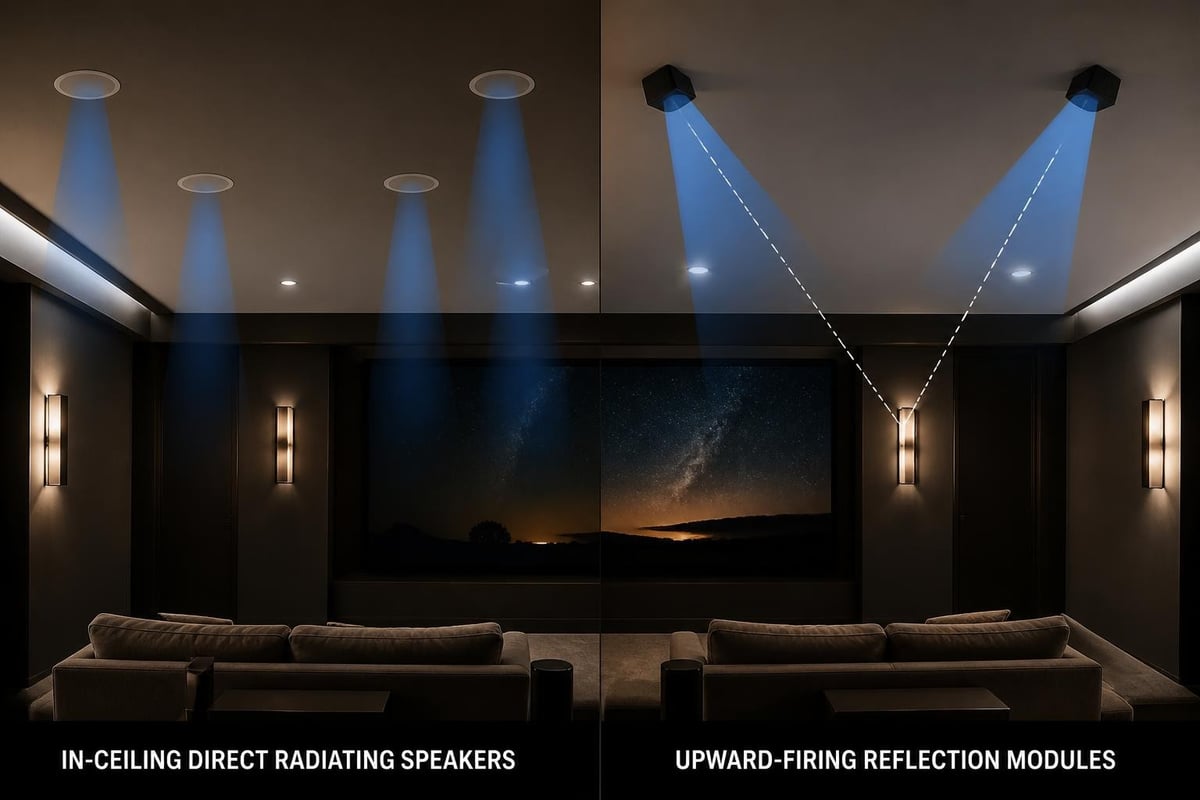
Ceiling-mounted speakers deliver the most authentic overhead experience. Flush-mount drivers installed directly into the ceiling position sound sources above the listening area with maximum accuracy. This approach requires access to the ceiling cavity for wiring and mounting, making it ideal for new construction or major renovations.
Professional installation ensures proper placement according to Dolby specifications. Front height speakers typically position 45-55 degrees forward from the primary seating position, while rear heights sit 135-150 degrees behind. Lateral spacing mirrors the front left and right speakers for optimal spatial coherence.
Upward-Firing Modules
When ceiling installation isn't feasible, upward-firing speakers offer an alternative solution. These specialized drivers mount atop traditional tower speakers or sit on surfaces near the main speakers, firing sound toward the ceiling where it reflects down to the listening area.
Performance depends on several factors:
- Ceiling height (8-14 feet optimal)
- Ceiling material (flat, reflective surfaces work best)
- Speaker positioning relative to listening area
- Room acoustics and reflective characteristics
While upward-firing technology has improved significantly, direct overhead speakers consistently outperform reflected designs in controlled comparisons. However, for renters or homeowners unable to modify ceilings, quality upward-firing modules provide a worthwhile compromise.
Dolby Atmos Soundbars
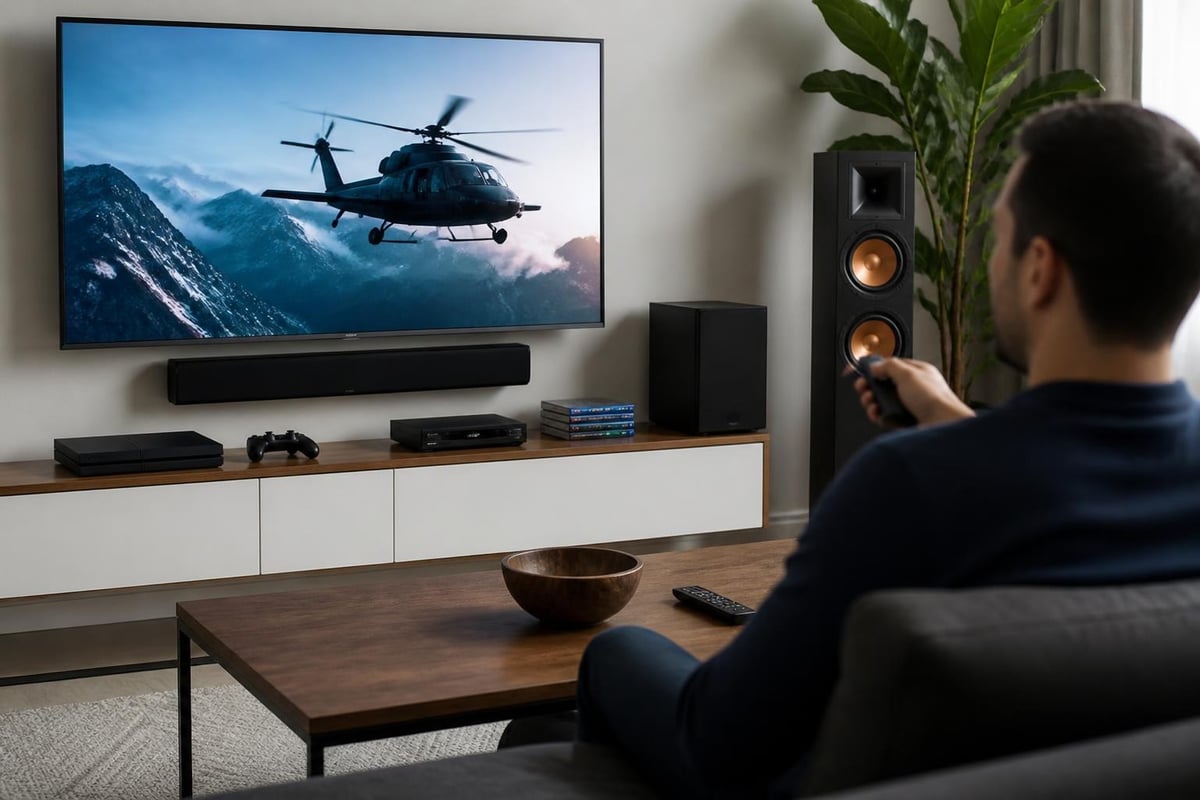
Soundbars with Atmos support represent the most accessible entry point, combining multiple drivers and psychoacoustic processing in a single cabinet. Comprehensive soundbar testing reveals significant performance variation across models, with premium units delivering surprisingly convincing results in appropriate spaces.
Soundbar considerations:
- Room size limitations (best under 300 sq ft)
- Reduced spatial precision versus discrete speakers
- Simplified setup and minimal visual impact
- Variable height channel effectiveness
- Often more affordable than AVR-based systems
For dedicated home cinema installations where performance takes priority, a discrete speaker atmos home theater system remains the professional recommendation. Soundbars serve smaller spaces, secondary zones, or situations where aesthetic constraints outweigh acoustic optimization.
AV Receiver Selection
The AV receiver functions as the brain of your atmos home theater system, decoding audio streams and distributing signals to each speaker with precise timing and calibration.
Essential Receiver Specifications
Modern Atmos-capable receivers must process object metadata in real time while powering multiple channels simultaneously. Look for these critical features:
- Channel amplification: Match or exceed your speaker count (7.2.4 requires 11 channels)
- Processing power: Handles up to 16 discrete objects in consumer implementations
- HDMI 2.1 support: Enables 4K/120Hz and 8K video passthrough
- eARC capability: Extracts Atmos from streaming apps on smart TVs
- Room correction: Automated calibration systems like Audyssey, Dirac, or YPAO
Many receivers support 7.2.4 configurations but include only 9 channels of internal amplification. External amplifiers can power the additional channels, though this increases system complexity and cost. Selecting a receiver with sufficient built-in amplification simplifies installation and reduces potential failure points.
Calibration and Processing
Automated room correction systems analyze your space using precision microphones, then apply digital filters that compensate for acoustic anomalies. These systems optimize:
- Speaker distance and timing alignment
- Frequency response equalization
- Level matching across all channels
- Crossover settings between speakers and subwoofers
Manual fine-tuning after automatic calibration often yields additional improvements. Critical listeners benefit from measuring systems like REW (Room EQ Wizard) combined with calibrated measurement microphones, allowing precise verification of frequency response, impulse response, and spatial characteristics.
Content Sources and Streaming
An atmos home theater system delivers value only when fed high-quality Atmos content. Multiple distribution channels now support the format, each with distinct characteristics.
Streaming Platforms
| Service | Atmos Availability | Bitrate | Content Library |
|---|---|---|---|
| Netflix | Premium tier | Lossy DD+ | Extensive originals |
| Disney+ | Standard subscription | Lossy DD+ | Marvel, Star Wars, Pixar |
| Apple TV+ | Included | Lossless TrueHD | Growing library |
| Amazon Prime | Included | Lossy DD+ | Select titles |
| HBO Max | Ad-free tier | Lossy DD+ | Warner catalog |
Apple TV+ stands out by offering lossless Atmos via Apple TV 4K devices, delivering superior audio quality compared to compressed streaming alternatives. The practical considerations around bandwidth requirements, device compatibility, and audio format support deserve attention when configuring streaming sources.
Physical Media
Ultra HD Blu-ray discs provide the highest-quality Atmos experience through Dolby TrueHD encoding. These lossless soundtracks preserve the complete dynamic range and spatial information from the theatrical master, delivering performance that streaming services cannot yet match.
A quality 4K Blu-ray player connects via HDMI to your receiver, which extracts and decodes the Atmos track. Ensure the player's audio settings output bitstream rather than PCM to preserve the Atmos metadata stream.
Room Design Considerations
Physical space characteristics profoundly impact your atmos home theater system's performance. Professional installation guidance emphasizes the relationship between room dimensions, acoustic treatment, and speaker placement in achieving optimal results.
Acoustic Treatment Fundamentals
Sound reflections, standing waves, and resonances color the audio your atmos home theater system produces. Strategic acoustic treatment addresses these issues without over-damping the space:
- First reflection points: Absorptive panels at sidewalls where speaker energy reflects to the listening position
- Bass traps: Corner-mounted absorbers control low-frequency room modes
- Diffusion: Rear-wall diffusers scatter reflections, creating spaciousness without excessive absorption
- Ceiling treatment: Moderate absorption prevents flutter echoes without eliminating beneficial reflections for upward-firing speakers
Professional acoustic analysis using measurement tools identifies problematic frequencies and reflection patterns specific to your space. This data-driven approach targets treatment placement for maximum effectiveness with minimal intervention.
Seating and Viewing Geometry
The primary listening position should center on the screen both horizontally and vertically, with all speakers equidistant when possible. Multiple rows require compromises, as perfect calibration for one position inevitably creates variances at others.
Theater seating elevation helps rear viewers see over front row occupants while improving sight lines to overhead speakers. Riser construction must account for structural loading, soundproofing, and integration with the room's acoustic treatment strategy.
Integration with Smart Home Systems
Modern atmos home theater systems integrate seamlessly with broader home automation platforms, enabling sophisticated control scenarios beyond simple remote operation.
Control Integration Options
Centralized control systems coordinate multiple technologies:
- One-touch "movie mode" that dims lights, closes shades, and powers the cinema system
- Voice commands through Amazon Alexa, Google Assistant, or Apple HomeKit
- Automated input switching based on source selection
- Volume presets for different content types and times of day
- Integration with security systems for automated shutdown
Control processors from manufacturers like Control4, Crestron, or Savant provide professional-grade integration, though complexity and cost increase substantially. For straightforward installations, receiver-based HDMI-CEC can accomplish basic coordination without dedicated control hardware.
Multiroom Audio Expansion
Many homeowners implement an atmos home theater system as the flagship zone within a larger distributed audio network. Whole-home audio platforms distribute music to additional rooms while maintaining the dedicated cinema space for immersive viewing.
High-resolution wireless streaming protocols now support lossless audio quality throughout the home. Coordinating these systems with your primary Atmos installation ensures consistent user experience and simplified management across all entertainment zones.
Professional Installation Benefits
While enthusiast-level DIY installation is certainly possible, professional design and implementation offer substantial advantages for an atmos home theater system investment at this scale.
Design Expertise
Experienced integrators assess your specific space, usage patterns, and performance expectations to recommend optimal configurations. Their familiarity with equipment compatibility, acoustic principles, and installation best practices prevents costly mistakes that compromise long-term satisfaction.
Professional design services typically include:
- Detailed site survey and acoustic analysis
- Equipment selection tailored to your requirements and budget
- Custom speaker placement calculations
- Acoustic treatment specifications
- Structured wiring and rack layout design
These foundational decisions determine system performance for years to come. Correcting poor initial choices often costs more than professional design would have prevented.
Installation Quality
Proper execution matters enormously in achieving your atmos home theater system's potential. In-wall and in-ceiling speaker installation requires precision cutting, secure mounting, and proper fire-code compliance. Equipment rack assembly, cable management, and termination quality affect both reliability and future serviceability.
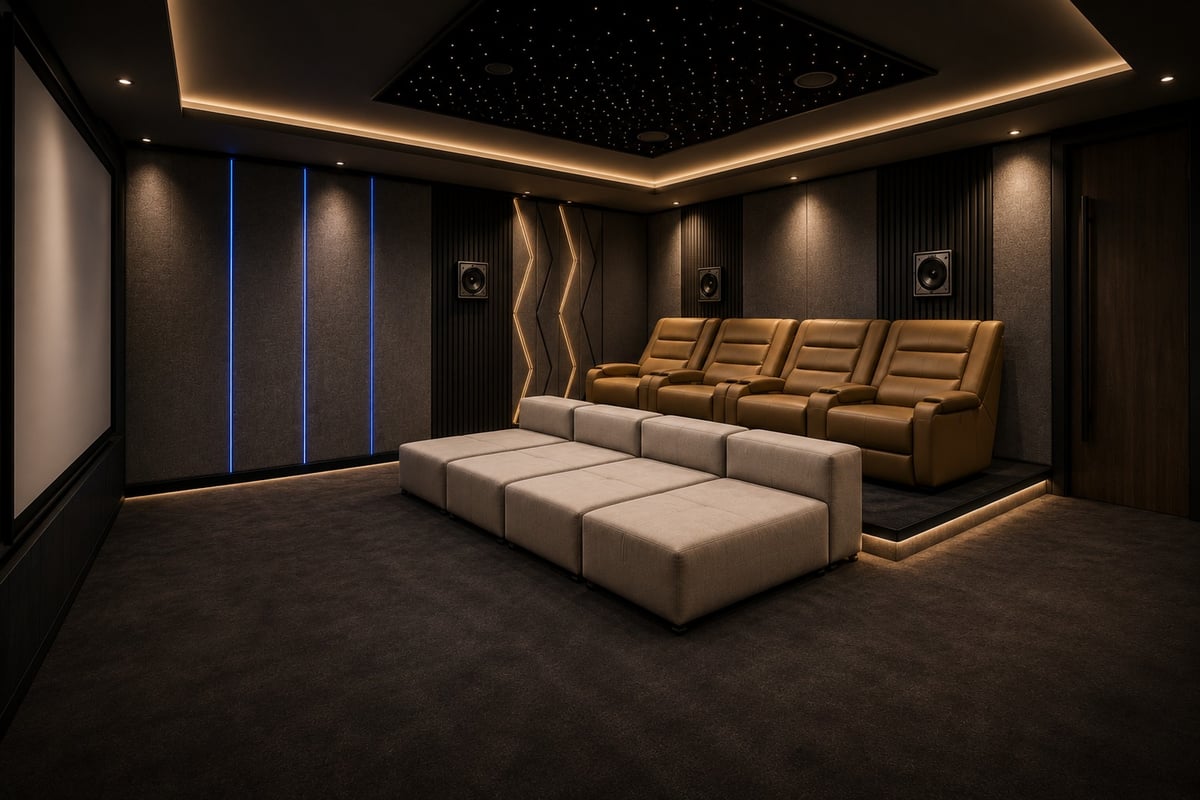
A custom home cinema room designed from the ground up incorporates acoustic optimization, lighting control, seating integration, and finish selections that transform a spare room into a dedicated entertainment sanctuary. Professional installation ensures every detail receives appropriate attention, from speaker mounting angles to cable dressing standards that facilitate future upgrades.
Calibration represents another area where professional expertise delivers measurable improvements. Technicians with specialized training and measurement equipment can fine-tune system response beyond what automated routines achieve, extracting the maximum performance your equipment offers.
Maintenance and Future-Proofing
An atmos home theater system represents a significant investment deserving of proper care and strategic planning for technology evolution.
Routine Maintenance
Regular attention preserves performance and longevity:
- Clean speaker grilles and drivers to prevent dust accumulation
- Verify all connections remain secure as thermal cycling can loosen terminals
- Update receiver firmware to maintain compatibility and add features
- Recalibrate periodically if seating or room configuration changes
- Test backup and protect against power surges with quality conditioning
Component lifespan varies by usage and quality tier. AV receivers typically serve 7-10 years before obsolescence or failure, while quality speakers often perform for decades with minimal degradation.
Technology Evolution
The ITU standards governing immersive audio continue evolving, though the core Atmos specification remains stable. Planning for future enhancements ensures your system adapts to emerging content formats and delivery methods.
Structured wiring exceeding current requirements facilitates upgrades without additional construction. Extra speaker wire runs, oversized conduits, and accessible mounting locations accommodate expanded configurations as budgets and desires evolve.
Format competition between Dolby Atmos and DTS:X has largely settled, with Atmos achieving market dominance across streaming, physical media, and theatrical exhibition. This widespread adoption suggests long-term viability, reducing obsolescence risk compared to proprietary formats with limited industry support.
Performance Optimization Techniques
Extracting peak performance from your atmos home theater system requires attention to details beyond basic setup and calibration.
Subwoofer Optimization
Low-frequency reproduction demands special consideration. Multiple subwoofers smooth room modes more effectively than a single unit, regardless of total output capability. Strategic placement based on measurement identifies locations that minimize cancellations and reinforce desired frequencies.
Delay alignment between subwoofers and main speakers prevents phase mismatches that create dips in the critical crossover region. Modern receivers handle this automatically during calibration, though manual verification using measurement tools confirms proper integration.
Power Management
Consistent, clean electrical power feeds sensitive electronics reliably. Dedicated 20-amp circuits prevent voltage sags during dynamic passages, while surge protection guards against destructive transients. Some enthusiasts employ power conditioners or regenerators, though well-designed modern electronics typically perform adequately with basic surge protection.
Speaker cable selection provokes endless debate among enthusiasts. Quality cables with proper gauge for the run length (14 AWG for under 50 feet, 12 AWG for longer runs) ensure adequate current delivery. Exotic cables offering marginal gains cost substantially more than comparable investments in acoustic treatment or equipment upgrades.
Source Quality
An atmos home theater system reproduces whatever signal it receives, making source quality paramount. Setup guidance emphasizes proper configuration of source devices to output Atmos streams rather than downmixed alternatives.
Streaming device settings should specify passthrough for audio rather than internal decoding. This ensures Atmos metadata reaches your receiver intact. Video settings should likewise use passthrough for optimal picture quality, allowing the display to handle processing rather than intermediate devices.
Budget Planning Strategies
Implementing an atmos home theater system requires realistic budget allocation across multiple system components and installation services.
Component Cost Distribution
| Category | Budget Range | Performance Tier |
|---|---|---|
| AV Receiver | $800-$3,500 | Entry to flagship |
| Speakers (7.2.4) | $2,000-$15,000 | Mid to premium |
| Subwoofer(s) | $500-$4,000 | Single to dual |
| Sources | $300-$1,500 | Streaming to UHD player |
| Installation | $1,500-$8,000 | Basic to comprehensive |
These ranges reflect quality equipment delivering legitimate performance improvements at each tier. Diminishing returns apply, with the jump from entry to mid-tier offering more substantial gains than mid-tier to flagship categories.
Phased Implementation
Financial constraints need not prevent enjoying an atmos home theater system. Strategic phasing allows gradual system development:
Phase 1: Implement 5.1.2 with quality AVR supporting future expansion, establishing the foundation
Phase 2: Add rear surround speakers, upgrading to 7.1.2 configuration for improved spatial imaging
Phase 3: Install remaining height channels, achieving 7.1.4 or 7.2.4 with enhanced overhead precision
Phase 4: Incorporate acoustic treatment, seating upgrades, and lighting control for complete experience
This approach spreads costs while maintaining a functional system throughout the evolution. Ensure initial equipment selections support planned expansions, avoiding premature obsolescence that forces redundant purchases.
Creating an exceptional atmos home theater system requires balancing technical specifications, acoustic principles, and practical installation realities to achieve truly immersive entertainment experiences. Whether you're planning a modest upgrade or a comprehensive dedicated cinema space, the object-based audio technology transforms how we experience content at home. ANR media specializes in designing and installing custom home cinema solutions tailored to your space, preferences, and budget, from straightforward Atmos upgrades to complete bespoke theater conversions. Contact our team to discuss how we can bring three-dimensional audio immersion to your home.