

Creating an immersive cinematic experience at home no longer requires a six-figure investment or a dedicated media room. An affordable home theater system can deliver impressive sound quality, stunning visuals, and that coveted theater atmosphere without draining your savings account. The key lies in understanding which components deliver the most impact for your money, how to balance quality with budget constraints, and where strategic investments pay dividends in long-term enjoyment. Whether you're transforming a living room, basement, or spare bedroom, building a home theater that rivals commercial cinemas is more accessible than ever in 2026.
Understanding Home Theater System Components
Building an affordable home theater system starts with knowing exactly what you need and what you can skip. The five essential components form the foundation of any setup, regardless of budget.
The core components include:
- Display: TV or projection system for visual content
- AV receiver: Central hub managing audio and video signals
- Speaker system: Surround sound array creating immersive audio
- Source devices: Media players, streaming boxes, or gaming consoles
- Seating and acoustics: Comfortable viewing positions and sound treatment
Display Options for Budget-Conscious Buyers
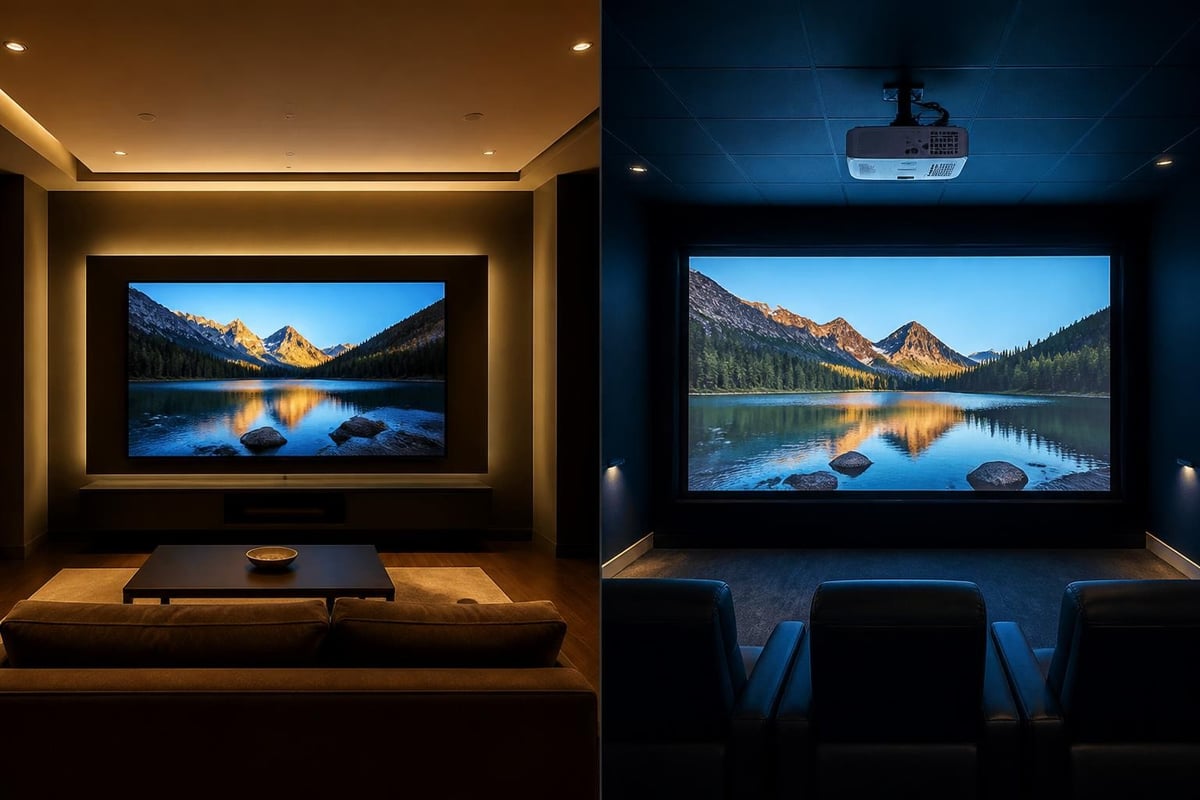
Your display represents the largest single purchase in most affordable home theater system builds. Modern 4K televisions offer exceptional value, with 65-inch models frequently available under $600. Projection systems, once prohibitively expensive, now include quality 1080p projectors starting around $400, though you'll need to budget for a screen.
The decision between TV and projector depends on your room characteristics and viewing preferences. TVs excel in rooms with ambient light and deliver crisp images without additional setup. Projectors create that authentic cinema scale, with 100-inch images becoming standard, but require light control and more installation work.
| Display Type | Price Range | Best For | Considerations |
|---|---|---|---|
| 65" 4K TV | $500-800 | Multi-purpose rooms | Excellent brightness, limited size |
| 75" 4K TV | $900-1400 | Larger spaces | Maximum TV impact |
| 1080p Projector + Screen | $600-1000 | Dedicated theaters | Requires dark room |
| 4K Projector + Screen | $1200-2000 | Premium budget builds | Best cinema experience |
Audio Receivers and Processing
The AV receiver functions as your system's brain, routing signals and powering speakers. Entry-level receivers supporting Dolby Atmos and 4K passthrough start around $350, providing features that cost thousands just five years ago.
Modern affordable receivers include:
- 5.1 or 5.2 channel configurations for full surround sound
- HDMI 2.1 inputs supporting latest gaming consoles and players
- Room calibration software automatically optimizing speaker output
- Streaming capabilities built directly into the receiver
- Wireless connectivity for flexible placement options
Don't overspend on excessive wattage. Most home theater environments perform beautifully with receivers rated between 75-100 watts per channel. Save those dollars for better speakers instead.
Speaker System Strategies on a Budget
Speaker selection makes or breaks your affordable home theater system. The market offers three primary approaches, each with distinct advantages.
Package Systems versus Individual Components
Complete 5.1 speaker packages deliver everything needed for surround sound, typically ranging from $300 to $800. These matched systems ensure tonal consistency and simplified setup, though individual component quality may lag behind separates.
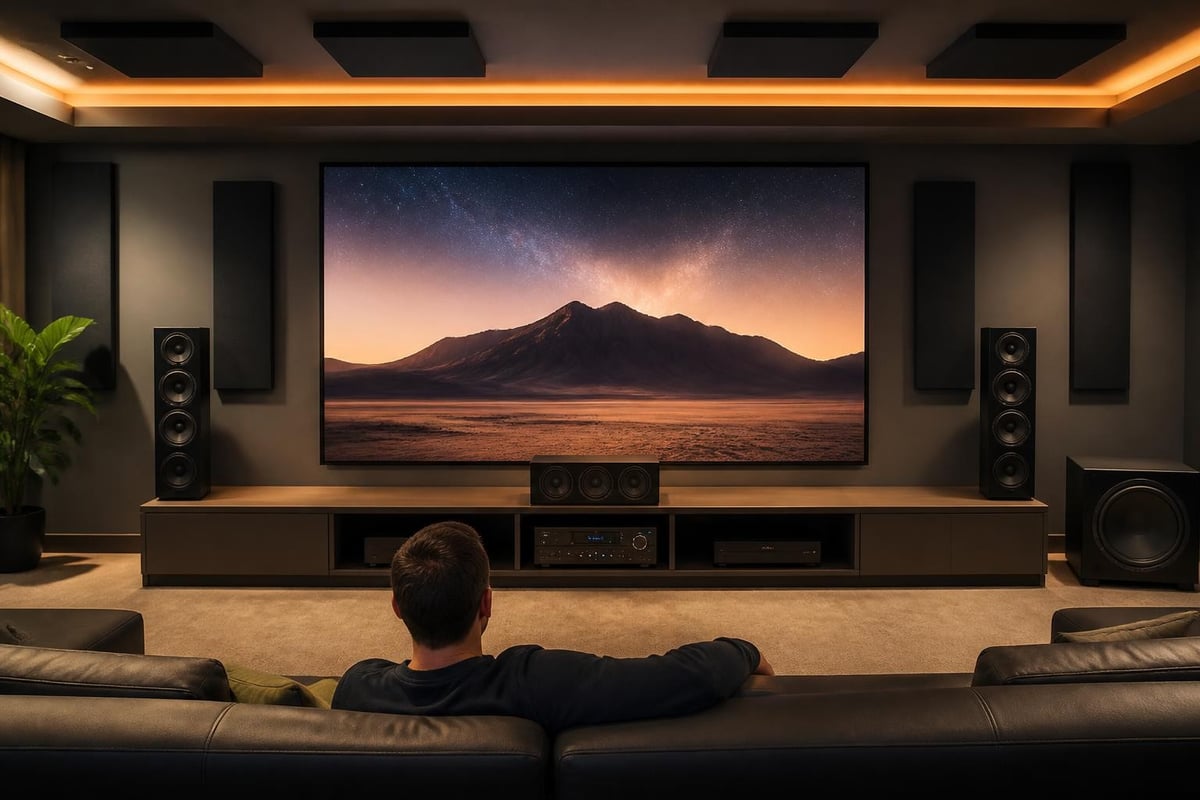
Building with individual speakers lets you prioritize the most critical channels. Invest heavily in front left, center, and right speakers where 80% of movie dialogue and effects occur. Surround speakers can be more modest without significantly impacting the experience.
Budget allocation strategy:
- 40% on front left and right speakers (bookshelf or tower)
- 25% on center channel (most critical for dialogue clarity)
- 20% on subwoofer (bass foundation)
- 15% on surround speakers (ambient effects)
This distribution ensures money flows to components you'll hear most prominently.
Subwoofer Selection Fundamentals
Bass response transforms action sequences and musical performances. A quality subwoofer matters more than expensive surround speakers for most content. Look for 10-inch or 12-inch powered subwoofers from reputable manufacturers, with prices starting around $200 for entry-level models that perform admirably.
Subwoofer placement significantly affects performance. Corner placement amplifies output through boundary reinforcement, potentially letting a smaller sub deliver bigger impact. Experimentation costs nothing and yields dramatic improvements.
Room Setup and Acoustic Considerations
Even an expensive system sounds mediocre in a poorly configured room. Strategic placement and basic acoustic treatment elevate an affordable home theater system to impressive performance levels.
Speaker Placement Following Dolby Standards
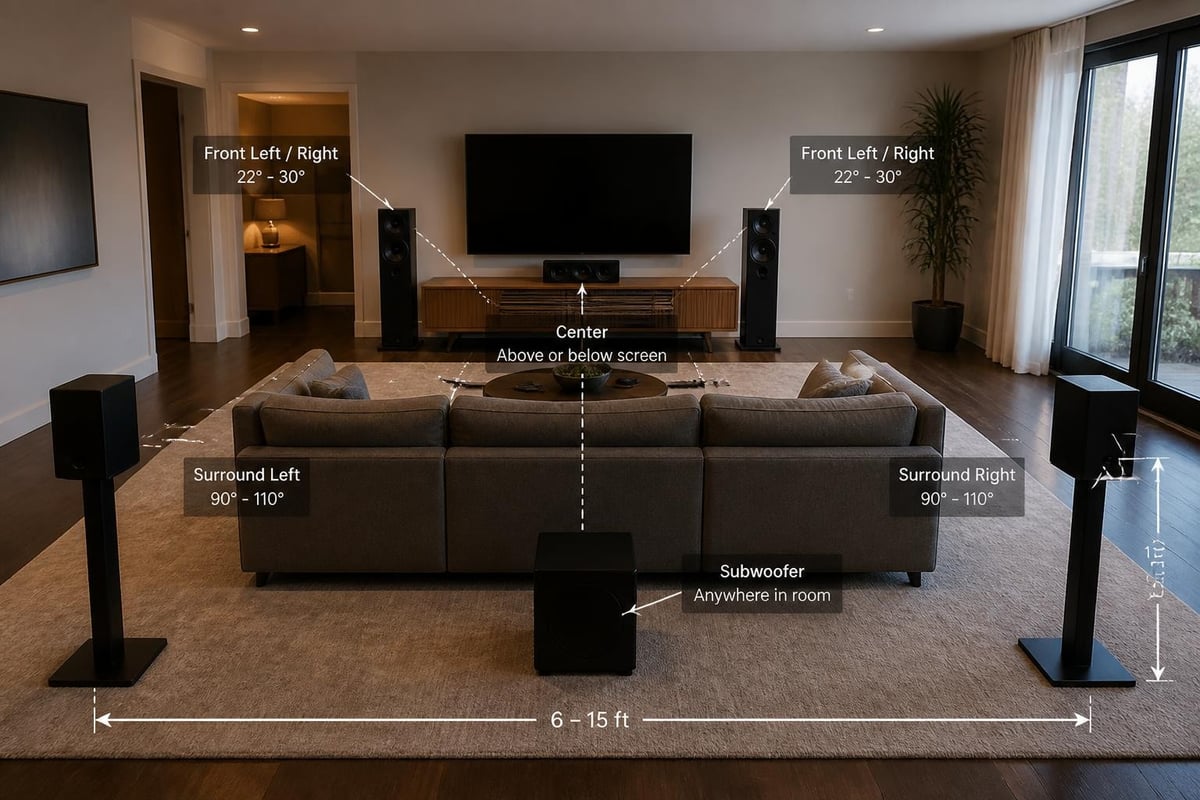
Following the Dolby home theater setup guide ensures proper spatial imaging and surround effects. Front speakers should form a 22-30 degree angle from the primary seating position, with the center channel directly below or above the screen.
Surround speakers work best at 90-110 degrees from center, slightly above ear level. This creates an enveloping soundfield without drawing attention to individual speaker locations.
Key placement measurements:
- Front speakers: 6-8 feet apart, tweeter at ear height
- Center channel: Within 2 feet of screen vertical center
- Surround speakers: 2-3 feet above seated ear level
- Subwoofer: Corner placement or front wall center
Acoustic Treatment on a Budget
Professional acoustic panels cost hundreds, but DIY solutions deliver 80% of the benefit at 20% of the cost. Sound-absorbing materials reduce echoes and tighten bass response, creating clarity that mimics far more expensive systems.
Heavy curtains, area rugs, and upholstered furniture provide surprising acoustic benefit. Strategic placement of thick blankets or DIY fabric-wrapped insulation panels at first reflection points (side walls where sound bounces toward listeners) dramatically improves dialogue intelligibility.
Building Your System in Phases
Creating an affordable home theater system doesn't require buying everything simultaneously. A phased approach spreads costs while delivering immediate enjoyment.
Phase One: Essential Foundation
Start with a quality TV or projector, basic receiver, and 3.1 setup (front left, center, right speakers plus subwoofer). This configuration handles dialogue and front soundstage beautifully, covering 90% of what you'll actively notice while watching.
Budget approximately $1,500-2,000 for this foundation:
| Component | Budget Range | Recommendation |
|---|---|---|
| Display | $600-1000 | 65" 4K TV or 1080p projector |
| AV Receiver | $350-500 | 5.1 capable with room calibration |
| Front Speakers | $300-500 | Bookshelf or compact towers |
| Center Speaker | $150-250 | Matching series to fronts |
| Subwoofer | $200-300 | 10" or 12" powered |
Phase Two: Surround Expansion
Add surround speakers and potentially upgrade your subwoofer after experiencing the base system. You'll better understand your room's characteristics and personal preferences, making more informed purchasing decisions. Surround speakers typically cost $150-300 for quality pairs.
Phase Three: Enhancement and Refinement
Consider Dolby Atmos height speakers, screen upgrades, or acoustic treatments. The Dolby Atmos installation guidelines provide detailed specifications for adding overhead effects, though these remain optional for budget builds. Additional seating, lighting control, and streaming device upgrades fit naturally into this phase.
Smart Shopping Strategies
Timing purchases and knowing where to look stretches your affordable home theater system budget considerably further.
Money-saving tactics that maintain quality:
- Black Friday and holiday sales often discount receivers and speakers 30-40%
- Previous generation models perform nearly identically to current versions at steep discounts
- Manufacturer refurbished units include full warranties at 20-30% savings
- Online retailers undercut physical stores on identical equipment
- Package deals bundle components for less than individual pricing
Avoid the temptation of unknown brands promising unrealistic specifications. Established manufacturers like Klipsch, Denon, Yamaha, and BenQ maintain reputations through consistent quality. A reputable entry-level product outperforms questionable "deals" every time.
When to Invest More
Certain components justify stretching your budget. The AV receiver represents your system's longevity, supporting new formats and features for years. Spending an extra $100-200 on a receiver with better room correction, more HDMI inputs, or future-ready features pays dividends over five-plus years of ownership.
Similarly, front speakers deserve priority investment. They handle the majority of movie soundtracks and music playback. Quality front speakers elevate average content while budget fronts limit even the best recordings.
Calibration and Optimization
Hardware represents only half the equation. Proper calibration transforms good components into a cohesive, impressive affordable home theater system.
Automatic Room Correction
Modern receivers include microphone-based calibration systems (Audyssey, YPAO, Dirac Live) that measure your room and optimize speaker levels, distances, and frequencies. Running this calibration takes fifteen minutes and delivers immediately noticeable improvements. Trust the system for initial setup, then make minor adjustments based on personal preference.
The calibration microphone should be positioned at primary seating height. Some systems benefit from multiple measurement positions, averaging results for broader optimization.
Manual Fine-Tuning
After automatic calibration, consider these manual adjustments:
- Reduce subwoofer level by 3-5 dB from calibrated setting (automatic systems often run bass hot)
- Increase center channel by 1-2 dB for clearer dialogue
- Verify all speakers are set to "small" with 80Hz crossover
- Disable unnecessary processing like virtual surround modes
Test with familiar content featuring clear dialogue and dynamic range. Action sequences reveal muddy bass or harsh treble, while dialogue-heavy scenes expose center channel issues.
Streaming and Source Devices
Physical media delivers the highest quality, but streaming dominates modern viewing habits. Your affordable home theater system should accommodate both.
Optimizing Streaming Quality
Netflix, Disney+, and other services stream in 4K with Dolby Atmos on premium tiers. Ensure your receiver supports these formats and that your internet connection provides at least 25 Mbps for consistent 4K streaming. Wired ethernet connections to streaming devices eliminate buffering and maximize quality.
Many smart TVs include streaming apps, but dedicated devices often provide better performance and regular updates. Budget $50-150 for quality streaming boxes that fully utilize your system's capabilities.
Custom Installation Considerations
While DIY installation works for many affordable home theater system builds, complex setups benefit from professional expertise. Running speaker wire through walls, mounting projectors, and integrating control systems requires specific tools and knowledge.
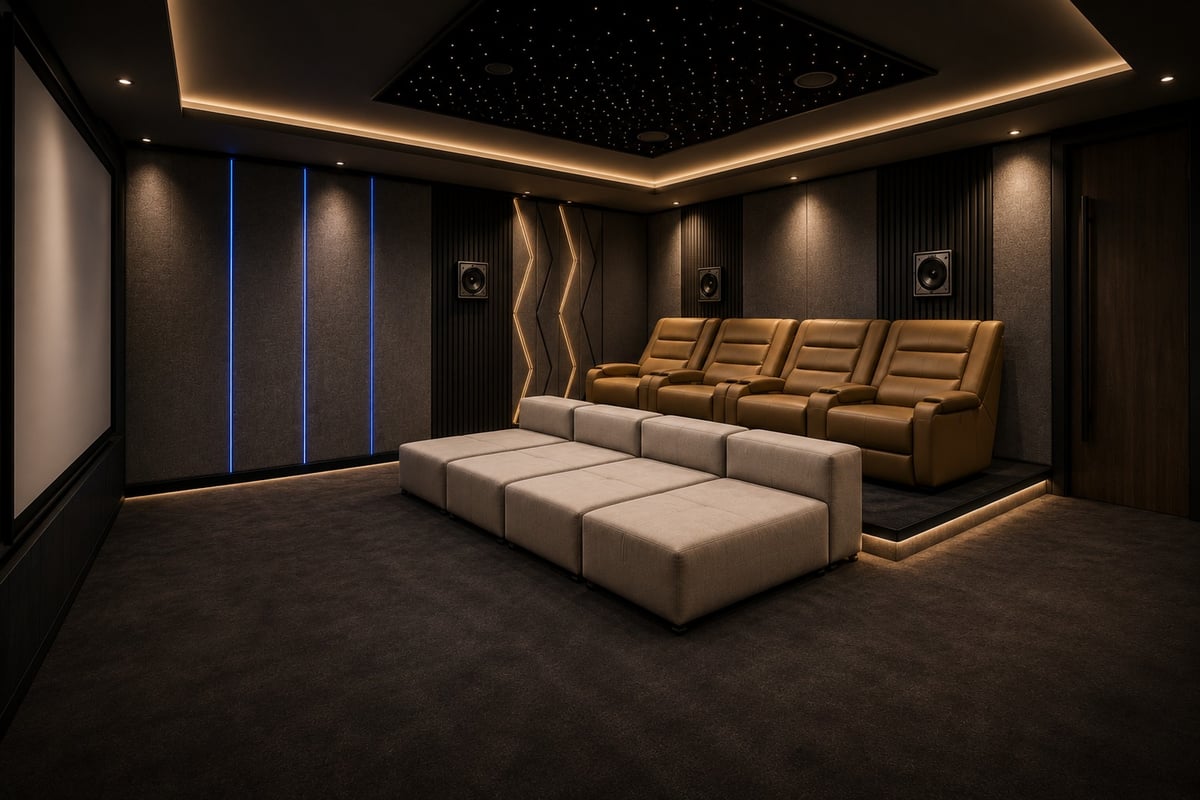
For those seeking a truly customized experience, investing in professional design and installation ensures optimal performance from day one. Custom installers assess room acoustics, recommend appropriate components for your space, and handle technical integration seamlessly. This approach particularly benefits customers planning dedicated theater rooms where construction, lighting, and acoustic design intersect.
If you're considering a more comprehensive solution, a professional Home cinema room installation can transform your vision into reality, offering complete integration from design through final calibration.
Common Mistakes to Avoid
First-time builders frequently encounter predictable pitfalls that compromise their affordable home theater system performance or waste budget.
Avoid these common errors:
- Skimping on HDMI cables: Cheap cables cause handshake issues; spend $15-30 on certified cables
- Ignoring room dimensions: Massive speakers overwhelm small rooms while tiny speakers disappear in large spaces
- Neglecting wire management: Visible cables detract from the experience and create trip hazards
- Maxing out receiver power: Running systems at full volume damages speakers and sounds terrible
- Forgetting about seating distance: Sitting too close to large displays causes eye strain
Additionally, resist the upgrade temptation immediately after completing your build. Live with the system for several months, understanding its strengths and limitations before making changes. Initial impressions often shift as you become familiar with the setup.
Maintenance and Longevity
Protecting your investment ensures years of reliable performance from your affordable home theater system.
Regular Maintenance Tasks
Dust accumulation affects speaker performance and receiver ventilation. Wipe speakers monthly with microfiber cloths and ensure receiver vents remain unobstructed. Check speaker connections annually, as vibrations can loosen terminals over time.
Firmware updates for receivers and source devices often add features and fix bugs. Enable automatic updates when available, or check manufacturer websites quarterly for manual updates.
Planning for Upgrades
Technology advances rapidly, but quality components remain relevant for years. Plan upgrades around format changes (like the shift from HD to 4K) or when components fail, rather than chasing every incremental improvement. A well-chosen affordable home theater system from 2026 will deliver excellent performance through 2030 and beyond.
Allocate a small annual budget ($100-200) for incremental improvements: better cables, acoustic panels, additional seating, or streaming subscriptions. These smaller investments maintain system freshness without major expenditures.
Building an affordable home theater system delivers incredible entertainment value, combining strategic component selection with smart shopping and proper setup techniques. By prioritizing essential components, phasing your build, and optimizing through calibration, you create immersive experiences that rival commercial theaters at a fraction of the cost. Whether you're starting with a basic 3.1 setup or planning a complete surround system, the key is making informed decisions that balance performance with budget. ANR media specializes in custom home cinema solutions, from expert consultation and component selection to complete room conversions, ensuring your investment delivers maximum impact for your unique space and preferences.