

Home cinema enthusiasts have long struggled with the challenge of running speaker cables across living rooms and through walls. The promise of wireless surround sound 5.1 systems addresses this pain point directly, offering true multichannel cinema audio without the installation complexity. As wireless audio technologies mature in 2026, understanding the technical capabilities, limitations, and practical considerations of wireless 5.1 setups has become essential for anyone planning a premium home theater installation.
Understanding Wireless Surround Sound 5.1 Architecture
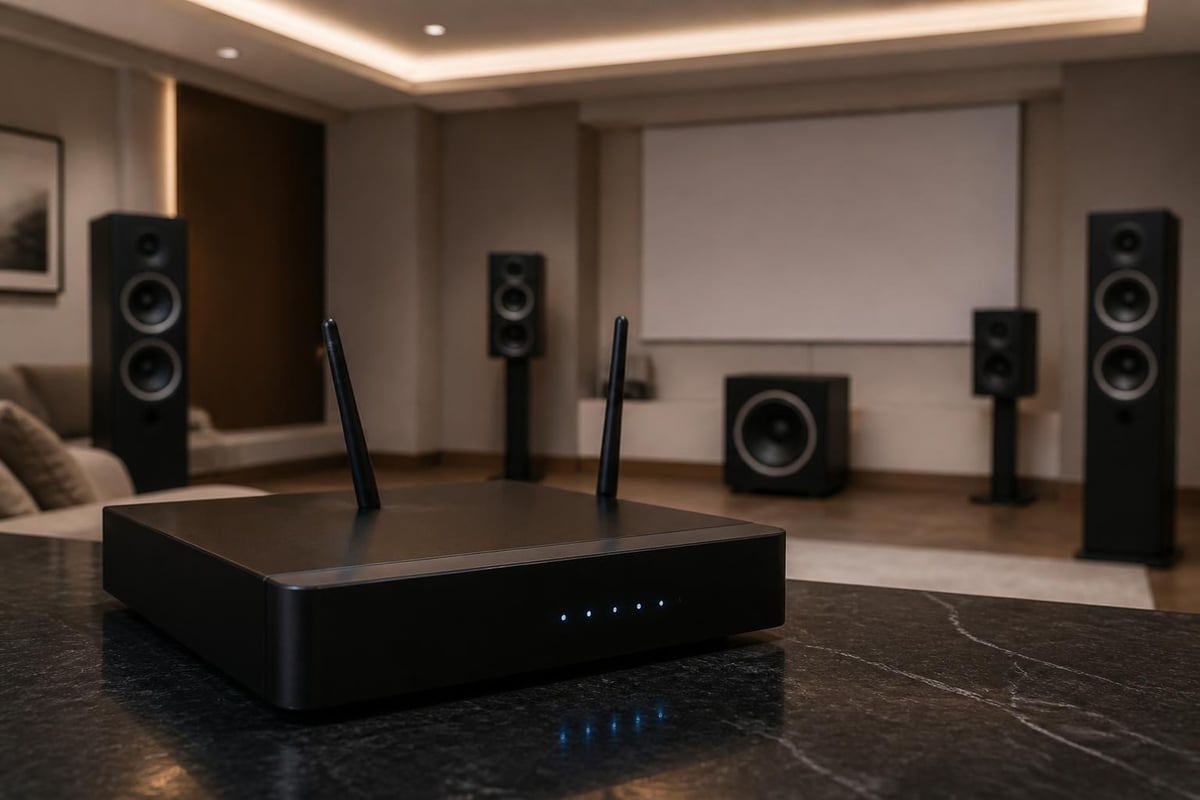
A wireless surround sound 5.1 system replicates the traditional 5.1 channel configuration-left, center, right, left surround, right surround, and a low-frequency effects (LFE) subwoofer-while eliminating the need for long speaker cable runs. The architecture typically consists of a central receiver or transmitter hub that wirelessly distributes discrete audio channels to individual speakers positioned throughout the room.
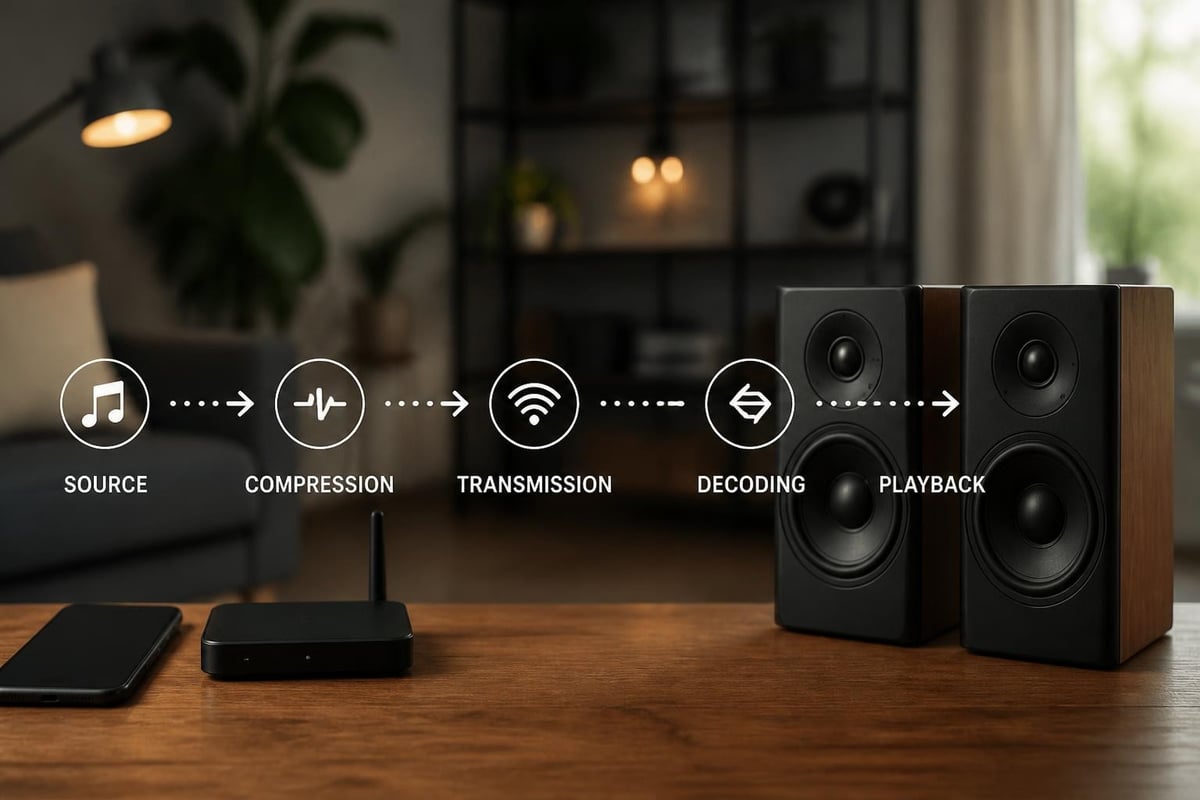
The fundamental distinction between wireless and traditional systems lies in how audio signals reach each speaker. Traditional wired systems use direct electrical connections from an AV receiver to passive speakers, ensuring zero latency and uncompressed signal transmission. Wireless configurations encode multichannel audio into wireless protocols, transmit the data to powered speakers with built-in amplifiers and wireless receivers, then decode and play the audio.
Key Technical Components
Every wireless surround sound 5.1 implementation requires several critical components working in concert:
- Wireless transmitter hub connected to your source devices (TV, Blu-ray player, streaming box)
- Five satellite speakers with integrated wireless receivers and amplification
- Wireless subwoofer with its own receiver and amplifier
- Synchronization technology ensuring all channels play in perfect timing
- Power connections for each wireless speaker (eliminating audio cables but requiring electrical outlets)
The synchronization element deserves particular attention. Audio channels must align within milliseconds to maintain proper soundstage imaging and prevent the disorienting effect of mismatched timing between dialogue and sound effects.
Wireless Technology Standards and Protocols
The wireless surround sound 5.1 market employs several competing wireless technologies, each with distinct characteristics affecting audio quality, latency, and reliability.
WiSA Technology
The WiSA (Wireless Speaker and Audio Association) platform represents one of the most established wireless multichannel standards specifically designed for home theater applications. WiSA transmits uncompressed 24-bit audio at sample rates up to 96 kHz across dedicated 5.2 GHz and 5.8 GHz wireless bands, avoiding interference from common Wi-Fi networks operating at 2.4 GHz and 5 GHz.
WiSA's architecture supports latency as low as single-digit milliseconds, maintaining lip-sync accuracy critical for cinema applications. The dedicated wireless spectrum and time-division multiplexing approach allows simultaneous transmission to multiple speakers without the bandwidth congestion that affects consumer Wi-Fi systems.
Proprietary Manufacturer Systems
Major audio brands have developed proprietary wireless protocols optimized for their specific product ecosystems. These closed systems typically offer several advantages:
- Guaranteed compatibility between components within the brand
- Optimized firmware for specific speaker drivers and amplifier characteristics
- Integrated setup apps with automatic room calibration
- Simplified troubleshooting through single-vendor support
However, proprietary approaches limit mixing components from different manufacturers and may create dependency on a single brand's product roadmap and longevity.
Bluetooth LE Audio and LC3
The Bluetooth LE Audio specification introduces capabilities that could eventually support wireless surround sound 5.1 applications. The LC3 (Low Complexity Communication Codec) offers improved audio quality at lower bitrates compared to older Bluetooth codecs, and isochronous channels enable synchronized multi-stream audio.
The LC3 codec performance characteristics demonstrate quality improvements, but current Bluetooth implementations face challenges meeting the strict latency and synchronization requirements for multichannel home theater use. Traditional Bluetooth introduces latency measured in tens or hundreds of milliseconds-unacceptable for maintaining lip-sync in cinema applications.
Audio Quality Considerations
The quality of wireless surround sound 5.1 playback depends on multiple technical factors beyond simple frequency response measurements.
| Quality Factor | Wired 5.1 | High-End Wireless | Budget Wireless |
|---|---|---|---|
| Audio Compression | Uncompressed | Minimal (lossless) | Lossy compression |
| Latency | <1 ms | 5-15 ms | 30-150 ms |
| Channel Separation | Perfect | Excellent (>70 dB) | Good (50-60 dB) |
| Bandwidth | Unlimited | 10-50 Mbps per channel | 1-5 Mbps per channel |
| Dropout Potential | None | Very Low | Moderate |
Testing Surround Localization
RTINGS’ methodology for testing 5.1 surround performance evaluates how accurately systems reproduce spatial positioning of sound effects. The test measures whether sounds panned to specific channels actually appear to originate from the correct speaker locations, assessing both the discrete channel separation and the psychoacoustic effectiveness of the soundstage.
Wireless systems face additional challenges here. Any compression artifacts can blur channel boundaries, and latency variations between speakers can shift apparent sound source locations. Premium wireless surround sound 5.1 implementations minimize these effects through careful protocol design, but budget systems may exhibit noticeable degradation compared to wired equivalents.
Frequency Response and Dynamic Range
Wireless transmission itself doesn't inherently limit frequency response or dynamic range-these depend primarily on the speakers themselves and the wireless protocol's audio bandwidth. Systems transmitting uncompressed or losslessly compressed audio maintain the full 20 Hz to 20 kHz range with dynamic capabilities matching the source material.
Compression introduces potential compromises. Lossy codecs, even high-quality variants, may reduce dynamic range slightly and introduce artifacts during complex passages with multiple simultaneous sound effects. The subjective audibility of these compromises varies based on listener sensitivity, content type, and system calibration.
Installation and Setup Requirements
Implementing wireless surround sound 5.1 eliminates speaker cables but introduces new installation considerations that custom installers and homeowners must address.
Power Infrastructure Planning
Every wireless speaker requires electrical power, creating placement constraints based on outlet availability. Professional installations should consider:
- Outlet placement near optimal acoustic positions for each channel
- Power conditioning to prevent electrical noise affecting audio performance
- Cable management for power cords, which often appear more conspicuous than speaker wire
- Surge protection for multiple powered components
- Circuit capacity ensuring adequate current for amplifiers across multiple speakers
The subwoofer typically draws the most power, with Class D amplifiers for LFE channels ranging from 200 to 500 watts. Satellite speakers consume less, but five additional units still represent significant combined power draw.
Wireless Network Optimization
Wireless surround sound 5.1 systems sharing spectrum with Wi-Fi networks require careful configuration to prevent interference:
- Channel selection to minimize overlap with Wi-Fi access points
- 5 GHz band management if the wireless audio system operates in this range
- Access point positioning maintaining separation from audio transmitters
- Network traffic management prioritizing time-sensitive audio streams
Dedicated wireless audio protocols like WiSA avoid many of these concerns by operating in spectrum separate from Wi-Fi, but consumer systems using Wi-Fi-based transmission need systematic optimization.
Source Integration and Compatibility
Successfully deploying wireless surround sound 5.1 requires proper integration with source devices and understanding how multichannel audio reaches the wireless transmitter.
TV Passthrough Capabilities
Most modern installations route audio from smart TV apps, game consoles, and streaming devices through the television. Understanding TV 5.1 audio passthrough becomes critical when building wireless systems around TV sources.
Three primary connection methods enable multichannel audio from TVs:
HDMI ARC (Audio Return Channel) supports compressed Dolby Digital and DTS up to 5.1 channels but lacks bandwidth for lossless or Dolby Atmos object-based audio. Reliability varies significantly between TV models, with some implementations exhibiting handshake issues or limited format support.
HDMI eARC (enhanced Audio Return Channel) provides sufficient bandwidth for lossless multichannel formats and Dolby TrueHD/Atmos, making it the preferred connection for premium wireless surround sound 5.1 systems. eARC support requires both the TV and wireless transmitter to implement the specification correctly, with 2026 models showing much better compliance than earlier generations.
Optical (TOSLINK) connections offer reliable compressed 5.1 transmission (Dolby Digital, DTS) with limitations on higher-resolution formats. The optical interface provides electrical isolation that can reduce ground-loop hum in some installations.
Direct Source Connections
Professional custom installations often bypass the TV for critical listening, connecting source devices directly to the wireless audio transmitter. This approach offers several benefits:
- Eliminating TV processing that may introduce additional latency
- Accessing full audio format capabilities of Blu-ray players and media servers
- Reducing potential failure points in the signal chain
- Enabling video display calibration independent of audio routing
High-quality wireless transmitters include multiple HDMI inputs with video passthrough, allowing direct connection of multiple sources while maintaining single-cable video connection to the display.
Performance in Real-World Environments
The controlled specifications of wireless surround sound 5.1 systems represent ideal conditions. Actual performance depends heavily on environmental factors and installation quality.
Interference and Obstruction Challenges
Wireless audio transmission encounters various obstacles in residential environments:
- Structural interference from metal studs, concrete, and dense materials
- Electronic interference from microwave ovens, cordless phones, and Wi-Fi networks
- Reflection and multipath issues in rooms with hard surfaces
- Distance limitations particularly for rear surround speakers in large rooms
Systems using higher frequencies (5 GHz and above) offer more bandwidth and less interference from consumer electronics but exhibit greater attenuation through walls and furniture. Lower frequencies penetrate obstructions more effectively but face congestion from the crowded 2.4 GHz spectrum.
Latency and Lip-Sync Management
Audio latency becomes perceptible to most listeners beyond 30-40 milliseconds, creating the distracting sensation of dialogue appearing before or after speakers' lips move. Wireless surround sound 5.1 systems address latency through multiple approaches:
- Protocol optimization minimizing encoding, transmission, and decoding delays
- Video delay compensation intentionally delaying video to match audio latency
- Latency detection and reporting allowing AV receivers to automatically adjust timing
- Wired center channel using a cable for the critical dialogue speaker to eliminate its latency
Research on latency in wireless time-sensitive applications demonstrates that maintaining consistent low latency across multiple wireless channels requires sophisticated just-in-time networking approaches and careful buffer management. Premium systems achieve this; budget implementations may not.
Custom Cinema Room Applications
Custom home cinema installations present unique opportunities and challenges for wireless surround sound 5.1 implementation compared to standard living room setups.
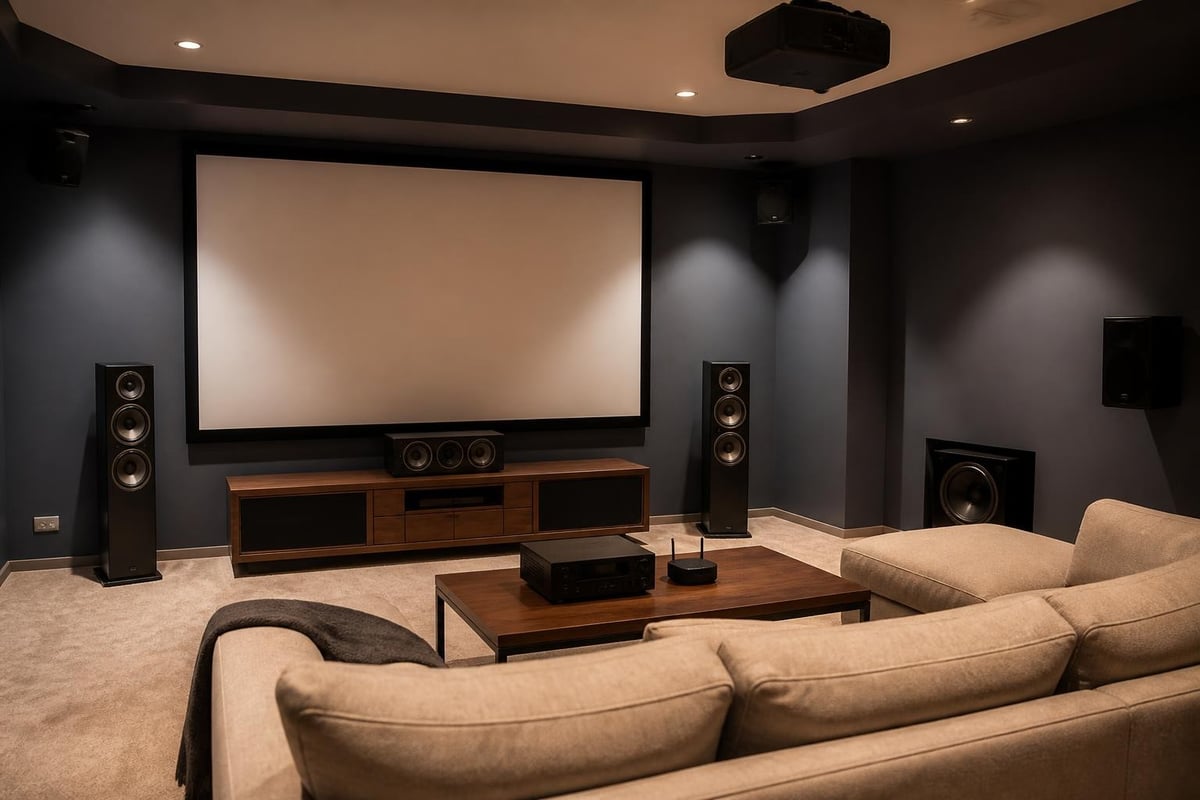
Professional-grade cinema speakers from manufacturers like M&K Audio are specifically designed for the dynamics and tonal characteristics of film soundtracks. When integrated into custom installations, these speakers deliver the precise imaging and impact that home theater enthusiasts expect. For clients pursuing dedicated cinema rooms, working with specialists who understand both acoustic design and modern wireless integration ensures systems that perform at reference levels while maintaining installation flexibility.
A home cinema room designed from the ground up can incorporate optimal speaker positioning while strategically planning power infrastructure for wireless speakers. This integrated approach delivers superior results compared to retrofitting wireless systems into existing spaces with suboptimal outlet placement.
Acoustic Treatment Interactions
Dedicated cinema rooms typically include extensive acoustic treatment-bass traps, diffusers, and absorbers-that affect both direct sound from speakers and wireless signal propagation. The relationship between acoustic design and wireless performance requires consideration:
Acoustic panels using fiberglass or mineral wool are transparent to wireless signals, allowing transmitters and speakers to be positioned based purely on acoustic criteria without wireless performance penalty.
Dense bass traps in corners where subwoofers often reside may slightly attenuate wireless signals depending on construction and wireless frequency. Testing signal strength during installation ensures reliable connection.
Metallic elements in some acoustic treatments or within HVAC systems can create reflection or shadowing that requires wireless transmitter repositioning.
Future Developments and Emerging Technologies
The wireless surround sound 5.1 category continues evolving as consumer demands increase and new wireless technologies mature.
Object-Based Audio Expansion
Current wireless 5.1 implementations provide channel-based audio, but the home theater industry increasingly adopts object-based formats like Dolby Atmos. Dolby Atmos specifications define how audio objects position in three-dimensional space rather than fixed channels, requiring additional height channels beyond traditional 5.1 configurations.
Future wireless systems will need to support:
- Additional wireless channels for height speakers (minimum 5.1.2, ideally 5.1.4 or beyond)
- Increased bandwidth to handle object metadata alongside audio streams
- Even tighter synchronization across 7-13+ individual wireless speakers
- Backward compatibility with existing 5.1 content and equipment
Some manufacturers already offer wireless expansion speaker kits that add height channels to existing 5.1 wireless systems, demonstrating the technical feasibility of scaling wireless approaches to immersive configurations.
Computational Audio Processing
Research on automatic upmixing algorithms that convert stereo sources to 5.1 using source separation and ambient extraction shows how computational processing can enhance wireless systems. Future wireless surround sound 5.1 receivers may incorporate advanced DSP that:
- Intelligently upmixes stereo content to discrete 5.1 channels
- Extracts and enhances dialogue for improved center channel clarity
- Dynamically adjusts channel balance based on content analysis
- Compensates for non-ideal speaker placement through acoustic modeling
These computational approaches could make wireless systems more forgiving of installation compromises while expanding the effective library of content that benefits from multichannel playback.
AI-Driven Room Calibration
Automated room correction systems have existed for years, but AI-enhanced calibration will bring new capabilities to wireless surround sound 5.1 installations:
- Smartphone-based measurement using device microphones and accelerometers to map room acoustics
- Adaptive EQ that learns listening preferences and adjusts tonal balance over time
- Dynamic range optimization customizing compression based on content type and time of day
- Placement suggestions analyzing measured response to recommend speaker repositioning
When combined with the installation flexibility that wireless systems provide, intelligent calibration enables optimization that would require complex acoustic treatment in traditional wired configurations.
Comparing Wireless 5.1 to Alternative Approaches
Prospective buyers should understand how wireless surround sound 5.1 compares to other home audio solutions before committing to this approach.
| System Type | Installation Complexity | Audio Quality | Expandability | Approximate Cost Range |
|---|---|---|---|---|
| Wired 5.1 | High (cable runs) | Excellent | Good | $800 – $5,000+ |
| Wireless 5.1 | Medium (power only) | Very Good | Good | $1,200 – $6,000+ |
| Soundbar + Wireless Surrounds | Low | Good | Limited | $600 – $2,500 |
| Virtual Surround (Soundbar) | Very Low | Fair | None | $300 – $1,500 |
| Dolby Atmos Soundbar | Low | Good | Limited | $800 – $2,000 |
Soundbar Systems with Wireless Surrounds
Many manufacturers offer soundbar-based systems with wireless rear speakers that approximate 5.1 configurations. These systems provide easier setup than discrete wireless surround sound 5.1 but compromise on several fronts:
- Front soundstage limitations from single-enclosure left/center/right presentation
- Limited upgradability with proprietary wireless surrounds specific to each soundbar model
- Tonal mismatches when soundbar drivers differ significantly from surround speaker drivers
- Processing constraints from soundbar-integrated electronics versus dedicated AV receivers
For dedicated home cinema rooms where uncompromising performance matters, discrete wireless 5.1 systems deliver superior results despite higher cost and complexity.
Traditional Wired Systems
The traditional wired approach remains the reference standard for ultimate audio quality. When cable runs are feasible-either in new construction, rooms with accessible crawl spaces, or installations where visible cable management is acceptable-wired systems offer several advantages:
Zero latency eliminates lip-sync concerns and timing compromises that even premium wireless systems must manage carefully.
Unlimited bandwidth supports the highest-resolution audio formats without compression or quality trade-offs.
Component flexibility allows mixing passive speakers from different manufacturers and upgrading amplification independently.
Lower ongoing costs avoid potential wireless transmitter obsolescence as standards evolve.
However, the installation labor for professional in-wall cable runs frequently exceeds the premium for wireless components, making wireless surround sound 5.1 cost-competitive when accounting for total installation expense rather than hardware costs alone.
Wireless surround sound 5.1 technology has reached maturity in 2026, offering genuine cinema-quality multichannel audio without the installation complexity of traditional wired systems. The key to success lies in selecting appropriate wireless protocols, planning power infrastructure thoughtfully, and properly integrating with source devices. Whether you're planning a dedicated cinema room or upgrading an existing living space, ANR media specializes in designing custom home cinema and audio video solutions that leverage the latest wireless technologies while maintaining the uncompromising performance that discerning enthusiasts demand.