

Creating a truly immersive entertainment experience in your home requires more than just purchasing the latest television and a soundbar. Professional home theater solutions encompass careful planning, acoustic optimization, advanced technology integration, and a deep understanding of how different components work together to deliver cinema-quality performance. Whether you're transforming a spare room into a dedicated screening space or enhancing your living room with premium audio-visual equipment, the right approach makes all the difference in achieving exceptional results that stand the test of time.
Understanding Modern Home Theater Solutions
The landscape of home entertainment has evolved dramatically over the past decade. Today's home theater solutions blend cutting-edge technology with architectural design principles to create experiences that rival commercial cinemas. This transformation goes beyond simple equipment upgrades.
Modern systems integrate multiple disciplines:
- Acoustic engineering for optimal sound dispersion
- Video calibration for accurate color reproduction
- Lighting control for the perfect viewing environment
- Seating ergonomics for extended comfort
- Smart automation for seamless operation
The foundation of any successful installation starts with understanding your space and how you intend to use it. A dedicated theater room offers maximum control over acoustics and lighting, while multi-purpose spaces require flexible solutions that accommodate different activities throughout the day.
Assessing Your Space and Requirements
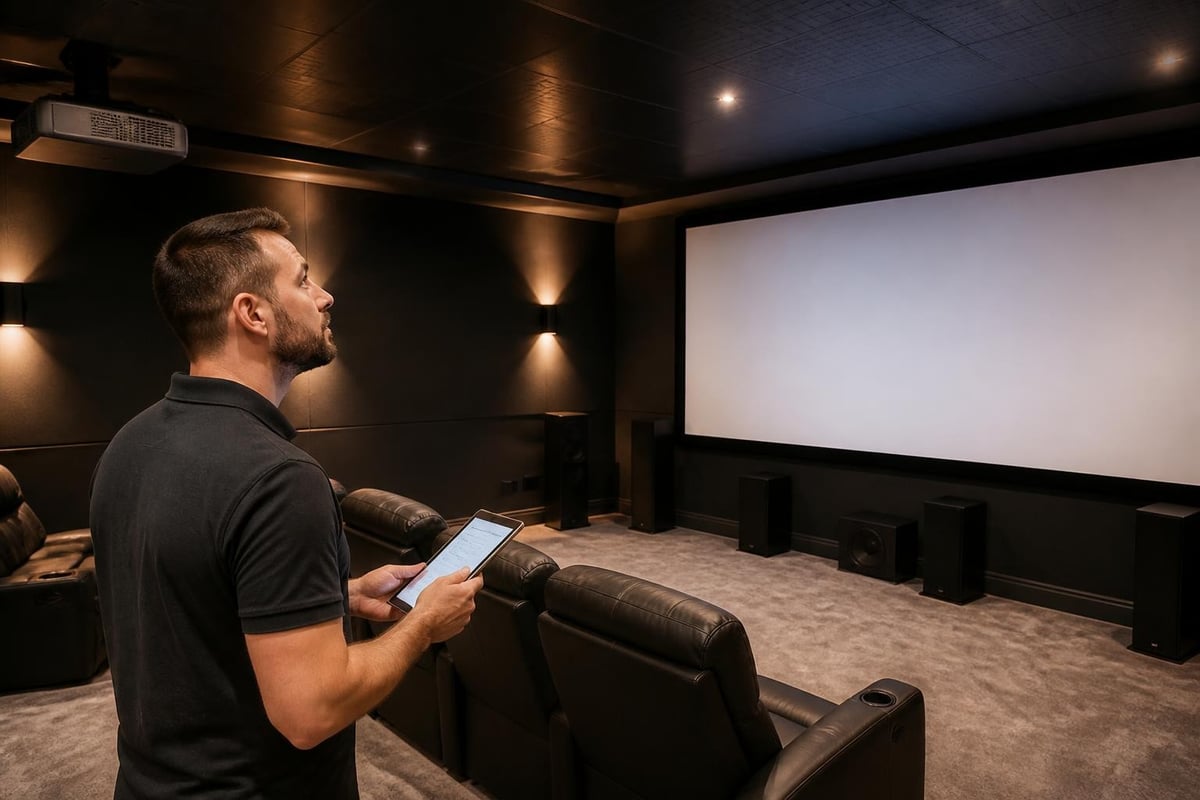
Before selecting equipment or designing your system, conduct a thorough evaluation of your available space. Room dimensions, ceiling height, window placement, and structural elements all impact your design decisions. Smaller rooms (under 150 square feet) benefit from focused acoustic treatments and carefully positioned speakers, while larger spaces require more powerful amplification and strategic sound management.
Consider your viewing habits and household needs. Families who primarily watch streaming content have different requirements than dedicated film enthusiasts who collect physical media. Sports fans prioritize bright displays and dynamic audio, while audiophiles focus on tonal accuracy and soundstage precision.
| Space Factor | Small Room (< 150 sq ft) | Medium Room (150-300 sq ft) | Large Room (> 300 sq ft) |
|---|---|---|---|
| Acoustic Treatment | Essential | Recommended | Critical |
| Speaker Configuration | 5.1 or 5.1.2 | 7.1.2 or 7.1.4 | 9.1.4 or larger |
| Screen Size Range | 100-120 inches | 120-150 inches | 150+ inches |
| Seating Rows | 1-2 | 2-3 | 3+ |
Audio System Architecture
The audio component represents the most critical element in professional home theater solutions. While visual quality creates impact, sound design generates emotional connection and immersion. Building an effective audio system requires understanding how different speaker types, placement strategies, and processing technologies work together.
Speaker Selection and Configuration
Modern surround sound formats have expanded beyond traditional 5.1 configurations. Dolby Atmos technology introduces height channels that place sound objects in three-dimensional space, creating overhead effects that enhance realism. This advancement requires ceiling-mounted or upward-firing speakers in addition to traditional ear-level positions.
Essential speaker types for comprehensive coverage:
- Front left, center, right: Deliver dialogue and primary soundstage
- Surround channels: Create ambient environmental effects
- Height channels: Add overhead dimensionality
- Subwoofers: Handle low-frequency effects and bass extension
Quality matters significantly more than quantity. Three exceptional front speakers outperform seven mediocre units spread around the room. When budget constraints exist, prioritize the front soundstage and subwoofer before expanding to additional channels.
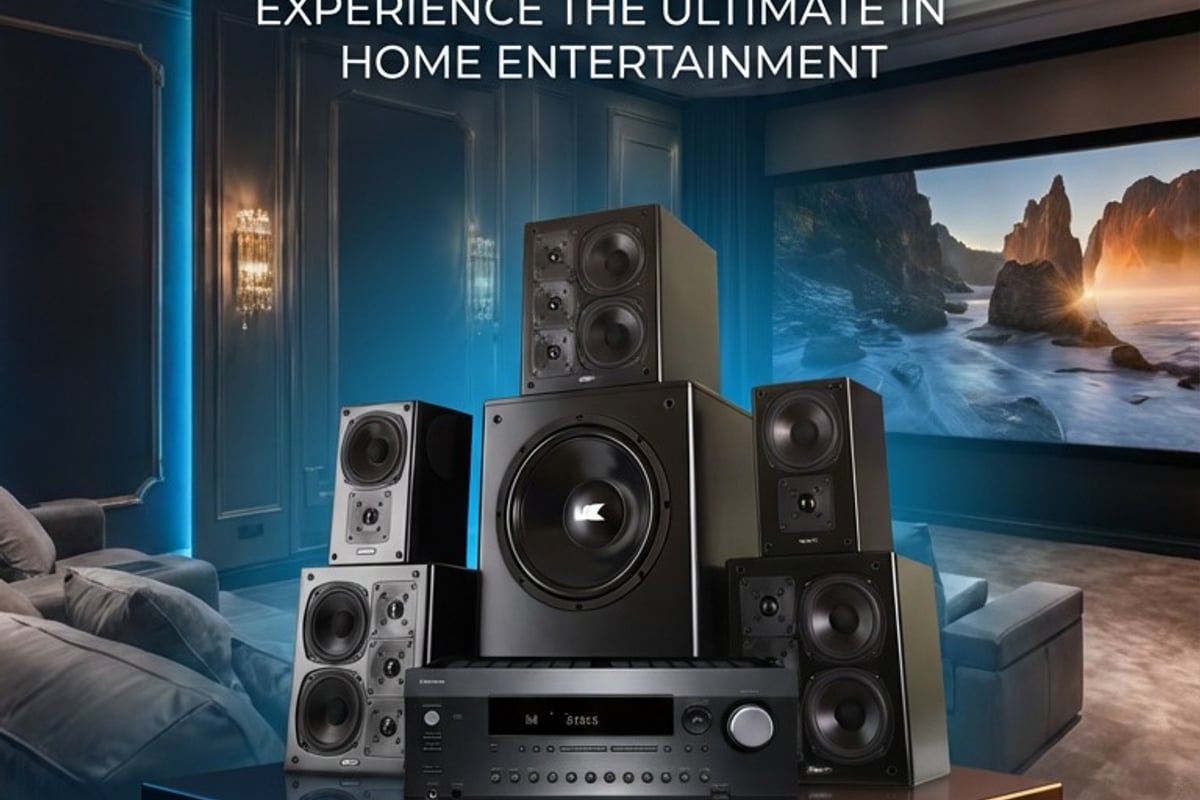
Cinema-specific speakers designed for home theater applications offer distinct advantages over conventional bookshelf or tower speakers. These specialized units feature controlled directivity patterns, extended dynamic range, and tonal characteristics optimized for film soundtracks rather than music reproduction. For clients seeking authentic cinema experiences, custom home cinema room conversions often incorporate these purpose-built solutions as part of comprehensive installations.
Amplification and Processing
The AV receiver serves as the central hub for modern home theater solutions, managing audio decoding, video switching, and system control. Selecting an appropriate receiver involves balancing channel count, power output, processing capabilities, and future expansion options.
Key receiver specifications demand attention:
- Channel configuration: Match your speaker layout (5.1.2, 7.1.4, etc.)
- Power output: Minimum 100 watts per channel for most applications
- HDMI connectivity: Support for 4K, 8K, HDR formats
- Room correction: Automated calibration systems (Dirac, Audyssey, etc.)
- Streaming integration: Built-in services and network connectivity
Separate amplification offers advantages for larger installations or demanding acoustic environments. Dedicated power amplifiers provide cleaner signal reproduction, better dynamic headroom, and improved reliability compared to receiver-based amplification alone.
Visual Display Technologies
Choosing between projection systems and flat-panel displays represents one of the most significant decisions in home theater design. Each approach offers distinct advantages depending on room characteristics, viewing preferences, and budget considerations.
Projection Systems
Projectors deliver the most authentic cinema experience through large-scale images that fill your field of vision. Modern 4K laser projectors provide exceptional brightness, contrast, and color accuracy while eliminating lamp replacement concerns. Screen selection impacts image quality as much as the projector itself.
| Screen Type | Gain | Ideal Environment | Key Benefit |
|---|---|---|---|
| Matte White | 1.0-1.3 | Dedicated dark room | Accurate color, wide viewing angle |
| High Contrast | 0.8-1.0 | Light-controlled space | Deep blacks, enhanced contrast |
| Ambient Light Rejecting | 1.0-1.5 | Multi-purpose room | Maintains image in ambient light |
Screen dimensions should match your viewing distance. The Society of Motion Picture and Television Engineers recommends a 30-degree viewing angle for cinema applications, which translates to a screen width approximately 1.5 times your seating distance.
Flat-Panel Considerations
Large-format OLED and Mini-LED displays offer compelling alternatives for spaces where projection isn't practical. These technologies deliver perfect blacks, vibrant colors, and peak brightness levels that exceed most projectors. However, screen sizes remain limited compared to projection, with 85-98 inches representing the upper range for consumer displays.
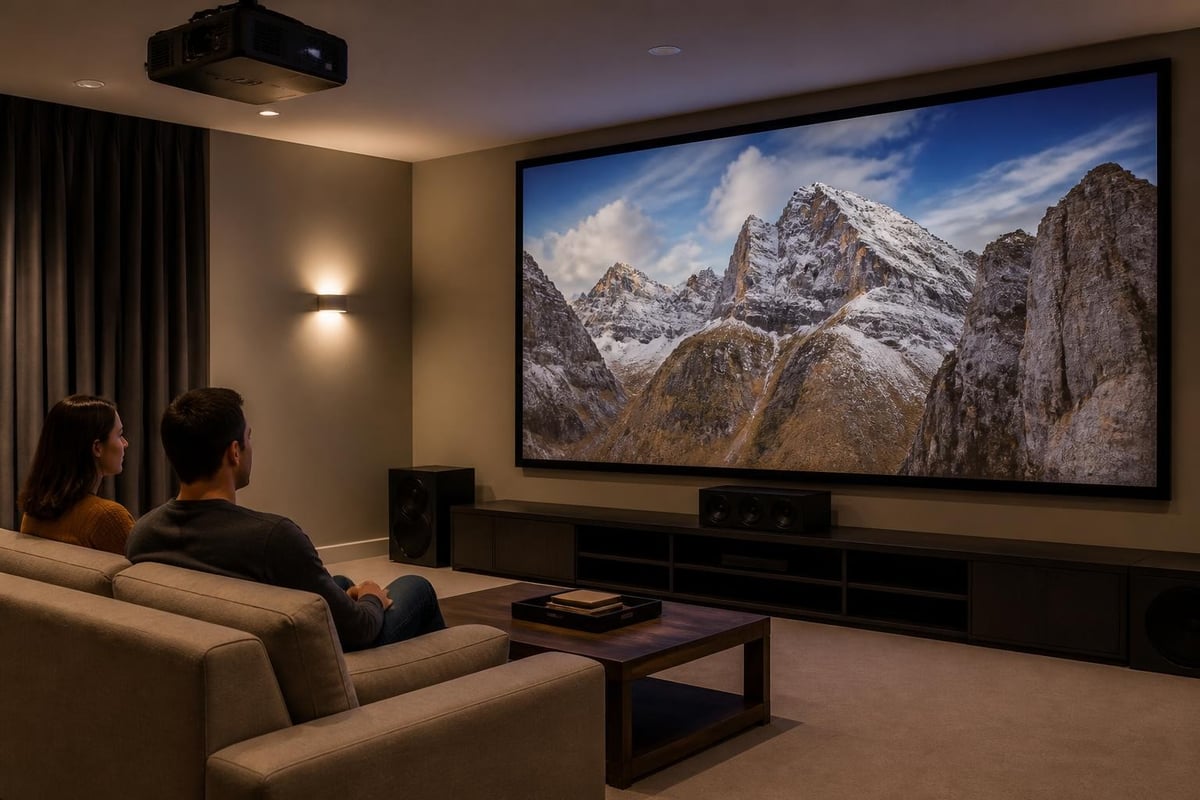
Flat panels excel in multi-purpose rooms with ambient light and shorter viewing distances. They require no installation complexity beyond wall mounting and eliminate concerns about projector noise, lens shift, or screen materials. For dedicated theater rooms where image scale creates impact, projection maintains clear advantages.
Acoustic Optimization Strategies
Even exceptional equipment underperforms in poorly treated spaces. Room acoustics significantly influence tonal balance, clarity, and immersion in home theater solutions. Controlling reflections, managing bass response, and minimizing external noise transform average systems into exceptional ones.
Treatment Approaches
Bass frequencies require different management strategies than mid and high frequencies. Low-frequency absorption demands significant material depth or specialized trap designs, while broadband panels effectively control reflections above 250 Hz.
Strategic treatment locations:
- First reflection points on side walls
- Ceiling reflection zones between speakers and seating
- Rear wall behind primary seating position
- Room corners for bass trap placement
- Front wall surrounding the screen
Diffusion plays a valuable role in larger rooms, scattering reflections to create spaciousness without excessive absorption. The rear wall particularly benefits from diffusive treatments that maintain liveliness while controlling strong reflections.
System Integration and Control
Sophisticated home theater solutions incorporate automation systems that manage lighting, climate, shades, and equipment through unified interfaces. This integration elevates the user experience while protecting expensive components and simplifying operation for all household members.
Control System Design
Modern control platforms range from simple smartphone apps to dedicated touchpanels and voice commands. CEDIA-certified integrators design control systems that balance functionality with accessibility, creating interfaces anyone can navigate confidently.
Essential control functions include:
- One-touch activity scenes (Movie, Sports, Concert, Gaming)
- Source selection and input switching
- Volume and bass management
- Lighting preset recall
- Climate adjustment
- Automated shade control
Programming logic should account for equipment warm-up sequences, proper shutdown procedures, and error recovery. Well-designed systems prevent users from inadvertently damaging components through incorrect operation sequences.
Smart Home Integration
Connecting home theater solutions to broader smart home ecosystems enables advanced automation scenarios. Motion sensors trigger welcome sequences when entering the room. Ambient light sensors adjust display brightness for optimal viewing. Voice assistants provide hands-free control for common functions.
Network infrastructure demands special attention in modern installations. Streaming 4K content, controlling multiple zones, and maintaining reliable communication between components requires robust wired and wireless networking. Dedicated networks for audio-visual equipment prevent interference from other household devices and ensure consistent performance.
Seating and Environment Design
The viewing environment encompasses more than just equipment. Comfortable seating, appropriate lighting, and thoughtful aesthetic choices contribute significantly to overall enjoyment and system effectiveness.
Seating Configuration
Theater seating should position viewers within the optimal listening area while maintaining unobstructed sight lines. Multiple rows require careful planning to avoid sightline issues, with each row elevated 6-12 inches above the row in front.
Riser construction must address structural loading, acoustic isolation, and utility routing. Properly designed platforms incorporate dedicated channels for speaker wire, power distribution, and network cables while providing vibration isolation between seating rows.
Seat selection balances comfort, size, and acoustic transparency. Oversized recliners create acoustic obstacles in smaller rooms, while compact seats maximize capacity without compromising the sound field.
Lighting Design
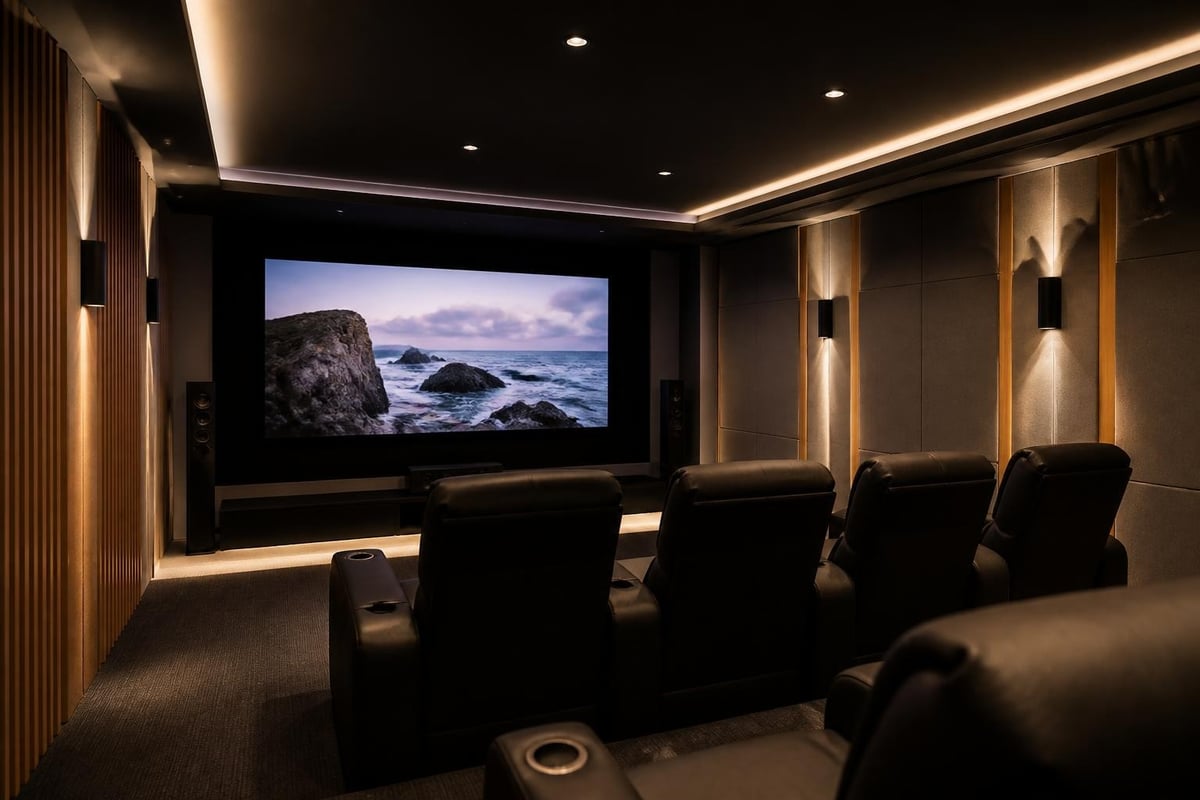
Ambient lighting systems provide essential functionality without compromising on-screen contrast. LED strips with dimming capability offer adjustable illumination for pre-show socializing and intermissions. Bias lighting behind the display reduces eye strain during extended viewing sessions by decreasing the contrast between the bright screen and dark surroundings.
Control integration ensures lighting automatically adjusts to appropriate levels when activating different viewing modes. Movie scenes trigger minimal illumination, while gaming or sports modes might maintain higher ambient levels for social viewing.
Equipment Selection Criteria
Choosing components for home theater solutions requires evaluating performance specifications, build quality, long-term reliability, and compatibility with existing or planned systems. Brand reputation matters, but verifiable performance metrics matter more.
Research and Evaluation Process
Independent measurement data provides objective assessment of speaker performance, projector specifications, and receiver capabilities. Professional reviews and testing reveal real-world performance beyond manufacturer marketing claims.
Critical evaluation factors:
- Measured frequency response for speakers
- Contrast ratios and color accuracy for displays
- HDMI capabilities and processing features for receivers
- Warranty coverage and service availability
- Upgrade path and future compatibility
Budget allocation should prioritize areas with the greatest performance impact. Investing heavily in speakers and acoustic treatment while choosing mid-range electronics typically delivers better results than expensive electronics paired with mediocre speakers.
Installation Best Practices
Professional installation ensures components perform to their full potential while maintaining system reliability and aesthetic appeal. Proper wire management, calibration procedures, and documentation establish the foundation for long-term satisfaction.
Calibration and Tuning
Automated room correction systems provide excellent starting points, but manual refinement often yields superior results. Measuring in-room frequency response, adjusting speaker distances, setting crossover points, and fine-tuning channel levels optimizes system performance for your specific environment.
Video calibration adjusts display settings to achieve accurate color reproduction and optimal contrast. Professional calibrators use specialized meters and software to align displays with industry standards, revealing detail and nuance invisible with factory settings.
Regular maintenance preserves system performance over time. Cleaning speaker grills, updating firmware, verifying connection integrity, and recalibrating after room changes maintains the exceptional performance you invested in achieving.
Planning Your Investment
Home theater solutions span enormous price ranges, from modest upgrades to six-figure installations. Establishing realistic budgets and phased implementation plans makes exceptional performance accessible across different investment levels.
Budget Allocation Guidelines
Professional installations typically allocate budgets across categories based on relative impact and requirements. These percentages vary with project scope, but general patterns emerge:
| Category | Budget Percentage | Considerations |
|---|---|---|
| Audio Components | 35-40% | Speakers, subwoofers, amplification |
| Video Display | 20-25% | Projector and screen or flat panel |
| Installation Labor | 15-20% | Professional design and integration |
| Acoustic Treatment | 10-15% | Absorption, diffusion, isolation |
| Seating & Furniture | 10-15% | Theater seats, risers, storage |
High-quality components retain value and provide upgrade flexibility. Building systems around robust infrastructure allows incremental improvements over time without replacing fundamental elements.
Phased Implementation
Budget constraints don't require compromising on quality. Strategic phasing allows building exceptional systems gradually while maintaining performance standards at each stage.
Recommended implementation sequence:
- Foundation phase: Screen, front speakers, subwoofer, basic receiver
- Expansion phase: Surround speakers, upgraded amplification, room treatments
- Enhancement phase: Height channels, upgraded display, advanced control
- Refinement phase: Additional seating, bass management, aesthetic finishing
Each phase delivers meaningful improvements while establishing infrastructure for subsequent additions. This approach prevents the costly mistakes of replacing inadequate components selected to meet arbitrary channel counts.
Professional home theater solutions transform how you experience entertainment by combining thoughtful design, quality components, and expert installation. The investment in proper planning, acoustic optimization, and calibrated equipment delivers years of exceptional performance that elevates every viewing experience. ANR media specializes in creating custom home cinema and audio video installations, from multiroom solutions to bespoke home cinema room conversions that bring your vision to life with professional precision and lasting quality.