

The concept of a portable movie theater has evolved dramatically over the past decade, transforming from basic backyard projector setups into sophisticated cinema experiences that rival traditional home theater installations. Whether you're planning community screenings, corporate events, private celebrations, or simply want the flexibility to enjoy cinema-quality entertainment anywhere, understanding the technical requirements and best practices for portable cinema systems is essential for achieving professional results in 2026.
Essential Equipment for Your Portable Movie Theater
Building a portable movie theater requires careful selection of components that balance performance, portability, and durability. The right equipment makes the difference between a forgettable screening and an unforgettable cinematic experience.
Projection Systems and Display Technology
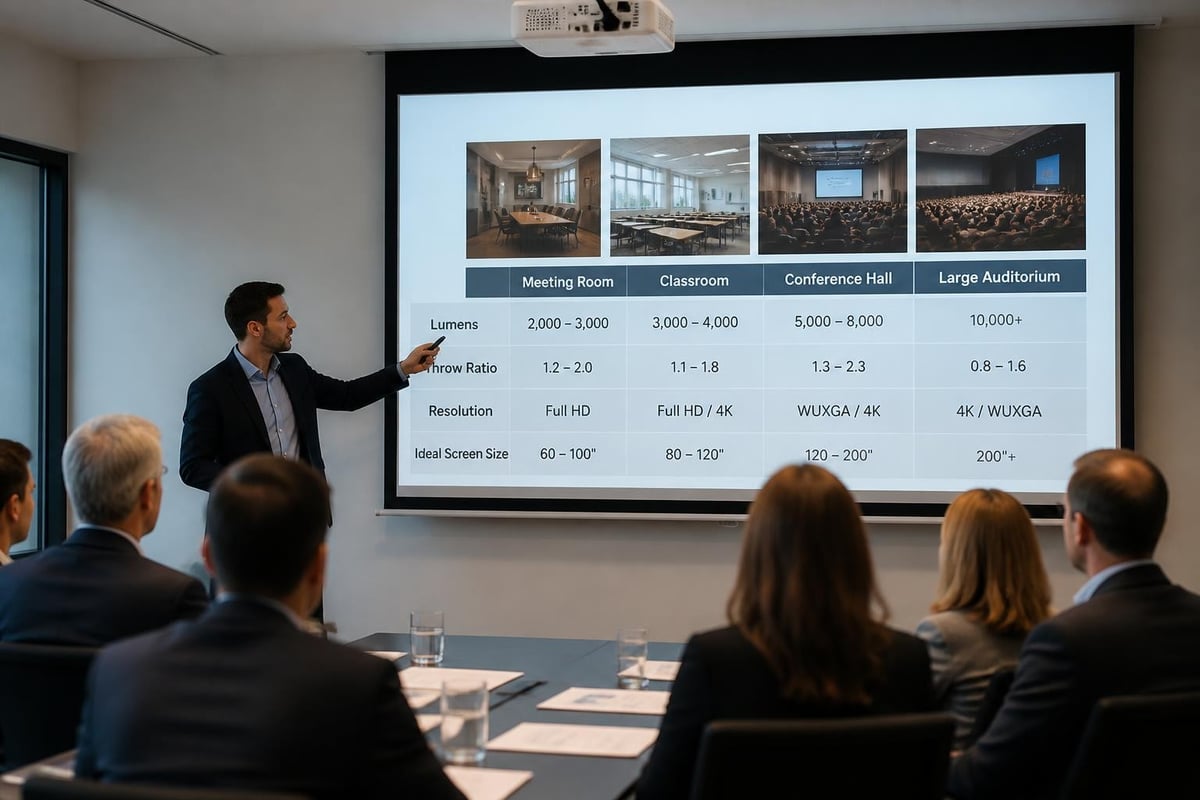
Modern portable projectors have reached impressive brightness levels, with many models exceeding 3,000 lumens for outdoor use. High-definition laser projectors now offer superior image quality while maintaining compact form factors that simplify transport and setup. When selecting a projector for your portable movie theater, prioritize native resolution (1080p minimum, 4K preferred), contrast ratio, and throw distance capabilities.
Screen selection requires equal attention. Inflatable screens provide quick setup and impressive visual impact, while tensioned frame screens deliver superior image quality with perfectly flat surfaces. Consider these factors:
- Screen size: Match to your audience size and viewing distance (120-200 inches typical for outdoor events)
- Gain rating: Higher gain screens reflect more light but narrow viewing angles
- Surface material: Matte white for general use, high-gain for bright environments
- Portability: Weight, packed dimensions, and setup complexity
Audio Solutions That Travel
Sound quality separates amateur setups from professional portable movie theater installations. Wireless speaker systems have revolutionized portable cinema, eliminating cable runs while delivering immersive soundscapes. Battery-powered amplification enables truly wireless setups in locations without reliable power access.
Professional portable cinema audio typically includes:
- Main left/right speakers: Full-range towers or line arrays (200-400 watts per channel)
- Center channel: Critical for dialogue clarity in film presentations
- Subwoofer(s): 15-18 inch drivers for impactful low-frequency effects
- Surround speakers: Wireless satellite speakers for immersive positioning
- Audio processor: EQ, delay, and crossover management for system optimization
| Audio Configuration | Audience Size | Power Requirements | Typical Investment |
|---|---|---|---|
| Basic Stereo | 25-50 people | 500W total | $800-$1,500 |
| 3.1 System | 50-100 people | 1,000W total | $2,000-$4,000 |
| 5.1 Surround | 100-200 people | 2,000W+ total | $5,000-$10,000 |
| Professional Array | 200+ people | 4,000W+ total | $15,000+ |
Location Planning and Site Considerations
Successful portable movie theater events depend heavily on proper location selection and preparation. Environmental factors significantly impact both technical performance and audience enjoyment.
Evaluating Potential Venues
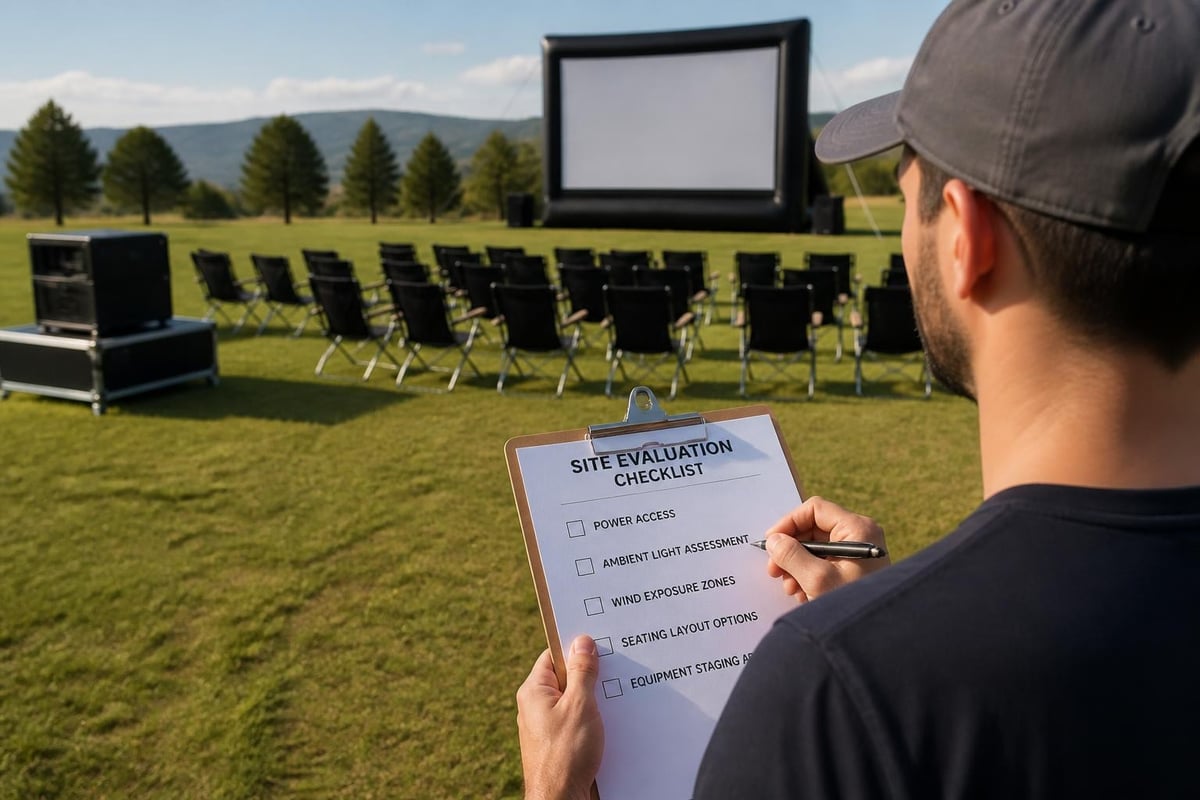
Ambient light control remains the primary challenge for outdoor cinema. Even high-brightness projectors struggle against street lights, building illumination, and twilight conditions. Scout locations during your intended screening time to assess light pollution. Urban environments may require negotiations with property managers to temporarily dim surrounding lights.
Ground conditions affect everything from screen stability to audience comfort. Level surfaces simplify setup and prevent screen tilt, while slight slopes can improve sightlines for tiered seating arrangements. Survey the site for:
- Electrical access points and required cable lengths
- Wind exposure and anchoring requirements for screens
- Audience traffic flow and emergency exit paths
- Restroom facilities and accessibility compliance
- Parking availability and load-in access for equipment
Weather contingency planning is non-negotiable for outdoor portable movie theater events. Monitor forecasts closely and communicate backup dates or covered venue alternatives. Wind speeds above 15 mph can make large inflatable screens dangerous and should trigger event postponement.
Power Infrastructure and Backup Systems
Professional portable cinema installations require robust power solutions. Calculate total wattage requirements across all equipment (projector, audio system, lighting, auxiliary devices) and add 25% overhead for safety margins. Generator selection should prioritize:
- Quiet operation: Inverter generators produce cleaner power with less noise
- Fuel capacity: Minimum 8-10 hour runtime for extended events
- Multiple outlets: Distribute loads and provide redundancy
- Proper grounding: Essential for safety and equipment protection
Battery backup systems provide insurance against power interruptions. Modern lithium power stations deliver 1,000-3,000 watt-hours in portable packages, sufficient to maintain critical systems through brief outages or generator refueling.
Legal and Licensing Requirements
Operating a portable movie theater involves navigating copyright law and public performance regulations. Ignorance of licensing requirements exposes organizers to significant legal and financial liability.
Understanding Public Performance Rights
Copyright law distinguishes between private and public performances. The U.S. Copyright Office provides comprehensive guidance on what constitutes public performance and when licenses are required. Generally, any screening outside a normal circle of family and friends-including community events, fundraisers, and corporate gatherings-requires proper licensing.
Commercial film screenings necessitate licenses from rights holders or authorized distributors. Major licensing organizations include:
- Motion Picture Licensing Corporation (MPLC)
- Swank Motion Pictures
- Criterion Pictures USA
- Movie Licensing USA
Licensing fees vary based on audience size, admission charges, and film selection. Budget $300-$1,500 per screening for popular titles, with discounts available for educational institutions and nonprofit organizations.
The Copyright Office’s appendices clarify exemptions and special considerations. Educational screenings within accredited institutions may qualify for fair use protections under specific circumstances, though restrictions apply to entertainment-focused events.
Seating, Comfort, and Audience Experience
The physical environment significantly influences how audiences perceive your portable movie theater. Professional attention to comfort details elevates events from casual screenings to premium experiences.
Seating Arrangements and Sightlines
Viewing angle calculations ensure every seat provides quality sightlines. The Society of Motion Picture and Television Engineers (SMPTE) recommends maximum viewing angles of 30 degrees from screen center, with optimal viewing distance of 1.5-2.5 times screen width.
Seating options span from simple blankets to sophisticated portable theater seating:
| Seating Type | Cost Per Person | Setup Time | Comfort Rating | Best Application |
|---|---|---|---|---|
| BYO Blankets | $0 | None | 2/5 | Casual community events |
| Folding Chairs | $5-15 | 30-60 min | 3/5 | Budget-conscious screenings |
| Stadium Chairs | $20-40 | 60-90 min | 4/5 | Premium outdoor cinema |
| Portable Risers | $50-100 | 2-3 hours | 5/5 | Professional installations |
Creating Ambiance and Atmosphere
Lighting design transforms functional spaces into inviting entertainment environments. Low-level pathway lighting ensures safe navigation without compromising screen visibility. LED strip lights with warm color temperatures (2700-3000K) create welcoming ambiance during pre-show and intermissions.
Temperature management often determines event success. Evening screenings in temperate climates provide ideal conditions, but prepared organizers offer blankets for cooler evenings or position events near shade structures for daytime showings. Consider audience comfort through:
- Insect control measures (citronella, fans, repellent stations)
- Concession access for refreshments
- Clearly marked restroom facilities
- Comfortable queuing areas for pre-show entry
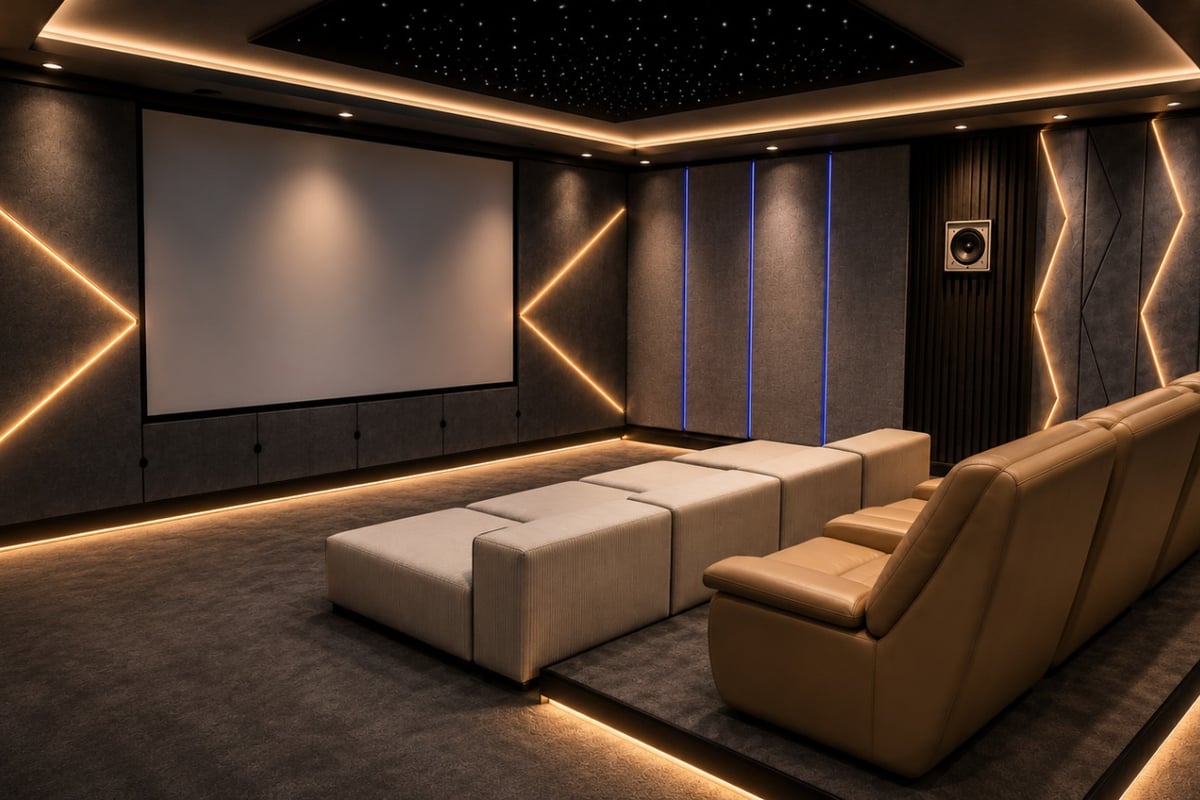
For those looking to create permanent yet flexible cinema solutions, a professionally designed home cinema room offers the ultimate in customization with acoustic treatments, dedicated equipment, and optimized viewing environments that can be adapted for various screen sizes and seating configurations.
Business and Event Planning Strategies
Launching a portable movie theater business or managing regular community screenings requires comprehensive planning beyond technical setup. The Small Business Administration offers valuable resources for entrepreneurs navigating permits, business structures, and local regulations.
Regulatory Compliance and Permits
Municipal requirements vary significantly across jurisdictions. Special event permits typically address noise ordinances, crowd management, and temporary structure installation. Contact local authorities 6-8 weeks before events to understand:
- Noise restrictions: Decibel limits and enforcement hours
- Assembly permits: Required for gatherings exceeding local thresholds (often 50-100 people)
- Fire safety compliance: Exit requirements and emergency access
- Food service licenses: If providing concessions beyond pre-packaged items
- Liability insurance: Often $1-2 million minimum for public events
Building relationships with municipal event coordinators streamlines future permits and may reveal co-marketing opportunities through city communications channels.
Environmental and Sustainability Practices
Modern audiences increasingly value environmental responsibility. The EPA provides practical guidance on reducing waste and environmental impact for outdoor events. Implement these sustainable practices:
- Reusable serviceware for concessions instead of disposables
- Recycling stations with clear signage and volunteer monitors
- Energy-efficient LED lighting throughout the venue
- Digital ticketing and programs to eliminate paper waste
- Bicycle parking and public transit promotion to reduce vehicle emissions
Sustainability initiatives provide marketing differentiation while demonstrating community responsibility. Highlight environmental efforts in promotional materials to attract eco-conscious audiences.
Marketing and Audience Development
Building consistent attendance for portable movie theater events requires strategic marketing and community engagement. Digital channels provide cost-effective reach while traditional methods build local presence.
Digital Marketing Strategies
Social media platforms excel at event promotion through visual content and community building. Share behind-the-scenes setup photos, equipment showcases, and countdown posts to build anticipation. Platform-specific strategies include:
- Instagram: High-quality screen images, reels of setup processes, story polls for film selection
- Facebook: Event pages with RSVP tracking, targeted local advertising, community group engagement
- TikTok: Short-form content showing unique aspects of portable cinema experiences
- Email newsletters: Advance screening announcements for subscribers, loyalty programs
Search engine optimization for local queries ("outdoor movies near me," "portable cinema [city name]") drives organic discovery. Maintain an updated Google Business Profile with accurate event schedules and location information.
Community Partnerships and Sponsorships
Local business collaborations expand reach while reducing costs. Approach complementary businesses with mutual benefit proposals:
- Restaurants: Cross-promotion and catering partnerships
- Breweries/wineries: Beverage service agreements with revenue sharing
- Hotels: Package deals for tourists and special occasion groups
- Retail stores: Product placement and promotional tie-ins with film themes
Sponsorship relationships help offset equipment costs and licensing fees. Develop tiered sponsorship packages offering brand visibility proportional to investment levels, from simple logo placement to naming rights for screening series.
Advanced Technical Considerations
Seasoned portable movie theater operators continuously refine technical approaches to deliver consistently excellent experiences across varied conditions.
Signal Distribution and Connectivity
Wireless video transmission eliminates cable runs between media sources and distant projection positions. Modern wireless HDMI systems operate on 5GHz frequencies with ranges exceeding 300 feet and minimal latency (under 1ms). This technology proves invaluable for portable setups where cable protection and trip hazards create safety concerns.
Network streaming capabilities enable advanced features like pre-show advertising, intermission content, and multi-camera live event broadcasts integrated with film screenings. Dedicated media servers with redundant storage prevent playback failures from corrupting drives or connection issues.
Audio Calibration and Optimization
Professional sound system tuning dramatically improves intelligibility and impact. Real-time analyzers (RTAs) measure frequency response across the listening area, revealing acoustic problems invisible to untrained ears. Address common issues through:
- Parametric equalization to flatten frequency response
- Delay alignment ensuring simultaneous arrival from multiple speakers
- Dynamic range compression maintaining dialogue clarity without limiting effects
- Subwoofer phase adjustment for coherent low-frequency reproduction
Wind and outdoor acoustics create unique challenges absent from indoor theaters. Position speakers closer to audiences in exposed locations, as inverse-square law dictates rapid sound pressure level decay with distance. Speaker elevation improves coverage by clearing audience heads and reducing ground reflection interference.
Troubleshooting Common Technical Issues
Even meticulously planned portable movie theater events encounter technical challenges. Preparation and systematic troubleshooting minimize disruption and maintain professional credibility.
Projection Problems and Solutions
Image quality issues typically stem from environmental factors or equipment configuration. Focus drift occurs as projectors heat up, requiring periodic adjustment during extended screenings. Lock focus controls after warm-up periods to prevent accidental changes.
Keystoning and geometric distortion plague projectors positioned off-axis from screens. Modern projectors include digital correction features, though optical alignment produces superior results. Use laser levels and careful positioning to achieve perpendicular projection angles whenever possible.
| Problem | Likely Cause | Solution |
|---|---|---|
| Dim image | Insufficient brightness, ambient light | Use higher-lumen projector, wait for darker conditions |
| Color cast | Incorrect color temperature, lamp age | Calibrate white balance, replace aging lamps |
| Flickering | Loose connections, power fluctuations | Secure all cables, use voltage regulator |
| Audio sync | Processing delay, incorrect settings | Adjust lip-sync delay in processor/receiver |
Weather-Related Contingencies
Moisture management prevents equipment damage and maintains reliable operation. Protect projectors and electronics with weather-resistant enclosures even during seemingly clear conditions, as dew formation can cause failures. Silica gel packets in equipment cases absorb ambient humidity during storage.
Unexpected weather changes require rapid response protocols. Designate crew members for specific shutdown procedures prioritizing equipment protection and audience safety. Practice emergency procedures during setup to ensure smooth execution under pressure.
Creating memorable portable movie theater experiences combines technical expertise, logistical planning, and audience-focused service delivery. From selecting the right projection and audio equipment to navigating licensing requirements and optimizing viewing environments, every detail contributes to the overall success of your cinema events. Whether you're organizing community screenings or exploring business opportunities in portable entertainment, the principles outlined here provide a foundation for professional-quality results. For those seeking permanent cinema solutions with the same attention to detail and technical excellence, ANR media specializes in custom home cinema installations that bring the magic of theatrical experiences into dedicated spaces designed specifically for your needs.