

The evolution of home entertainment has reached a pinnacle with immersive audio technologies that transport viewers beyond traditional surround sound. A dolby atmos home theater represents the cutting edge of this evolution, delivering three-dimensional soundscapes that envelop listeners from every direction, including overhead. This technology fundamentally changes how we experience movies, music, and gaming by treating sounds as individual objects that can be precisely placed and moved throughout a three-dimensional space. For homeowners considering an upgrade or planning a dedicated cinema room, understanding the nuances of Dolby Atmos can mean the difference between a good system and an extraordinary one.
Understanding Dolby Atmos Technology
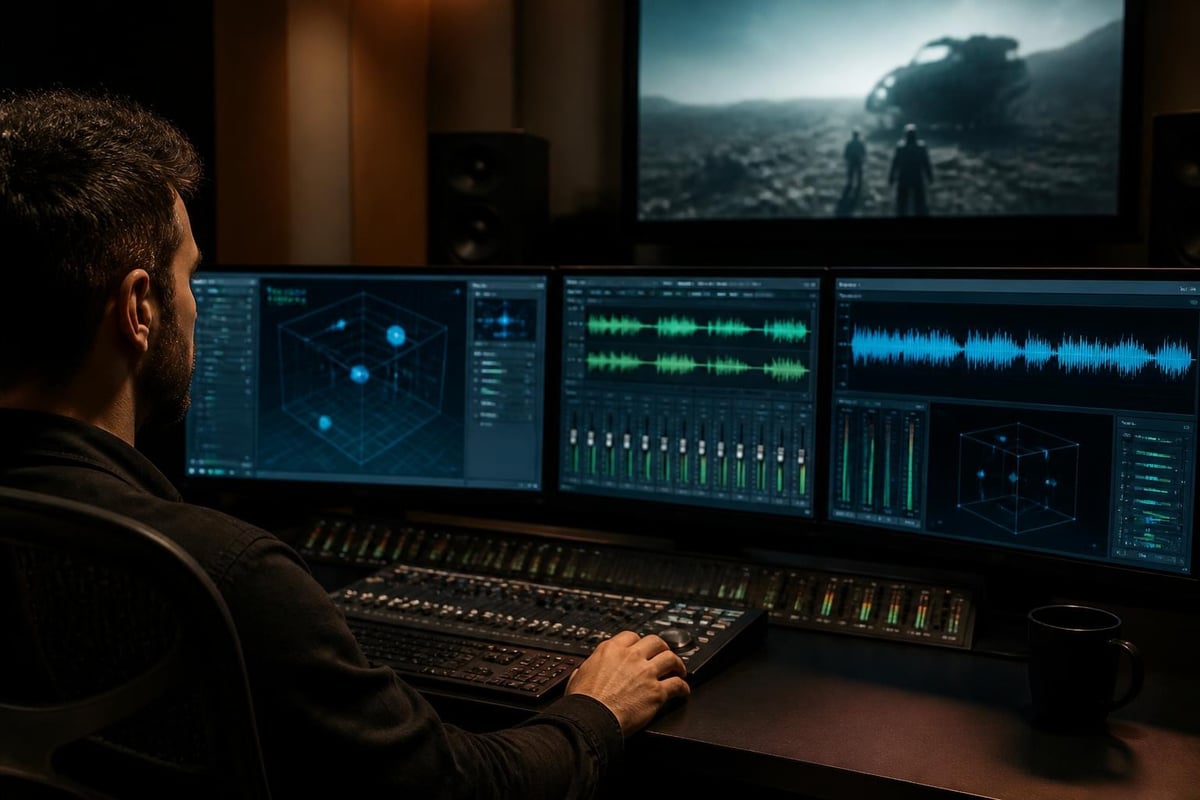
Dolby Atmos technology moves beyond channel-based audio to an object-based approach that revolutionizes spatial sound. Traditional 5.1 or 7.1 systems assign audio to specific channels, but Dolby Atmos treats each sound as an independent object with its own location coordinates in three-dimensional space.
The system processes up to 128 simultaneous audio objects, positioning them precisely throughout your listening environment. This creates a hemispherical sound field rather than a flat plane of audio around the listener.
The Height Dimension Advantage
What distinguishes a dolby atmos home theater from conventional surround sound is the addition of height channels. These overhead speakers or upward-firing modules create the illusion of sounds moving above the listening position.
Key benefits of height channels include:
- Rain, thunder, and atmospheric effects positioned realistically overhead
- Aircraft and flying objects tracked smoothly across the ceiling plane
- Enhanced sense of space and venue acoustics in music recordings
- Improved dialogue clarity through more precise center channel imaging
The height layer integrates seamlessly with ear-level speakers to create a cohesive, enveloping soundstage that matches the scale of modern large-format displays.
Speaker Configuration Options
Selecting the right speaker layout for your dolby atmos home theater depends on room dimensions, budget, and performance expectations. The nomenclature uses three numbers: the first represents ear-level speakers, the second indicates subwoofers, and the third denotes height channels.
| Configuration | Total Speakers | Best For | Room Size |
|---|---|---|---|
| 5.1.2 | 8 speakers | Entry-level Atmos | Small to medium rooms |
| 5.1.4 | 10 speakers | Balanced performance | Medium rooms |
| 7.1.4 | 12 speakers | Premium experience | Large rooms |
| 9.1.4 | 14 speakers | Reference quality | Dedicated cinema spaces |
In-Ceiling vs. Upward-Firing Speakers
Two primary approaches exist for delivering height effects in a dolby atmos home theater. In-ceiling speakers mount directly into the ceiling structure, firing downward at the listening position. These provide the most authentic overhead effects but require installation access and ceiling modifications.
Upward-firing modules sit atop conventional floor-standing or bookshelf speakers, bouncing sound off the ceiling to create the illusion of height. This approach works best with flat, reflective ceilings at standard heights between 8 and 10 feet.
In-ceiling advantages:
- Direct sound path for clearer localization
- More powerful bass extension from height channels
- Cleaner aesthetic without visible hardware
Upward-firing advantages:
- No installation or construction required
- Easier to relocate or reconfigure
- Lower initial investment
The Dolby Atmos speaker setup guide provides detailed placement specifications for both approaches, ensuring optimal performance regardless of which method you choose.
Room Acoustics and Treatment
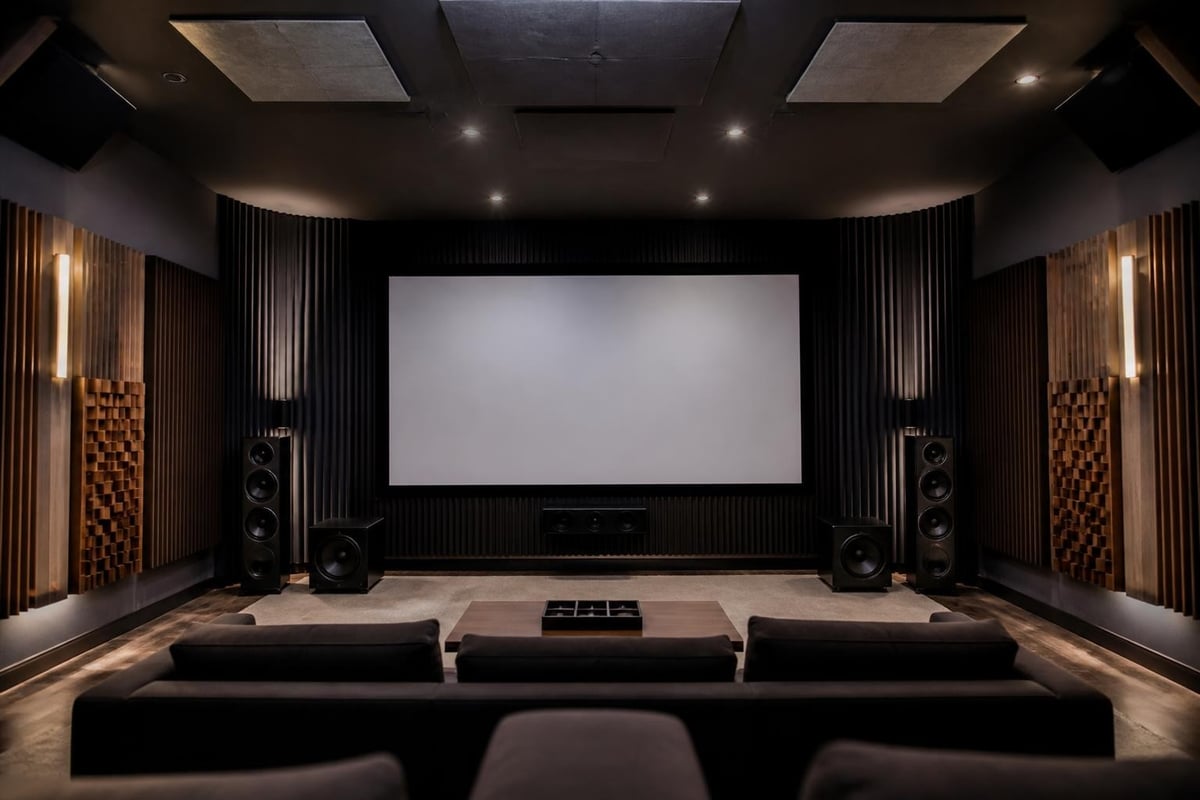
Even the finest speakers and electronics cannot overcome poor room acoustics. A dolby atmos home theater demands careful attention to how sound behaves within your specific space.
Critical Acoustic Considerations
Room dimensions significantly impact bass response and overall sound quality. Rectangular rooms with non-parallel dimensions minimize standing waves and modal issues that create uneven bass distribution.
Hard, reflective surfaces like glass, tile, and drywall create excessive reverberation that muddies dialogue and reduces spatial precision. Strategic acoustic treatment tames these reflections without deadening the space entirely.
- First reflection points: Absorb early reflections from side walls at the listening position
- Ceiling treatment: Control overhead reflections between height speakers and listeners
- Bass trapping: Address low-frequency buildup in corners and wall-ceiling junctions
- Diffusion: Scatter rear-wall reflections to prevent slap echo
Professional acoustic analysis identifies specific problem areas and prescribes targeted solutions rather than generic treatment patterns.
Equipment Selection Essentials
Building a dolby atmos home theater requires compatible electronics that can decode and process the additional audio objects and height information. Your AV receiver serves as the system's brain, handling complex audio processing and amplification duties.
AV Receiver Requirements
Modern Dolby Atmos receivers must support the specific speaker configuration you plan to implement. A 5.1.4 system requires at least a 9-channel AVR with processing for 11.1 channels. Verify that the receiver provides adequate power output for your chosen speakers, typically 100 watts per channel or more for optimal performance.
Essential receiver features:
- Dolby Atmos decoding and processing
- Sufficient amplifier channels for your configuration
- Room calibration system (Audyssey, Dirac, or similar)
- eARC HDMI connectivity for lossless audio from TV apps
- Pre-outs for external amplification expansion
Premium receivers incorporate advanced room correction algorithms that measure your specific acoustic environment and apply precise equalization to compensate for room-induced colorations.
Source Component Considerations
Your dolby atmos home theater can only reproduce content encoded with Dolby Atmos metadata. Streaming services including Netflix, Disney+, Apple TV+, and Amazon Prime Video offer extensive Atmos catalogs, but require premium subscription tiers and compatible streaming hardware.
Ultra HD Blu-ray delivers the highest-quality Dolby Atmos tracks with superior bitrate and dynamic range compared to streaming. Dedicated players from Panasonic, Sony, and others provide reference-quality playback for discerning enthusiasts.
Professional Design and Installation
While capable DIY enthusiasts can assemble basic systems, a truly exceptional dolby atmos home theater benefits enormously from professional design and installation expertise. Custom integrators bring specialized knowledge of acoustic principles, product compatibility, and installation techniques that maximize system performance.
For clients seeking the ultimate viewing experience, a home cinema room conversion offers complete control over every environmental factor affecting audio and video quality. This turnkey approach addresses acoustics, lighting, seating, and aesthetics in an integrated design that delivers cinema-reference performance.
Calibration and Optimization
Even perfectly installed systems require precise calibration to achieve their full potential. Professional calibrators use specialized measurement equipment and software to analyze system response and apply corrections.
The calibration process includes:
- Acoustic measurement: Capture frequency response at multiple listening positions
- Speaker level matching: Ensure balanced output across all channels
- Distance/delay alignment: Synchronize arrival times from all speakers
- Crossover optimization: Integrate subwoofers seamlessly with main speakers
- EQ application: Correct room-induced response anomalies
- Dynamic range verification: Confirm proper headroom and compression settings
Setting up your home theater with Dolby Atmos requires attention to numerous technical parameters that professional installers navigate efficiently through experience and training.
Content and Streaming Optimization
Maximizing your dolby atmos home theater investment means accessing the highest-quality content available. Not all Dolby Atmos implementations deliver identical performance, with significant differences between streaming and physical media.
Streaming Versus Physical Media
| Aspect | Streaming | Ultra HD Blu-ray |
|---|---|---|
| Audio Bitrate | 448-768 kbps | Up to 3,840 kbps |
| Dynamic Range | Compressed | Full reference |
| Reliability | Network-dependent | Consistent |
| Convenience | Instant access | Physical library |
| Cost | Subscription | Per-title purchase |
Streaming services compress Dolby Atmos tracks to fit bandwidth constraints, reducing the number of simultaneous audio objects and limiting dynamic range. This results in less dramatic spatial effects and reduced impact during action sequences.
Network Requirements for Streaming
When relying on streaming sources for your dolby atmos home theater, network infrastructure becomes critical. Unstable connections cause audio dropouts, format downgrading, or complete playback failures.
Minimum network specifications:
- 25 Mbps sustained download speed for 4K Dolby Atmos
- Wired Ethernet connection to streaming devices
- Quality of Service (QoS) router settings prioritizing streaming traffic
- Dedicated network switch for home theater components
Wi-Fi connections introduce variable latency and bandwidth availability that can compromise playback reliability, particularly during peak usage periods.
Emerging Technologies and Future Trends
The landscape of immersive audio continues evolving with new technologies that expand possibilities for dolby atmos home theater systems. Dolby Atmos FlexConnect represents the latest advancement, allowing speaker placement flexibility without compromising spatial precision.
This technology uses sophisticated processing to compensate for non-ideal speaker positions, making Dolby Atmos more accessible in rooms where traditional placement proves impossible. The system analyzes each speaker's actual location and applies corrections to maintain proper spatial imaging.
Integration with Smart Home Systems
Modern dolby atmos home theater installations increasingly integrate with comprehensive smart home ecosystems. Control4, Crestron, and Savant systems provide unified control of audio, video, lighting, shading, and climate through intuitive interfaces.
Voice control through Amazon Alexa, Google Assistant, or Apple Siri enables hands-free operation, though these convenience features require careful programming to avoid conflicts with system operation.
Budgeting and Investment Considerations
Creating an exceptional dolby atmos home theater represents a significant investment that varies widely based on performance expectations and room requirements. Understanding cost factors helps establish realistic budgets and prioritize spending for maximum impact.
Entry-level systems begin around $2,000-$3,000 for receiver, speakers, and basic installation. Mid-tier implementations with quality components and professional installation typically range from $8,000-$15,000. Reference-quality systems in dedicated spaces can exceed $50,000 with premium speakers, electronics, acoustic treatment, and custom installation.
Prioritizing Expenditures
When budget constraints require compromises, certain components deserve priority in a dolby atmos home theater. High-quality speakers provide the foundation for excellent sound, making them worthy of significant investment. Room acoustic treatment delivers dramatic improvements for relatively modest cost compared to electronics upgrades.
Investment priority hierarchy:
- Front left, center, and right speakers (40% of speaker budget)
- Subwoofer system (25% of speaker budget)
- Height and surround speakers (20% of speaker budget)
- AV receiver with Atmos processing (15% of total budget)
- Acoustic treatment materials
- Professional calibration services
Phased implementation allows spreading costs over time while building toward a complete system. Start with a strong 5.1 foundation, then add height speakers and additional surrounds as budget permits.
A dolby atmos home theater transforms entertainment into an immersive experience that rivals commercial cinemas while offering the comfort and convenience of home viewing. The combination of object-based audio processing, height channels, and careful system design creates three-dimensional soundscapes that enhance every form of content from blockbuster movies to intimate music performances. Whether you're planning a dedicated cinema room or upgrading an existing family room, the expertise of professional designers and installers ensures your investment delivers maximum performance and long-term satisfaction. ANR media specializes in custom home cinema solutions, from multiroom audio systems to complete bespoke cinema room conversions that bring reference-quality Dolby Atmos performance to South African homes.