

Creating a truly exceptional home cinema experience requires far more than purchasing premium equipment and setting it up yourself. The complexity of modern audio-visual systems, acoustic engineering, and custom integration demands the expertise that only qualified home theater installers can provide. Whether you're converting a spare room into a dedicated cinema space or building a state-of-the-art entertainment zone from scratch, professional installers transform technical specifications into immersive experiences that rival commercial theaters. The difference between a good system and an extraordinary one often comes down to the skill, experience, and attention to detail that specialized installers bring to every project.
Understanding What Home Theater Installers Actually Do
Professional home theater installers provide comprehensive services that extend well beyond simply connecting cables and mounting screens. Their expertise encompasses room analysis, acoustic design, equipment selection, custom integration, and ongoing calibration to ensure every element works in perfect harmony.
The initial consultation phase involves detailed assessment of your space, including room dimensions, existing architecture, lighting conditions, and structural limitations. Installers evaluate how sound waves will behave in your specific environment, identifying potential acoustic challenges before they become problems.
Technical Expertise and System Design
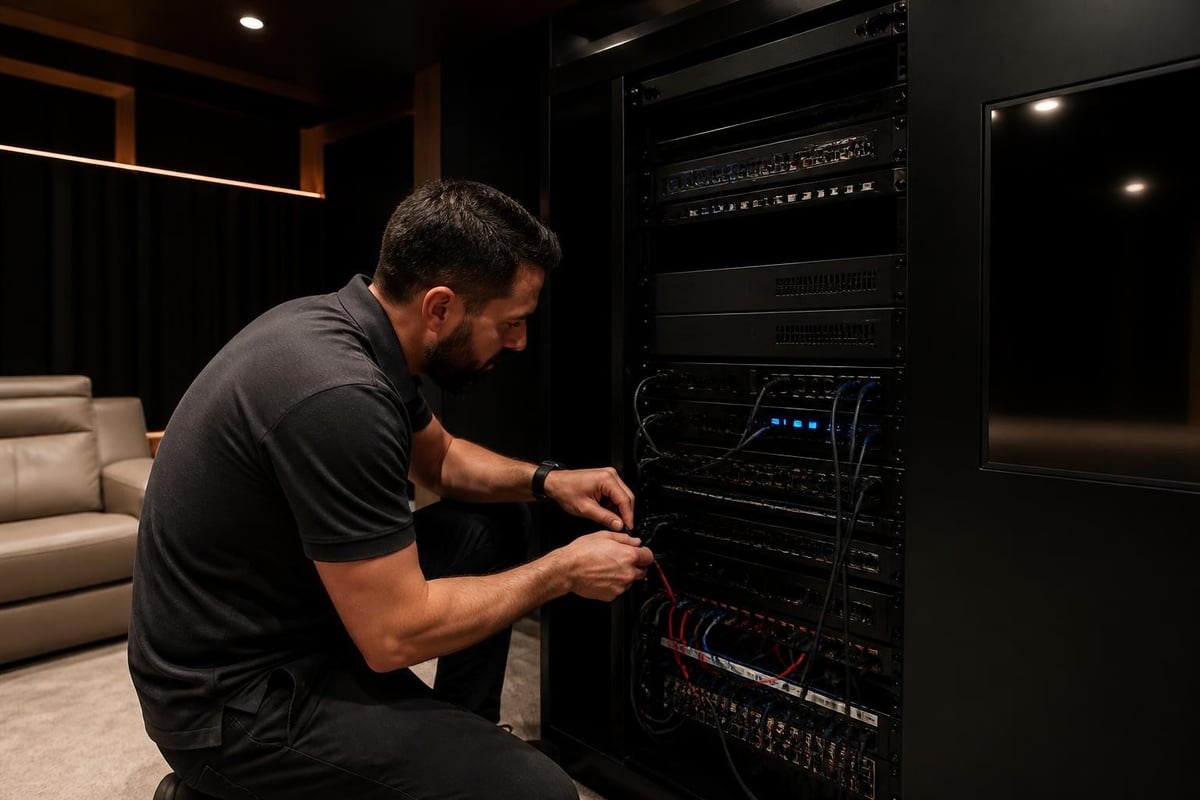
Home theater installers combine electrical engineering knowledge with audio-visual expertise to design systems that maximize performance within your budget and space constraints. They understand signal flow, impedance matching, power requirements, and network infrastructure in ways that casual enthusiasts simply cannot replicate.
Their technical capabilities include:
- Custom rack building and equipment housing solutions
- Advanced wire management and concealment techniques
- Network configuration for streaming and smart home integration
- Calibration using professional-grade measurement equipment
- Integration with lighting, climate control, and automated systems
This specialized knowledge ensures that every component operates at peak efficiency while maintaining reliability over years of use.
Acoustic Treatment and Room Optimization
One of the most critical yet frequently overlooked aspects of home cinema installation is proper acoustic treatment. Professional installers understand how sound reflections, standing waves, and frequency response interact with room geometry to either enhance or degrade audio quality.
According to award-winning home theater designers, room design fundamentally determines audio-visual performance more than equipment selection alone. This philosophy drives how experienced installers approach every project.
| Acoustic Element | Purpose | Impact on Performance |
|---|---|---|
| Bass traps | Control low-frequency buildup | Eliminates muddy, boomy bass |
| Diffusers | Scatter sound reflections | Creates natural, spacious soundstage |
| Absorption panels | Reduce echo and flutter | Improves dialogue clarity |
| Isolation materials | Prevent sound transmission | Protects adjacent rooms from disturbance |
Selecting the Right Home Theater Installers for Your Project
Choosing qualified home theater installers requires careful evaluation of credentials, experience, and compatibility with your vision. Not all installers offer the same level of expertise, and the wrong choice can lead to disappointing results or costly mistakes.
Industry Certifications and Qualifications
Reputable home theater installers typically hold certifications from recognized industry organizations. CEDIA (Custom Electronic Design & Installation Association) certification represents the gold standard, indicating comprehensive training in residential systems integration.
Look for installers with:
- CEDIA certification levels (Installer, Designer, or higher)
- Manufacturer-specific training and authorization
- ISF (Imaging Science Foundation) calibration credentials
- THX certification for premium installations
- Proven track record with complex projects
These qualifications demonstrate commitment to ongoing education and adherence to industry best practices.
Portfolio Review and References
Examining previous work reveals an installer's capabilities and design aesthetic. Request detailed case studies showing projects similar to yours in scope and budget. Pay attention to cable management quality, equipment rack organization, and overall finish quality in photographs.
Contact previous clients directly to ask about:
- Communication throughout the project timeline
- Problem-solving when unexpected challenges arose
- Budget adherence and transparency
- Post-installation support and responsiveness
- Overall satisfaction with completed system performance
Exceptional installers maintain long-term relationships with clients, often servicing and upgrading systems years after initial installation.
The Home Theater Installation Process
Understanding what happens during a professional installation helps set realistic expectations and facilitates smooth collaboration with your chosen installers. The process typically unfolds across several distinct phases, each building on the previous stage.
Initial Consultation and Design Phase
Professional home theater installers begin with comprehensive needs assessment. They discuss your viewing preferences, content sources, budget parameters, and aesthetic requirements. This conversation informs equipment recommendations and system architecture.
During site surveys, installers document room dimensions, photograph existing conditions, and identify installation challenges. They note electrical panel capacity, network infrastructure, HVAC placement, and structural elements affecting speaker placement or screen positioning.
The design phase produces detailed proposals including:
- Equipment specifications and justified recommendations
- Wiring diagrams and infrastructure requirements
- Acoustic treatment plans with material specifications
- Seating layout optimized for viewing angles and audio coverage
- Project timeline with milestone dates
- Itemized pricing breakdown
Installation and Integration
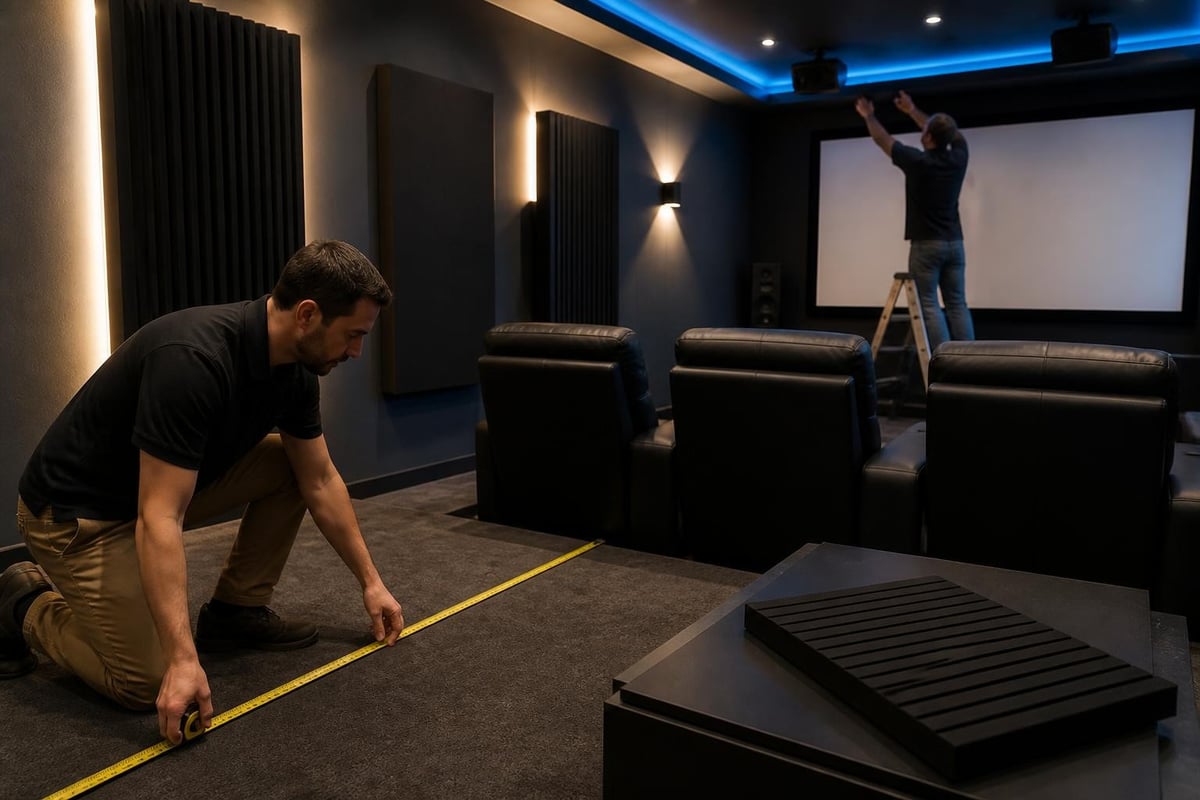
Once design approval is secured, the physical installation begins. Experienced home theater installers coordinate with other trades when necessary, scheduling work to minimize disruption and ensure proper sequencing.
The installation typically progresses through these stages:
- Infrastructure preparation: Running cables, installing conduits, preparing equipment locations
- Acoustic treatment: Installing panels, bass traps, and diffusers per design specifications
- Equipment mounting: Securing displays, projectors, speakers, and subwoofers
- System connection: Wiring all components, verifying signal paths, establishing network connectivity
- Calibration: Using measurement microphones and analyzers to optimize audio and video performance
- Programming: Configuring control systems and user interfaces for intuitive operation
Quality installers maintain clean work sites, protect your property, and communicate progress regularly throughout the installation.
Calibration and Fine-Tuning
The calibration phase separates amateur setups from professional installations. Home theater installers use specialized equipment to measure room acoustics and adjust system parameters for optimal performance. Proper speaker placement following Dolby and THX standards ensures immersive surround sound that envelops viewers without drawing attention to individual speakers.
Video calibration adjusts display parameters including brightness, contrast, color accuracy, and gamma curves to reproduce content as filmmakers intended. Professional installers reference industry standards and test patterns, making subtle adjustments that dramatically improve picture quality.
Custom Home Cinema Room Conversions
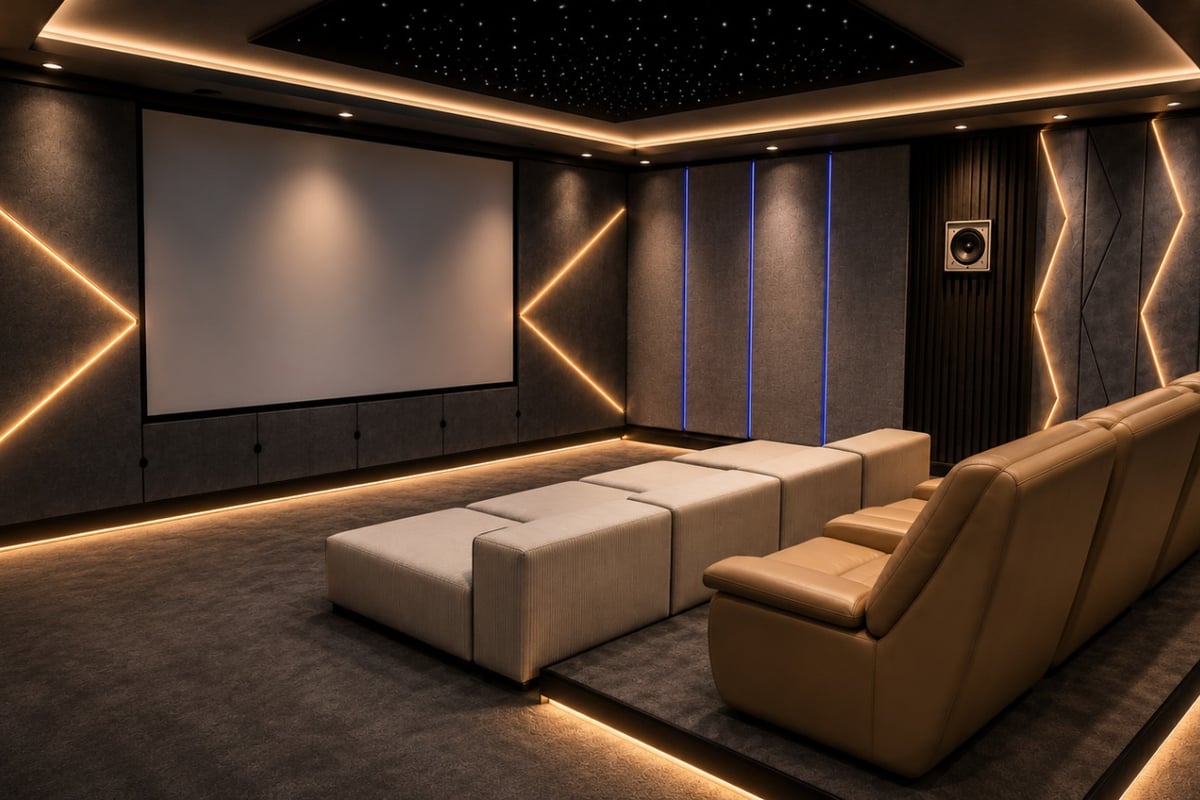
Dedicated home cinema rooms represent the pinnacle of residential entertainment installations. These projects transform ordinary spaces into immersive viewing environments that rival commercial theaters in performance and aesthetics. Professional home theater installers approach these conversions with meticulous attention to every detail, from soundproofing and lighting control to seating selection and decorative elements. A Home cinema room conversion handled by specialists like ANR media encompasses complete turnkey solutions that address every aspect of the viewing experience, ensuring nothing compromises the quality of your entertainment space.
Architectural Considerations
Room conversions often require structural modifications. Installers coordinate with architects and contractors to implement:
- Soundproofing between walls, floors, and ceilings
- Dedicated electrical circuits with clean power delivery
- HVAC modifications maintaining consistent temperature without noise
- Specialized wall construction for acoustic optimization
- Riser platforms for optimal viewing angles from multiple rows
These architectural elements must integrate seamlessly with audio-visual systems for maximum effectiveness.
Aesthetic Integration and Design Themes
While technical performance remains paramount, exceptional home theater installers also excel at creating visually stunning spaces. They balance equipment functionality with design cohesion, ensuring technology enhances rather than dominates the environment.
| Design Element | Function | Design Impact |
|---|---|---|
| Fabric-wrapped acoustic panels | Sound absorption and diffusion | Elegant wall treatments in custom colors |
| Recessed equipment racks | Component housing and heat management | Clean, uncluttered aesthetic |
| Architectural lighting | Ambient illumination and scene setting | Dramatic atmosphere without screen reflections |
| Custom seating | Comfort during extended viewing | Theater authenticity and luxury appeal |
| Acoustic-transparent screens | Enables behind-screen speaker placement | Immersive soundstage from ideal location |
Common Mistakes When Working with Installers
Even when hiring professionals, misunderstandings and poor planning can compromise results. Awareness of common pitfalls helps ensure successful collaboration with home theater installers.
Inadequate Budget Planning
Underestimating total project costs leads to compromises that diminish performance. Beyond equipment expenses, factor in:
- Infrastructure work (electrical, network, structural)
- Acoustic treatments and materials
- Custom fabrication and millwork
- Furniture and seating
- Ongoing service and calibration
Professional installers provide transparent pricing, but clients must budget realistically for their desired outcome. Common setup mistakes often stem from budget constraints that force suboptimal compromises.
Unclear Communication of Priorities
Different users prioritize different aspects of home cinema experience. Some value maximum screen size, others prioritize audio fidelity, and still others focus on aesthetic integration with home décor. Clearly communicate your priorities during initial consultations so installers can optimize designs accordingly.
Document your must-haves versus nice-to-haves. Be specific about:
- Primary content types (movies, sports, gaming, music)
- Expected usage frequency and user count
- Aesthetic preferences and design restrictions
- Future expansion plans and technology upgrades
- Automation and smart home integration desires
This clarity prevents disappointment and ensures alignment between expectations and deliverables.
Technology Trends Shaping Modern Installations
Home theater installers continuously adapt to evolving technologies and consumer preferences. Understanding current trends helps clients make informed decisions about system specifications and future-proofing strategies.
Immersive Audio Formats
Dolby Atmos and DTS:X have revolutionized home cinema audio by adding height channels that create three-dimensional soundscapes. Professional installers design speaker layouts that maximize these formats' impact, positioning ceiling speakers or upward-firing modules according to established best practices for room optimization.
Implementation complexity increases with channel count, requiring expertise in:
- Amplifier selection and power management
- Advanced room correction processing
- Speaker placement optimization for overhead effects
- Acoustic treatment preventing ceiling reflections
- Calibration using object-based audio test signals
8K Displays and Advanced Video Processing
While 8K content remains limited in 2026, forward-thinking installations accommodate future technology adoption. Home theater installers specify HDMI infrastructure supporting 48Gbps bandwidth, ensuring compatibility with highest-resolution sources and displays.
Video processing considerations include:
- HDR format support (HDR10, Dolby Vision, HDR10+)
- Upscaling quality from lower resolution sources
- Frame rate handling for gaming and sports
- Color space conversion and management
- Low-latency modes for interactive content
Professional installers stay current with rapidly evolving video standards, protecting client investments against premature obsolescence.
Maintenance and Long-Term Support
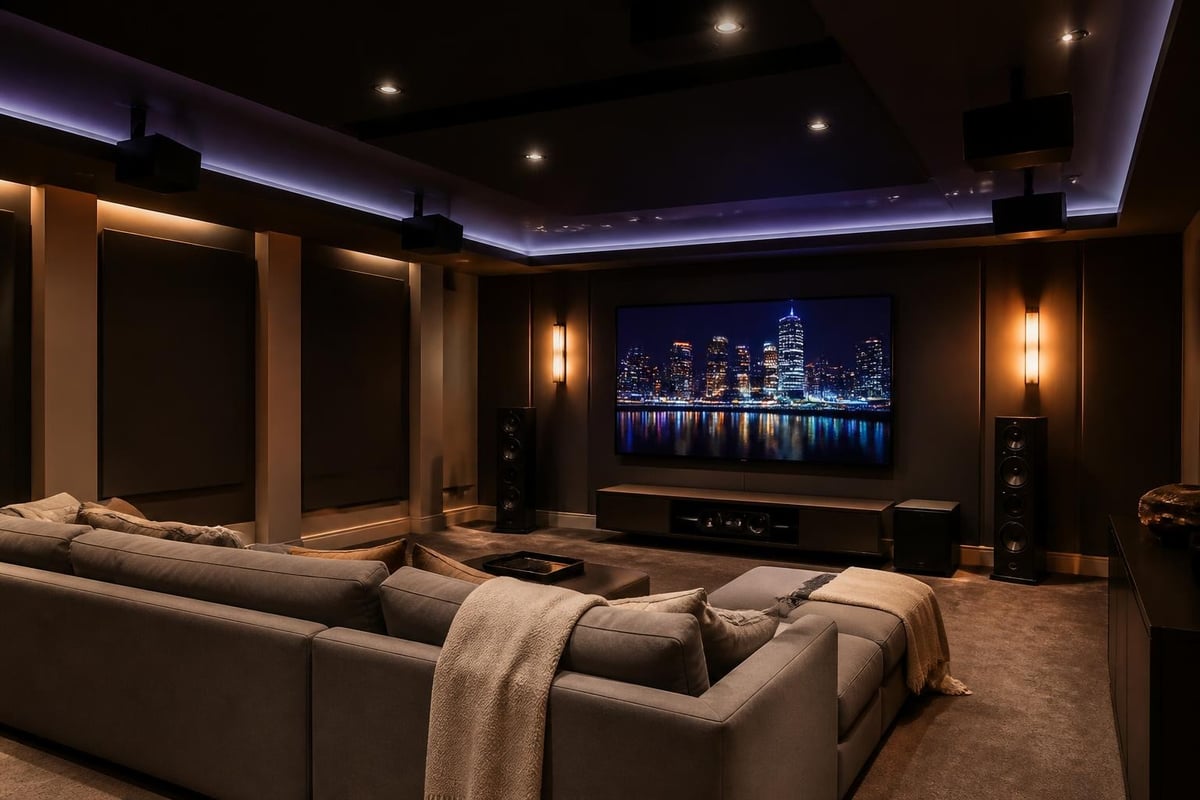
The relationship with home theater installers shouldn't end when installation completes. Ongoing support ensures continued optimal performance as technology evolves and components age.
Service Agreements and Calibration Updates
Environmental changes, component drift, and firmware updates affect system performance over time. Regular service visits by professional installers address these issues through:
- Annual recalibration maintaining audio and video accuracy
- Firmware updates improving functionality and compatibility
- Cleaning and inspection preventing component failures
- Performance verification ensuring specifications remain met
- User training on new features and capabilities
Many installers offer service agreements providing priority support and scheduled maintenance visits.
System Evolution and Upgrades
Technology advancement inevitably makes components obsolete. Professional home theater installers design systems with upgrade paths, using modular approaches that allow incremental improvements without complete replacement. They maintain relationships with clients, advising when upgrades deliver meaningful benefits versus when existing systems remain adequate.
Upgrade planning considers:
| Upgrade Category | Typical Lifespan | Performance Impact |
|---|---|---|
| Display technology | 5-7 years | High (resolution, brightness, contrast) |
| Audio processing | 7-10 years | Medium (format support, room correction) |
| Speakers | 15-20 years | Low (unless damaged or tastes change) |
| Amplification | 10-15 years | Low (solid-state reliability) |
| Control systems | 5-8 years | Medium (interface improvements) |
Strategic upgrades maximize value while maintaining budget discipline across system lifetime.
Making the Investment Decision
Hiring professional home theater installers represents significant investment, but the value delivered extends far beyond equipment costs. Exceptional installations provide years of reliable performance, immersive experiences that bring entertainment to life, and pride of ownership from knowing your system realizes its full potential.
When evaluating installation proposals, consider total cost of ownership including energy efficiency, reliability, upgrade flexibility, and ongoing support. The lowest initial quote rarely delivers best long-term value. Exceptional home theater installations showcase what's possible when expertise meets vision, demonstrating why professional installation matters.
Return on Investment Beyond Dollar Metrics
While difficult to quantify, professional installation delivers intangible benefits:
- Enhanced family time in shared entertainment experiences
- Increased home value and market differentiation
- Elimination of frustration from technical issues
- Confidence that systems operate safely and reliably
- Access to expert advice for future technology decisions
These factors contribute to overall satisfaction and justify premium pricing for exceptional home theater installers.
Quality installations become lifestyle enhancements, transforming how families consume entertainment and spend time together. The memories created in properly designed cinema spaces far exceed the initial investment.
Selecting and working with qualified home theater installers transforms complex technical challenges into seamless, enjoyable experiences. By understanding what professionals bring to your project and maintaining clear communication throughout the process, you ensure installations that deliver exceptional performance for years to come. ANR media specializes in custom home cinema and audio video solutions, from multiroom installations to complete bespoke cinema room conversions, bringing technical expertise and design excellence to every project. Whether you're planning a dedicated theater space or enhancing existing entertainment areas, professional guidance ensures your vision becomes reality.